Sony PS5 Price Hike Creates Competitive Opening for Switch 2 Teams
Sony's $100 PS5 price hike widens the total year-one cost gap with Switch 2 to roughly $260, landing just six weeks before Nintendo's June 5 hardware launch.

Six weeks before Nintendo Switch 2 hits shelves, a consumer choosing a PS5 disc edition will spend roughly $870 in year one on hardware, two flagship games, and an online subscription. A Switch 2 buyer making equivalent purchases will spend about $610. That $260 gap is the most actionable number Nintendo's marketing and commercial teams will work with this spring.
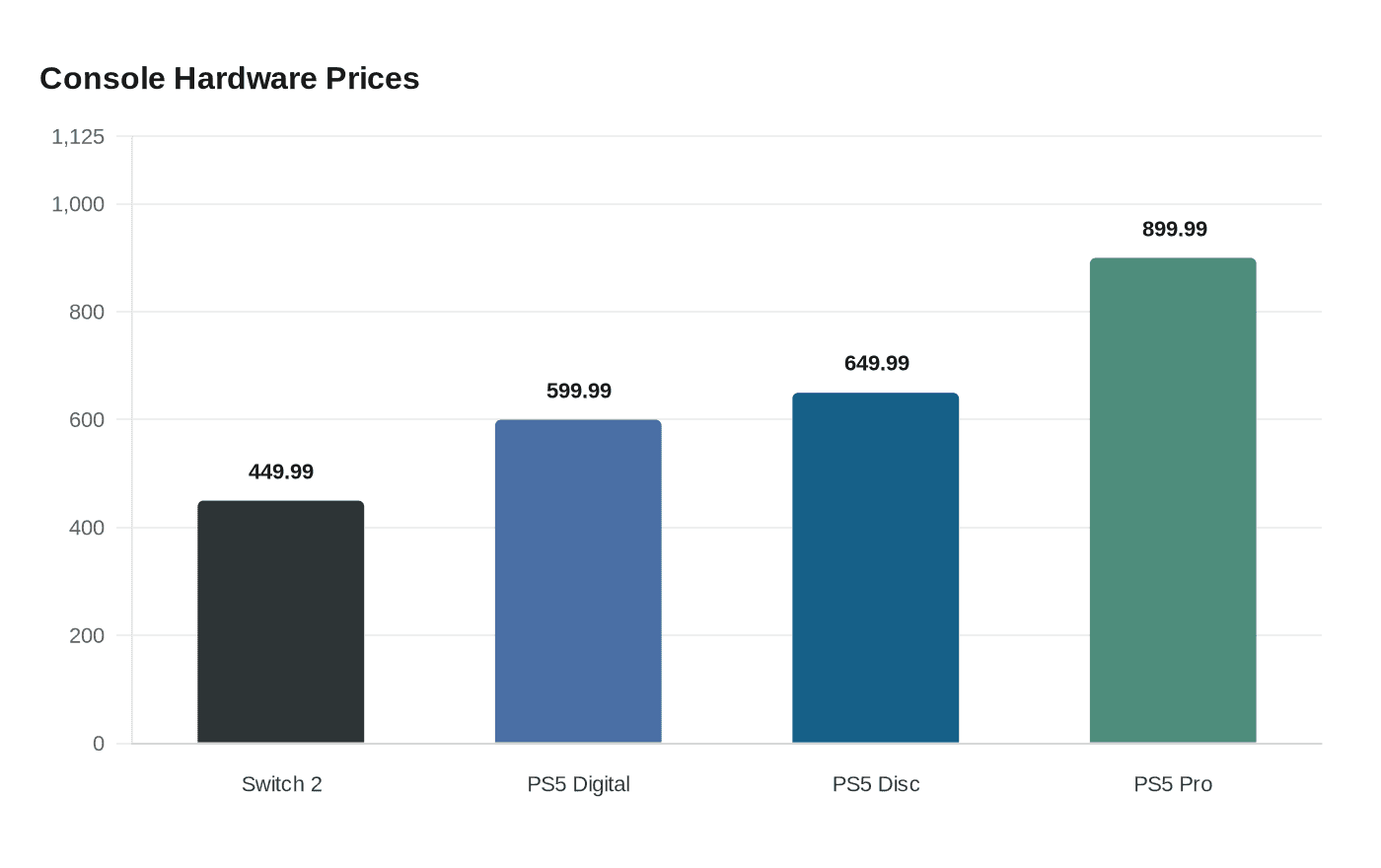
Sony's Isabelle Tomatis, VP of Global Marketing at Sony Interactive Entertainment, announced the price changes effective April 2, 2026. The PS5 disc edition rises $100 to $649.99 and the Digital Edition climbs the same amount to $599.99. The PS5 Pro takes the steepest hit: up $150 to $899.99, pushing the premium Sony tier to nearly twice the Switch 2's $449.99 entry price. Sony attributed the hikes to "continued pressures in the global economic landscape," and the changes apply in the U.S., UK, Europe, and Japan.
The full arithmetic behind the $260 gap runs like this: a PS5 disc buyer pays $649.99 for the console, roughly $140 for two flagship titles at $69.99 each, and $79.99 for a year of PS Plus Essential. A Switch 2 buyer spends $449.99 for the console, the same two games, and $19.99 for Nintendo Switch Online's base individual tier. The subscription delta of $60 per year is modest but recurring; the hardware delta of $200 is visible the moment a consumer stands in front of a shelf.
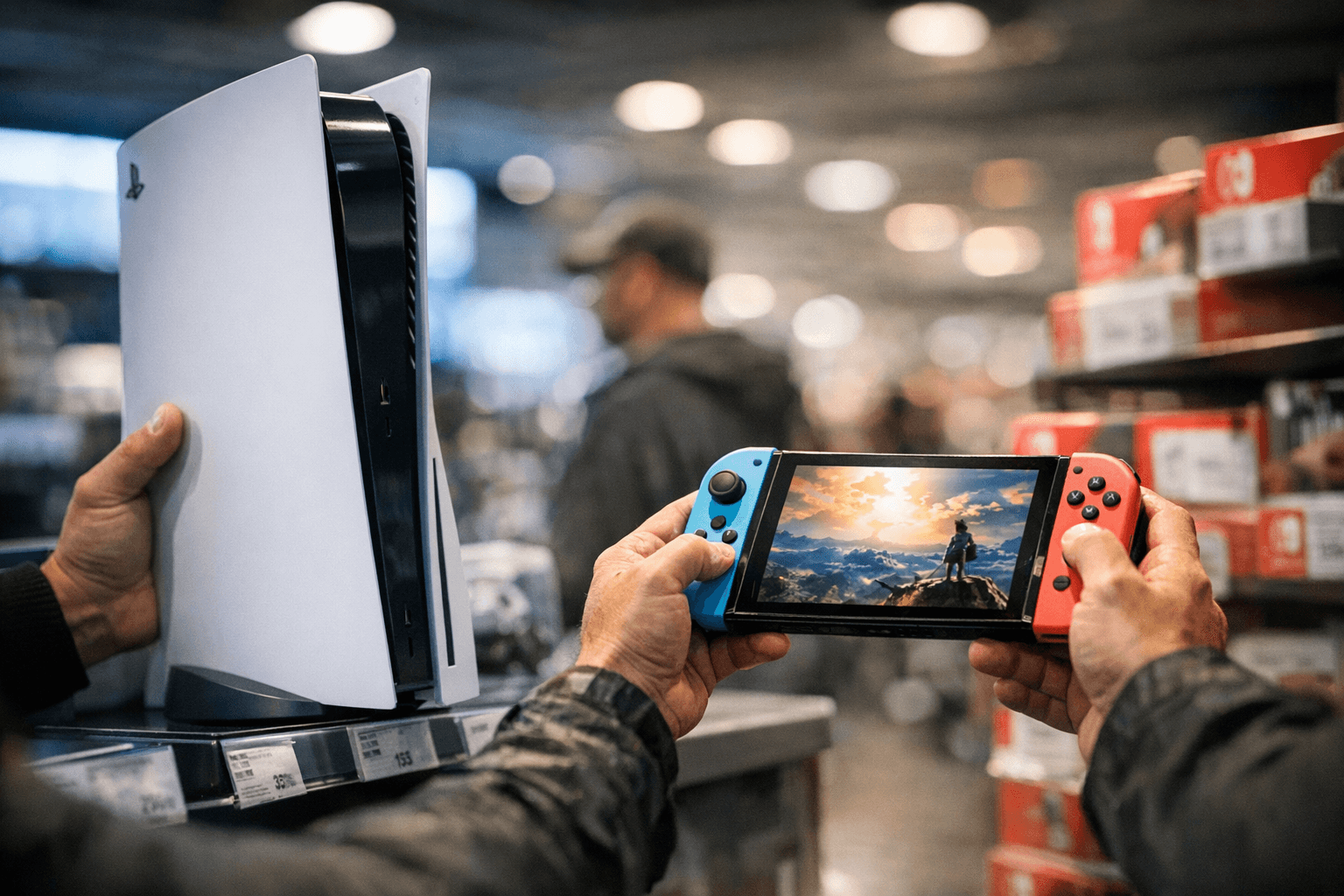
For Nintendo's product marketing teams, the window to activate this comparison is narrow. Switch 2 launches June 5 at $449.99, with a Mario Kart World bundle available at $499.99. Any Nintendo Direct or retail campaign planned for April or May should be built around the $260 argument now, with messaging and creative assets finalized before Sony's new prices normalize in consumer perception. The story ages the moment consumers stop noticing the change.
Sales forecasting and FP&A teams face a more complex calculation. Sony's hike creates potential demand softness on the PS5 side, but it may equally prompt aggressive retailer promotions from Sony's channel partners that neutralize part of the pricing signal. Revenue teams should be running scenario models across moderate, strong, and weak competitor response cases by region; the UK and European adjustments are particularly relevant given those markets' sensitivity to hardware price differentials.
Channel and hardware operations teams need to review fulfillment lead times and retailer display inventory against the possibility that demand shifts faster than standard pre-launch models anticipate. A consumer who was undecided between platforms in March may have already made a decision by mid-April, well before Nintendo's own launch marketing peaks.
Nintendo has never positioned itself primarily on price, and that discipline is part of what protects franchise reputation across decades. But a $260 total-cost advantage does not require aggressive or comparative messaging to land with consumers. It needs only to be visible, specific, and placed consistently across retail, digital, and first-party marketing surfaces between now and June 5. Sony has provided the number; Nintendo's commercial teams choose what to do with it.
This article was produced by Prism’s automated news system from verified source data, official records, and press releases, then run through automated quality and moderation checks before publishing. The system is built and supervised by the people who set the standards it runs under. Read our full AI policy.
Did this article answer your question?
