Union urges U.S. regulators to review EA's $55 billion buyout
The CWA is pressing the FTC and CFIUS to scrutinize EA's $55 billion take-private, warning it could shake thousands of jobs and consumer data.
Electronic Arts’ proposed $55 billion take-private has moved from a valuation story to a power story. The Communications Workers of America formally asked the Federal Trade Commission and the Committee on Foreign Investment in the United States to review the deal, warning that the transaction could put thousands of jobs and sensitive consumer data at risk as control shifts to a consortium led by Saudi Arabia’s Public Investment Fund, Silver Lake and Jared Kushner’s Affinity Partners.
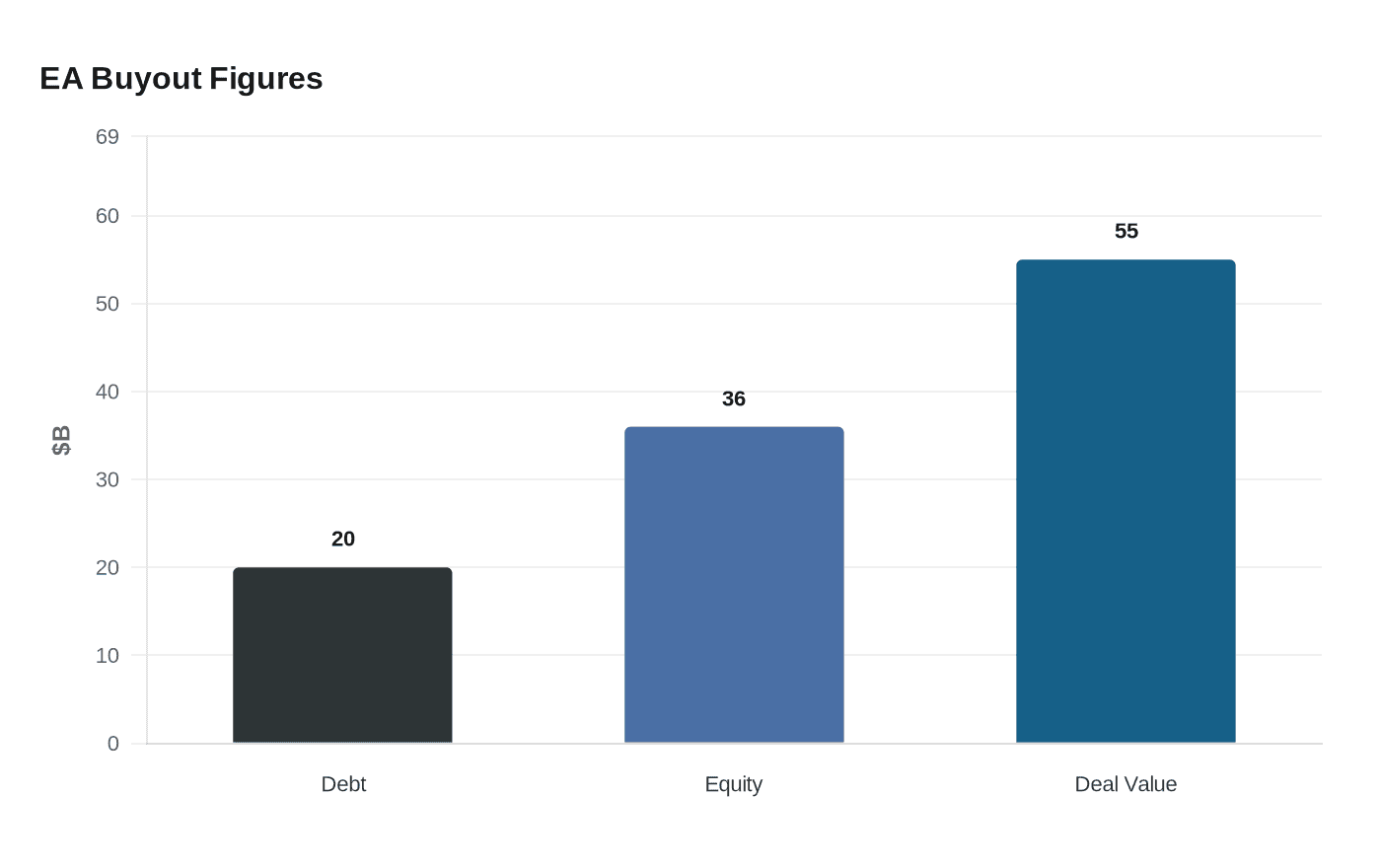
The structure matters. EA said the transaction is an all-cash deal valued at about $55 billion. Reporting on the financing described roughly $20 billion in committed debt from JPMorgan Chase, alongside about $36 billion in equity investment across the consortium and PIF rollover. Some coverage put the offer at $210 per share, roughly a 25% premium, and called it the largest private-equity buyout ever in gaming. For workers inside a company like Nintendo, that is not just Wall Street theater. Ownership shapes how fast a publisher hires, how much it spends on long-term development, and how willing it is to cut staff when margins tighten.
CWA president Claude Cummings Jr. said the deal could affect thousands of jobs, consumer data, labor competition and even AI technology, while raising boardroom conflicts tied to overlapping industry interests. That warning lands in a gaming sector where control over studios has become a workplace issue as much as a corporate one. When ownership is unsettled, so is the answer to a basic question for developers, QA testers and localization staff: who decides whether a franchise gets protected, pushed, outsourced or quietly reshaped?
Nintendo’s own labor profile shows why the EA fight resonates beyond Redwood City, California. Nintendo of America faced new labor complaints in December 2025 and January 2026 over alleged U.S. labor law violations involving Nintendo and Teksystems. Those filings followed Nintendo’s 2022 NLRB settlement with QA contractor Mackenzie Clifton, who alleged she was cut off after discussing unionization and working conditions. At the same time, Nintendo’s FY2025 annual report listed 8,205 consolidated employees, while reporting based on company data put Nintendo Japan’s average tenure at 14.4 years with turnover of 1.9 percent and Nintendo of America’s average tenure at 10 years.
That kind of stability is why ownership models matter. In November 2025, Nintendo president Shuntaro Furukawa said game development was one of the company’s main investment areas and that Nintendo would consider acquiring developer companies as part of future growth. For Nintendo teams in business development, legal, HR and studio-facing roles, the EA buyout is a reminder that strategy now sits at the intersection of labor confidence, acquisition appetite and franchise stewardship. If the owners change, the creative priorities often do too.
Know something we missed? Have a correction or additional information?
Submit a Tip