California fast-food wage hike boosts pay, not layoffs or prices
California’s $20 fast-food floor lifted pay about 11% without the layoffs or price spikes Pizza Hut operators warned about.
The biggest surprise in California’s $20 fast-food wage test was not a wave of cutbacks, but how little the floor changed day-to-day operations: wages and weekly earnings for covered workers rose about 11%, hours were not cut, and menu prices moved only by pennies. For Pizza Hut managers weighing staffing, delivery coverage and turnover, the finding undercut the argument that a higher wage automatically means fewer shifts on the schedule or a thinner crew on the line.
The policy came out of Assembly Bill 1228, which Gov. Gavin Newsom signed on Sept. 28, 2023, and which took effect on April 1, 2024. It created a Fast Food Council inside the state Department of Industrial Relations with authority to set an hourly minimum wage and write industry standards. Supporters said the law covered more than half a million workers. Operators warned it would force price hikes, service cuts or layoffs, and Pizza Hut franchise announcements in late 2023 became one of the clearest warning shots. Some California locations said they would lay off delivery drivers, and some would end in-house delivery altogether. One report said two franchise operators planned cuts affecting about 1,200 drivers and 841 drivers.
The Berkeley-backed analysis suggests those warnings were too simple. Using administrative wage and employment data, Glassdoor pay data and prices scraped from more than 2,000 restaurants, the study found that the wage floor raised pay without reducing employment. The researchers also found that labor made up only a small share of total restaurant spending, which helped explain why operators passed on only about half of the added cost to customers. That is the kind of math a shift manager feels quickly: not a dramatic sticker shock on the menu board, but a smaller, steadier adjustment that can be absorbed through scheduling, ordering and labor mix.
The human side was just as important. The analysis pointed to Jose de la Torre, a Los Angeles pizza delivery driver who had said his weekly hours were cut from 40 to 30 before the wage increase and who had once been living in his car. His experience gave the abstract debate a floor-level meaning for Pizza Hut drivers and crew members who live and die by weekly hours, tips and whether dispatch keeps delivery work in-house or hands it to DoorDash and Uber Eats. When pay rises without an obvious hit to hours, that changes how long a driver can stay on the road and whether a crew member sees a reason to stick around.
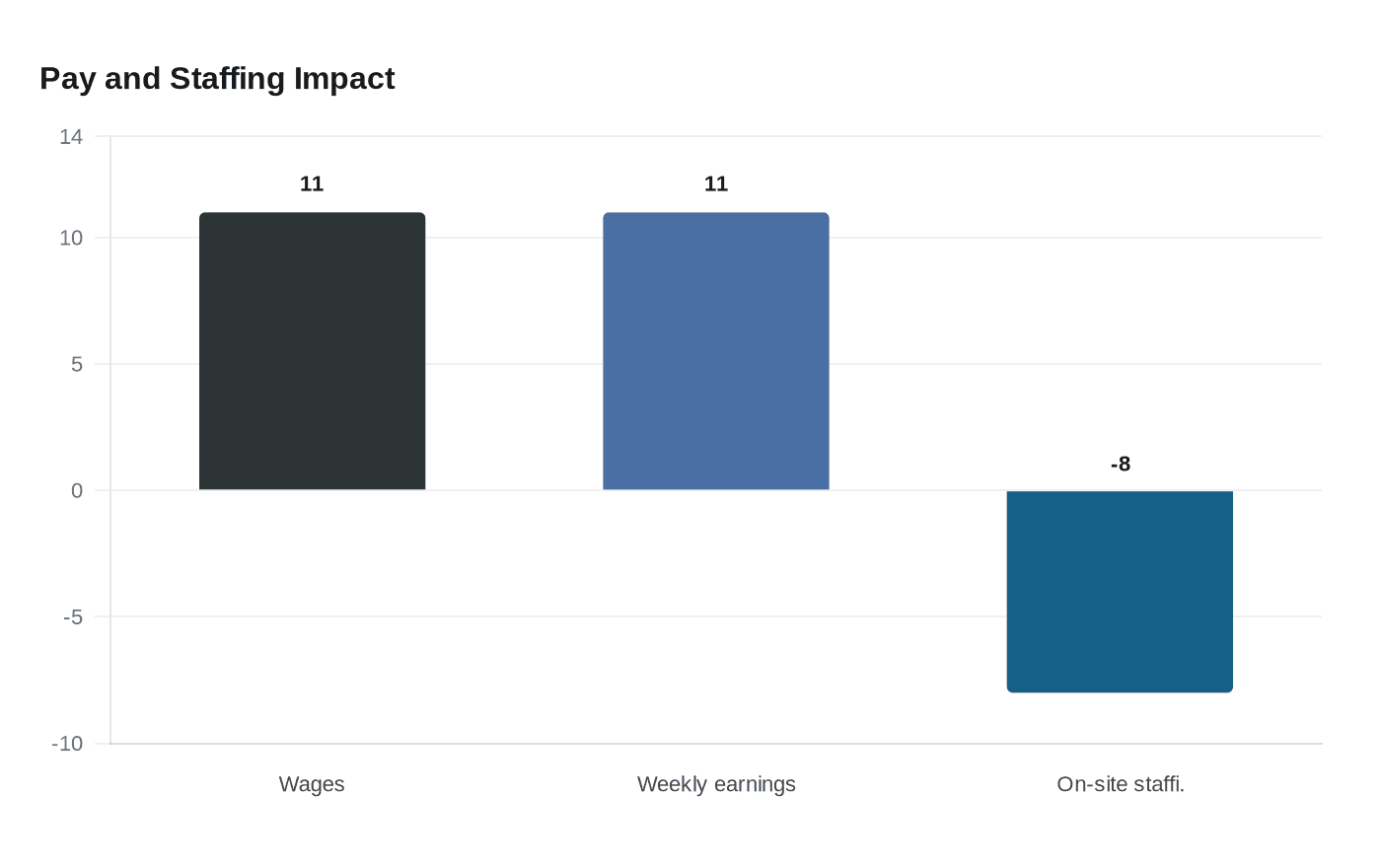
The broader picture was not fully settled. A later Northeastern summary of another study found an average 8% decrease in on-site staffing at California fast-food restaurants, suggesting some operators still trimmed coverage or leaned on leaner crews. At the same time, reporting in 2025 said the Fast Food Council had largely gone dormant and had barely discussed anything beyond another possible wage increase. For Pizza Hut, California remained a live test of whether higher mandated pay could improve retention and earnings without triggering the worst-case staffing and delivery cuts.
This article was produced by Prism’s automated news system from verified source data, official records, and press releases, then run through automated quality and moderation checks before publishing. The system is built and supervised by the people who set the standards it runs under. Read our full AI policy.
Did this article answer your question?