Colorado bill targets AI wage-setting, signals scrutiny for Pizza Hut managers
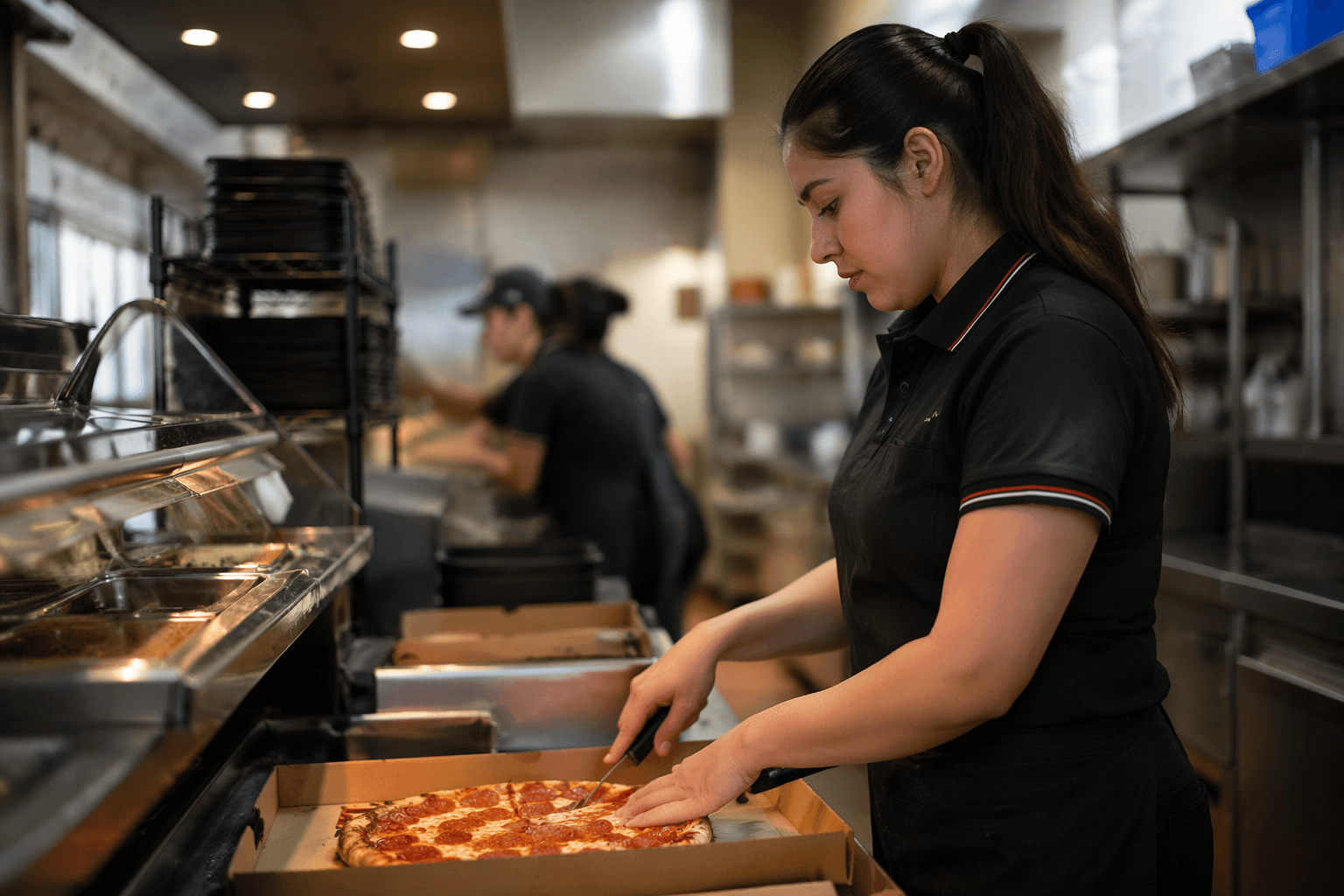
Colorado lawmakers moved to curb AI wage-setting, a warning shot for Pizza Hut operators using software to steer pay, hours, or labor costs.
Colorado’s move to restrict AI-based wage-setting landed as a direct warning for Pizza Hut managers who rely on software to decide who works, when they work, and how much labor a store can afford. House Bill 26-1210 would prohibit individualized price or wage setting based on surveillance data when that data is used as a substantial factor in an automated decision system, putting restaurant tech practices under a new legal lens.
The bill gives enforcement teeth. The Colorado attorney general or a district attorney could bring civil actions, and the bill file says civil penalties could reach up to $10,000 per violation in suits brought by the Department of Labor or a district attorney. It also would authorize the Colorado Department of Labor and Employment to write the rules that govern how the law is enforced. For operators, that means a scheduling or labor-management system that looks routine today could become evidence in a compliance dispute tomorrow.
The political fight around the measure is already familiar. Colorado lawmakers revived a proposal that failed the year before, and supporters argued the bill was needed because algorithms can hide discrimination. Business groups pushed back, saying it overreached and interfered with legitimate data-driven practices. That clash matters in restaurants, where managers increasingly use digital tools to tighten labor costs and match staffing to demand in real time.
For Pizza Hut workers, the stakes are practical. If a franchisee uses software to analyze customer behavior, browsing patterns, or other surveillance data to lower labor costs, the next question is no longer just whether the schedule is efficient. It is whether the process can be explained in plain English, documented, and defended if regulators ask how wages or hours were set. That shifts pressure onto store managers to keep cleaner records, show human review, and make sure pay decisions are not buried inside a black box.
The issue is especially relevant inside Yum Brands, which launched Byte by Yum in February 2025 as an AI-powered platform for its technology tools. Yum said it had more than 61,000 restaurants across more than 155 countries and territories, and later reporting said Byte houses AI-driven products for mobile app ordering, point-of-sale, inventory, and labor management. Yum also partnered with Nvidia in 2025 to accelerate AI across its global restaurant system, underscoring how deeply Pizza Hut sits inside a data-heavy corporate stack.
That technology push has long run alongside labor concerns at Pizza Hut. In 2022, Pizza Hut COO Chequan Lewis said restaurant labor should be treated as a human problem with a personalized solution and emphasized belonging and pathways for frontline staff. Colorado’s bill suggests that the next phase of restaurant technology will be judged not only on efficiency, but on whether it treats wages, hours, and pricing as fair.
This article was produced by Prism’s automated news system from verified source data, official records, and press releases, then run through automated quality and moderation checks before publishing. The system is built and supervised by the people who set the standards it runs under. Read our full AI policy.
Did this article answer your question?