Latitude Food Group names James O’Reilly CEO to drive franchise growth
James O’Reilly takes over Latitude Food Group as the parent pushes franchising, a move likely to sharpen labor, speed and unit-economics pressure in its stores.
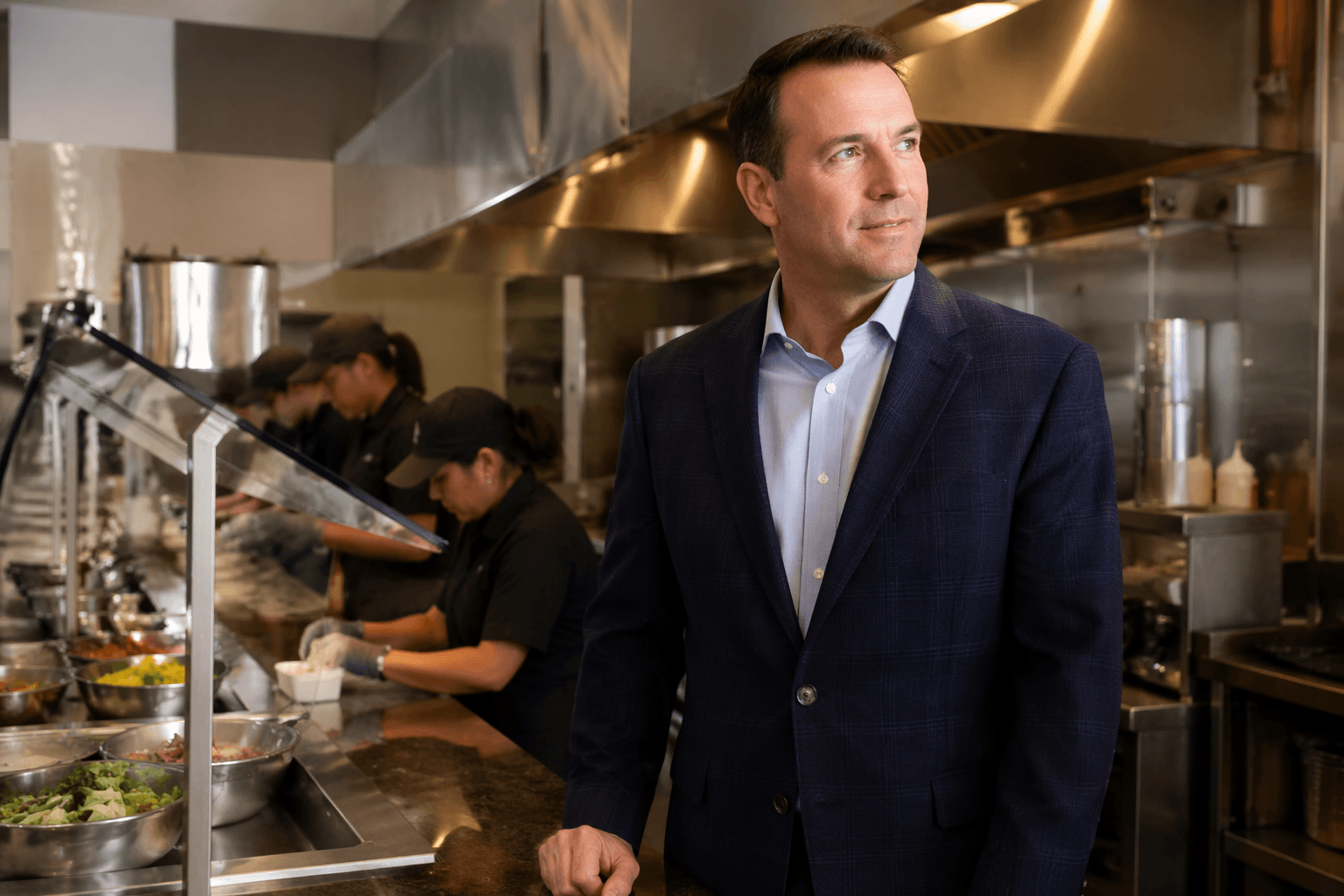
James O’Reilly has taken over as chief executive of Latitude Food Group, the parent of &pizza and Tijuana Flats, as the young holding company tries to turn two battered restaurant brands into a growth platform. The hire lands about eight months after Latitude was formed, and it puts a veteran operator with more than three decades in the business in charge of a portfolio that is still trying to prove it can expand without adding more strain to store-level operations.
O’Reilly’s background includes leadership roles at Ascent Hospitality Management, Smokey Bones, Long John Silver’s, Sonic Drive-In, Einstein Noah Restaurant Group and Yum Brands. That kind of résumé usually signals a turnaround job, not a quiet stewardship role. For restaurant managers, that often means closer scrutiny of labor targets, menu complexity, speed of service and the math behind each unit’s profit.
Latitude was created in November 2025, when &pizza bought the 95-unit Tijuana Flats. At the time, &pizza had about 45 units of its own. The company said the new holding company would use shared infrastructure, technology and purchasing power to support expansion, with Tijuana Flats set to grow through a mix of company-owned and franchised locations beginning in Florida. Latitude later said it could add other concepts to the portfolio.
The timing matters because both brands were already under pressure. &pizza finished 2025 with $53.6 million in sales, down 10.5% from the prior year, while its footprint shrank 6.5%. Tijuana Flats had already been through a painful reset, filing Chapter 11 in April 2024 after closing 40 restaurants and defaulting on $20 million in Truist debt. It emerged from bankruptcy in March 2025 with secured debt cut to $16 million.
The chain’s sales history shows how hard the recovery has been. Tijuana Flats ended 2023 with $134 million in sales, down 6.6% year over year. Yet the brand has recently relaunched franchising, updated its franchise disclosure document and said it is seeing strong interest from experienced operators. It also said sales rose 54% on Cinco de Mayo 2025 compared with the year before, and that the holiday produced the highest single day of catering and loyalty sales in company history.
For Pizza Hut managers and franchise operators, that is the familiar playbook. Growth stories built on franchising rarely stay at the corporate level for long. They filter down into staffing plans, delivery timing, order accuracy, promotional pressure and the daily push to do more with a tighter labor pool. When a restaurant company starts talking about shared systems and unit economics, store teams usually feel it first.
This article was produced by Prism’s automated news system from verified source data, official records, and press releases, then run through automated quality and moderation checks before publishing. The system is built and supervised by the people who set the standards it runs under. Read our full AI policy.
Did this article answer your question?