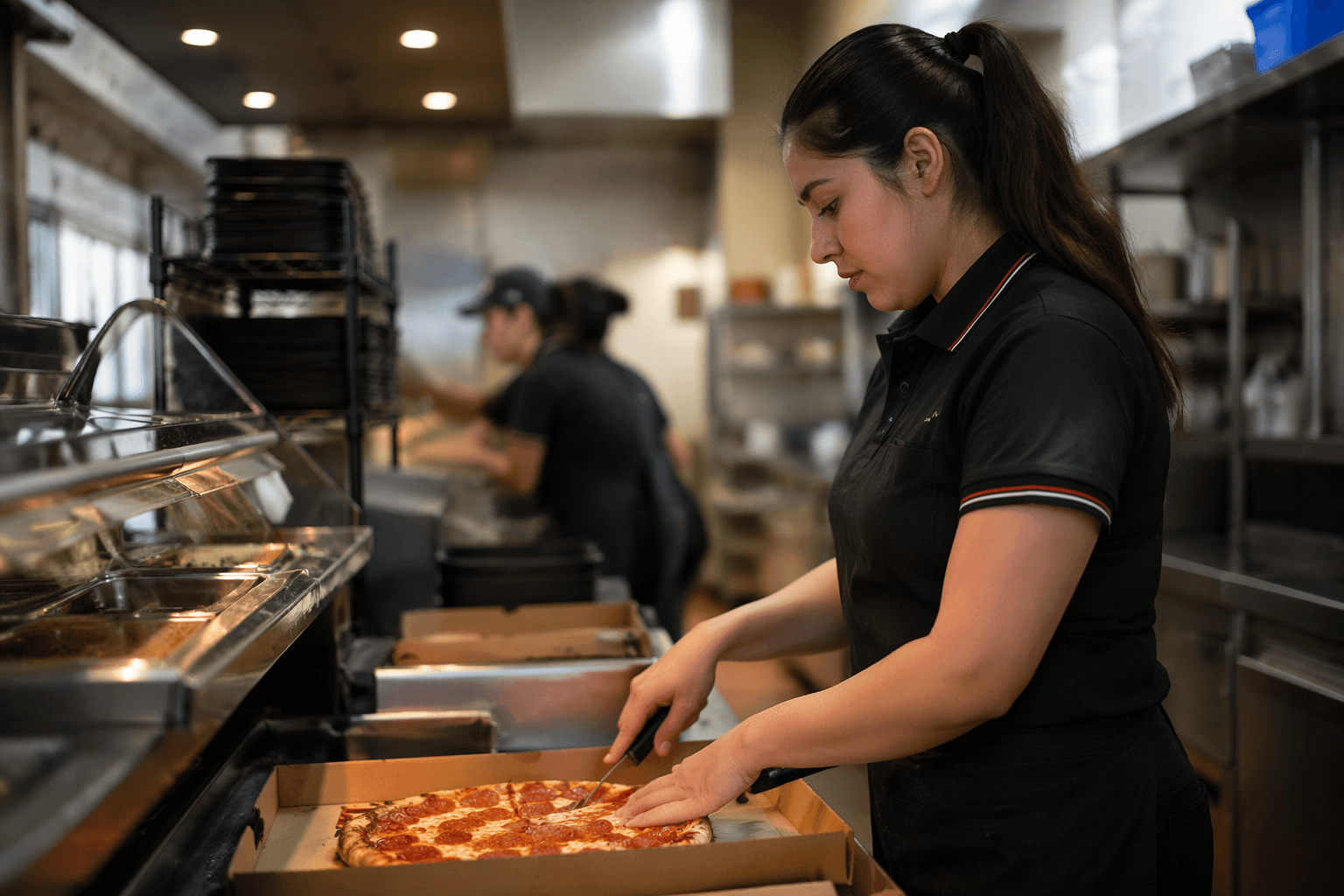
OSHA warns Pizza Hut teen training must prioritize restaurant safety
Teen Pizza Hut hires are most vulnerable before the rush, when a hot pan, slick floor or bad delivery route can turn weak training into an injury.
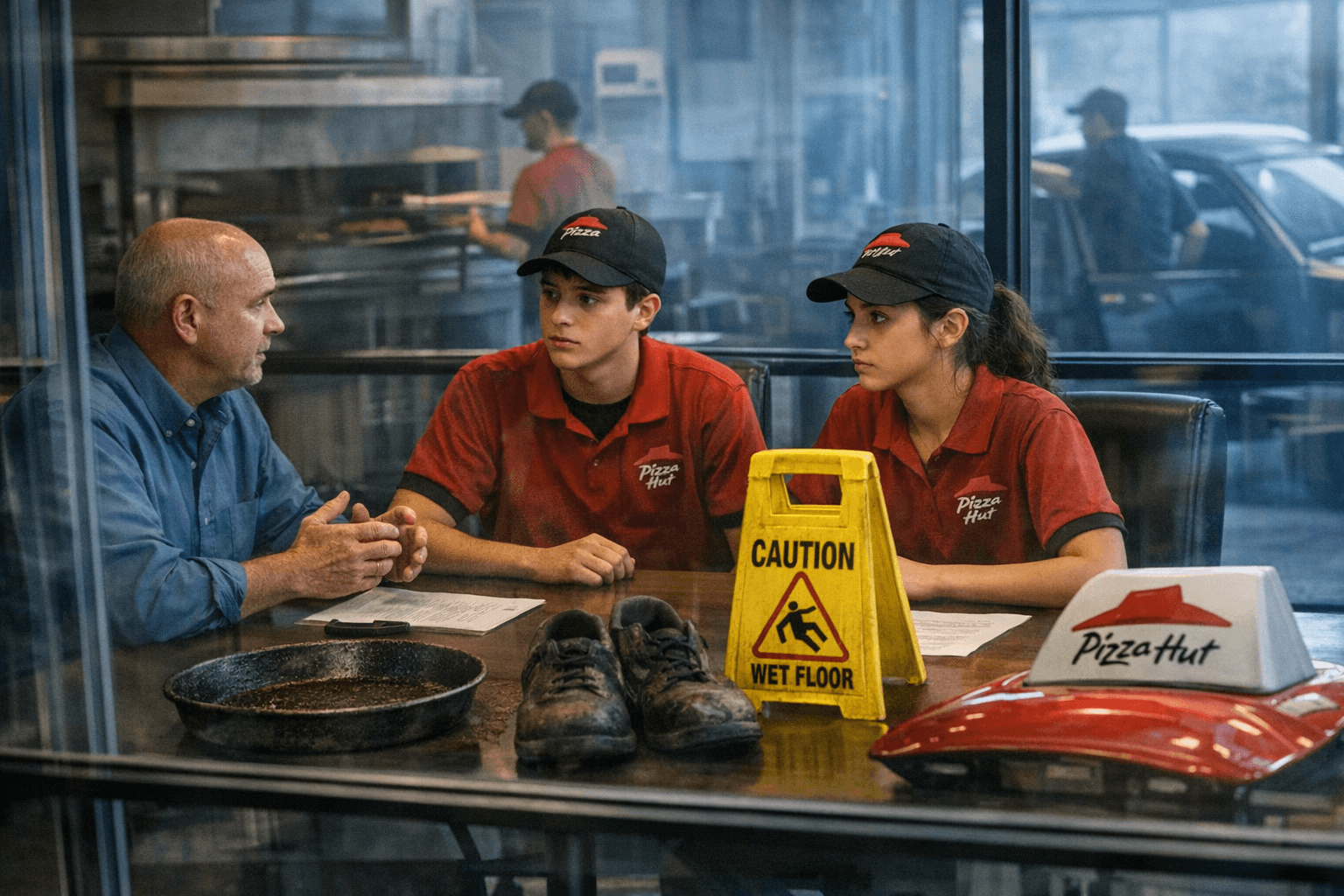
The first week on the job is when a Pizza Hut shift can go wrong fast. A new hire who does not yet know the pace of the make line, the weight of a hot pan, or how quickly a delivery route can turn risky is the worker most likely to get burned, slip, cut, or panic when the dinner rush hits.
That is the warning from the Occupational Safety and Health Administration, which says young workers suffer a disproportionate share of injuries and fatalities, especially in their first year on the job. OSHA also says the service industry ranks highest among U.S. industries for injury among workers ages 16 to 19, a reminder that restaurants are not low-risk workplaces just because the job is familiar.
OSHA’s Young Worker Safety in Restaurants eTool covers the exact kind of hazards Pizza Hut crews face every day: cooking, delivery, drive-thru, food prep, serving and cleanup. The site map is blunt about the risks, listing burns and scalds, cuts, electrical hazards, hazardous chemicals, slips, trips and falls, strains and sprains, fire hazards, heat hazards, machine guarding, noise, prolonged standing and workplace violence. In a pizza store, those dangers are easy to miss until someone is carrying a hot box through a crowded kitchen or turning too fast on a wet floor.
The agency says restaurants and other eating and drinking businesses employ 11.6 million people in the United States, and nearly 30% of those workers are under 20. That makes the safety problem feel less like a side issue and more like a core staffing issue, especially in stores that lean on teens, first-job workers and part-time crews to cover peak hours. OSHA says employers must provide appropriate protective equipment, including gloves, aprons and foot protection, and must train young workers exposed to hazardous materials under the Hazard Communication Standard.
For Pizza Hut managers, the practical answer starts before the doors open. A strong first-week checklist should spell out what to do if a pizza peel slips, how to handle hot boxes, how to move through a crowded make line, and when a delivery should be reassigned because weather or fatigue makes the route unsafe. OSHA also says workers under 18 may face limits on the hours they work, the jobs they do and the equipment they can use, so shift leaders need to know the rules before the rush starts, not after an accident.
The stakes are not theoretical. OSHA said 22 youths under 18 died from work-related injuries in 2017, and 27,070 were sickened or injured. The U.S. Bureau of Labor Statistics later reported 2.5 million private-industry injury and illness cases in 2024, along with 5,070 fatal work injuries. Yum! Brands said in April 2020 it had expanded health and safety measures across KFC, Pizza Hut, Taco Bell and The Habit Burger Grill, showing the company can move quickly when it treats safety as an operational priority. For Pizza Hut, that same discipline matters most when a new hire is still learning where the danger is.
This article was produced by Prism’s automated news system from verified source data, official records, and press releases, then run through automated quality and moderation checks before publishing. The system is built and supervised by the people who set the standards it runs under. Read our full AI policy.
Did this article answer your question?