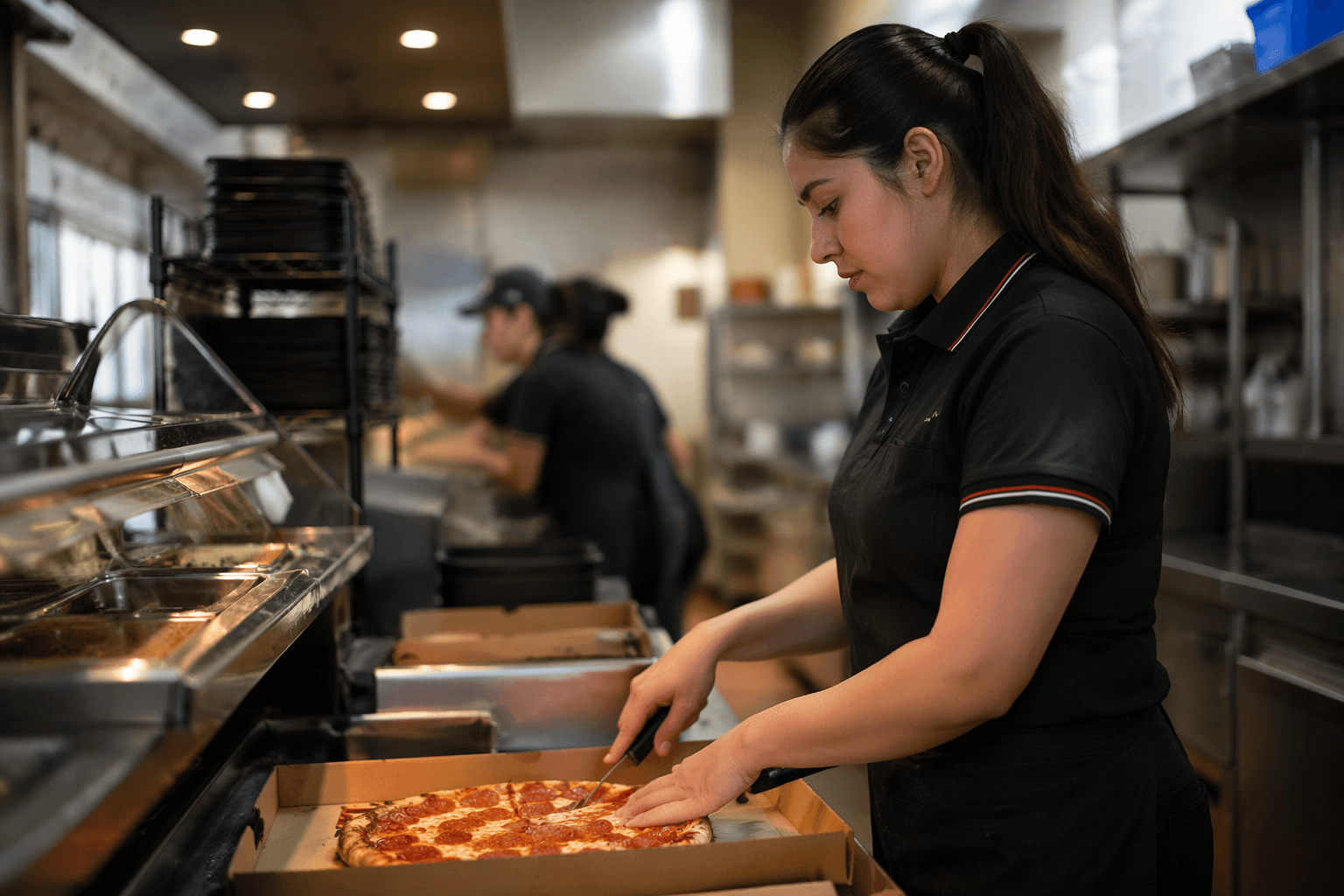
Pizza Hut crews still face staffing gaps despite labor gains
Pizza Hut stores still lose time to thin shifts, even as restaurant hiring improves. One missing driver or prep cook can still slow tickets, skip breaks, and strain managers.

One missing driver or prep cook can still ripple through a Pizza Hut store, turning a normal rush into longer ticket times, skipped breaks, and a manager patching holes in the schedule.
That is the reality behind the latest National Restaurant Association and Workday labor data. Even as restaurant staffing has improved since the crisis years, 62% of operators said recruiting and retaining staff remained a very or fairly significant challenge, and 22% still said they did not have enough workers to meet consumer demand. That was better than 32% in 2024 and far below 78% in 2021, but it still meant thousands of shifts across the country were running short.
The industry’s scale makes the gap harder to ignore. The National Restaurant Association said restaurants were expected to reach $1.5 trillion in sales and employ 15.9 million people by the end of 2025, or roughly one in 10 U.S. workers. The U.S. Bureau of Labor Statistics defines accommodation and food services as the sector that prepares meals, snacks and beverages for immediate consumption, the core business for pizza chains like Pizza Hut. Leisure and hospitality employment had already returned to its pre-pandemic February 2020 level by March 2024, but the labor market inside individual stores has not felt fully repaired.
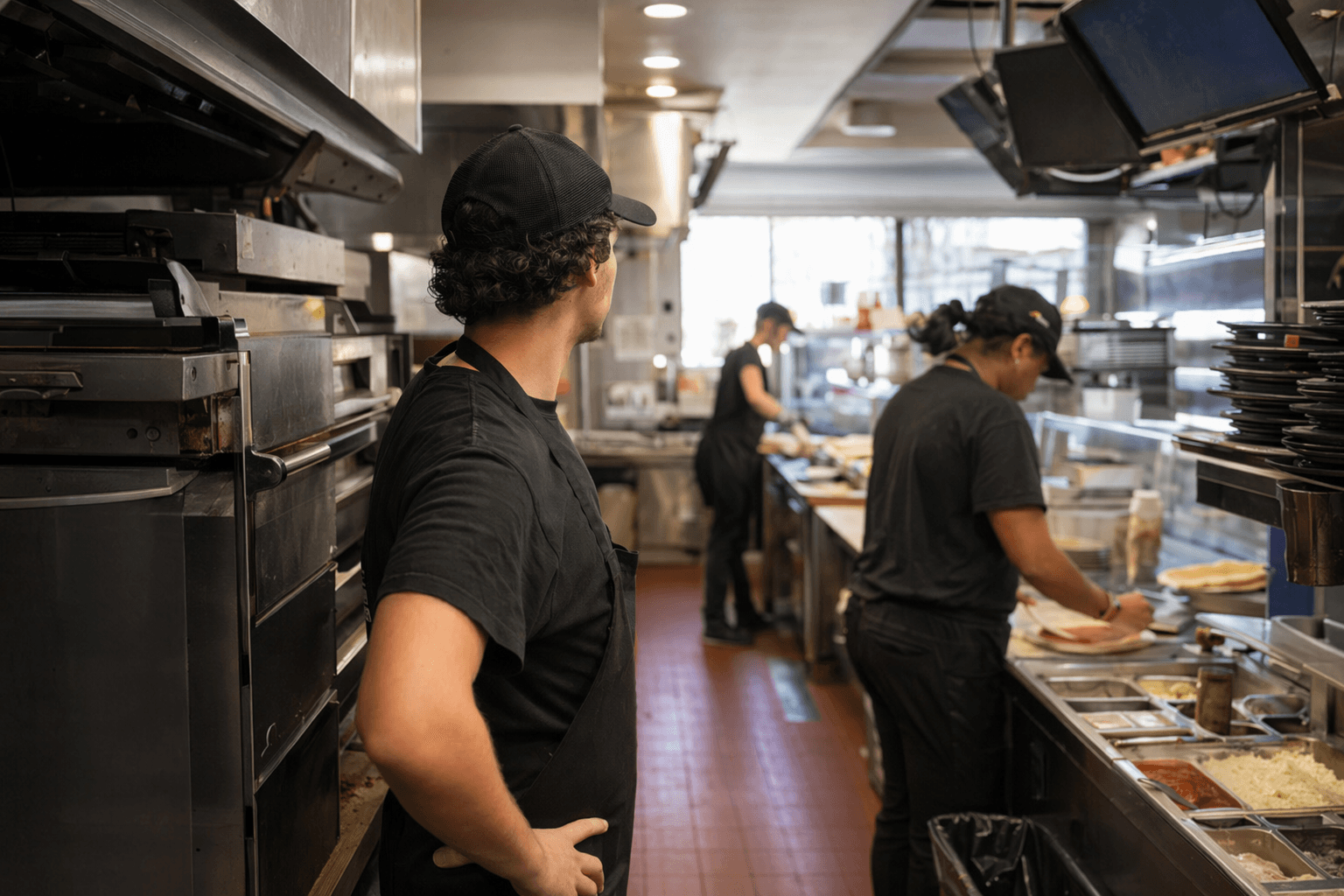
For Pizza Hut crews, understaffing shows up in the grind of the shift. Kitchen workers are asked to multitask with less margin for error. Drivers wait longer for dispatch and spend more time covering in-store work when the team is short. Managers end up filling prep, expo and delivery gaps themselves, which can slow service and make it harder to keep delivery promises that customers expect to hold.
Pizza Hut has dealt with that pressure before. The chain turned to third-party delivery services after a severe driver shortage left it unable to make many deliveries, leaning on DoorDash and Uber Eats when its own driver bench was too thin. That workaround solved one problem, but it also showed how quickly a staffing gap can change the economics of a night shift.
The stakes are rising beyond the schedule board. Pizza Hut planned to close 250 U.S. restaurants as part of a Yum Brands strategy review, a reminder that labor, operations and brand performance are tied together. A franchisee that owned more than 300 Pizza Hut locations also agreed to pay $4.75 million to resolve delivery-driver wage claims, underscoring the cost of getting labor wrong.
The newest labor numbers point to a sector that is healthier than it was, but still not normal. For Pizza Hut, that means staffing is no longer just an HR problem. It is a service problem, a safety problem and a retention problem, and every short shift makes the next one harder to cover.
This article was produced by Prism’s automated news system from verified source data, official records, and press releases, then run through automated quality and moderation checks before publishing. The system is built and supervised by the people who set the standards it runs under. Read our full AI policy.
Did this article answer your question?