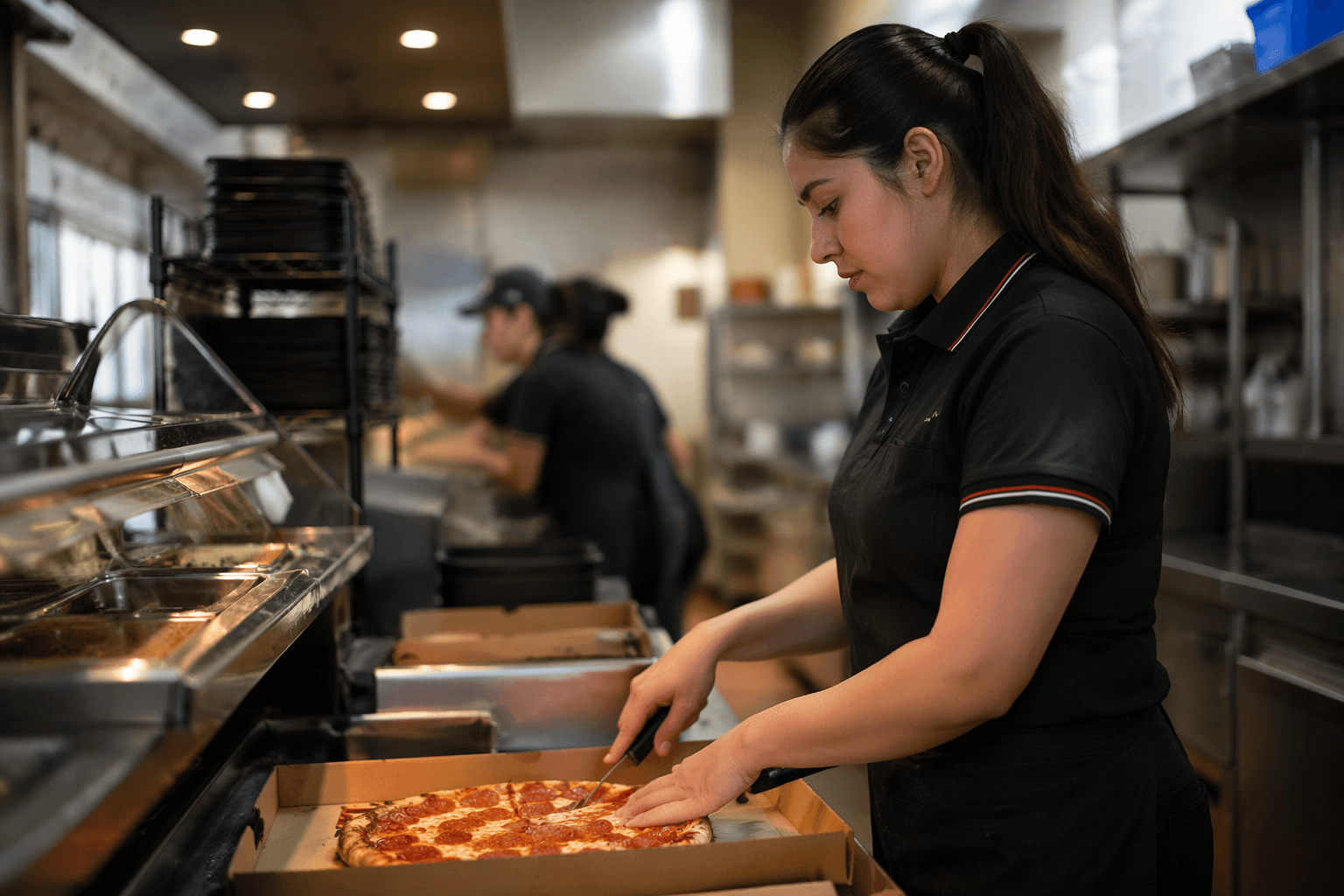
Pizza Hut Faces Fierce Competition as U.S. Pizza Market Stalls
Pizza Hut is heading into 2026 with more rivals, weaker sales, and 250 U.S. closures ahead, tightening pressure on staffing, schedules, and manager targets.
A crowded market with little room for slack
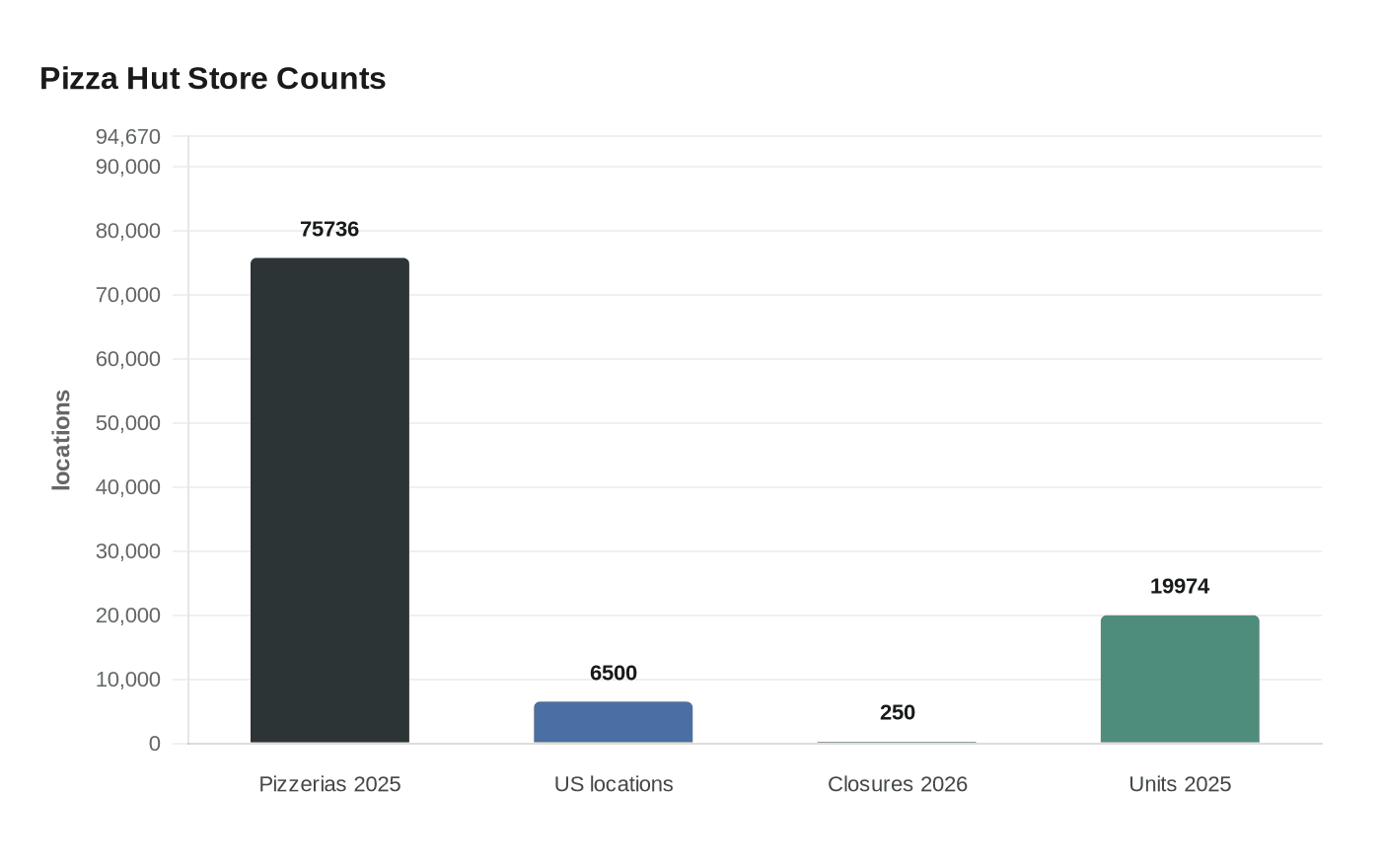
The U.S. pizza business is still huge, but for Pizza Hut that size now reads more like pressure than opportunity. The projected number of pizzerias rose to 75,736 in 2025 while pizza restaurant revenue was estimated to dip about 0.3% to $49.5 billion, which is a warning sign for every store trying to hold margin, keep labor steady, and hit delivery times without burning out the crew.
What matters inside the restaurant is not just that the market is crowded, but that the crowd is still growing. The top four pizza companies stayed the same, with Domino’s, Pizza Hut, Little Caesars, and Papa Johns still leading the category, while independents still make up roughly 45% to 60% of the market. That means a Pizza Hut manager is competing not only against the next chain over, but also against local independents that can move fast on price, product, and neighborhood loyalty.
For crews, that kind of pressure usually shows up as a busier promo calendar and a tighter pace on the line. For drivers, it means more competition for orders and more insistence that deliveries leave on time, because when customers have a store or app five minutes away, a slow run or a missed item can send the next ticket somewhere else.
What the strategic review says about the brand
Pizza Hut is not just fighting a competitive market. Its parent, Yum! Brands, launched a formal strategic review of the chain on November 4, 2025 and said it would explore a range of options, with chief executive Chris Turner saying the brand may be better executed outside Yum! Brands. The company also kept Goldman Sachs and Barclays as advisers and said there was no deadline and no guaranteed outcome.
That matters for workers because a strategic review is never just a boardroom exercise when the brand is already under sales pressure. It usually means more scrutiny of store performance, more attention to unit economics, and less patience for locations that are dragging on results. Even if the language sounds abstract, the effect at store level is concrete: managers are asked to do more with less while every labor hour gets watched more closely.
Yum! has tried to frame the brand’s strengths around consumer loyalty, its global reach, and its technology platform. But the gap between that corporate framing and the store reality is hard to ignore when the company itself is signaling that major changes may be necessary.
Closures will change routes, shifts, and store leadership
The most direct sign of strain is the plan to close 250 underperforming U.S. Pizza Hut locations in the first half of 2026. The closures are part of Hut Forward, a program that also includes marketing upgrades, technology modernization, and changes to franchise agreements. Pizza Hut ended 2024 with just over 6,500 domestic locations, so the planned cuts amount to less than 4% of the U.S. system.
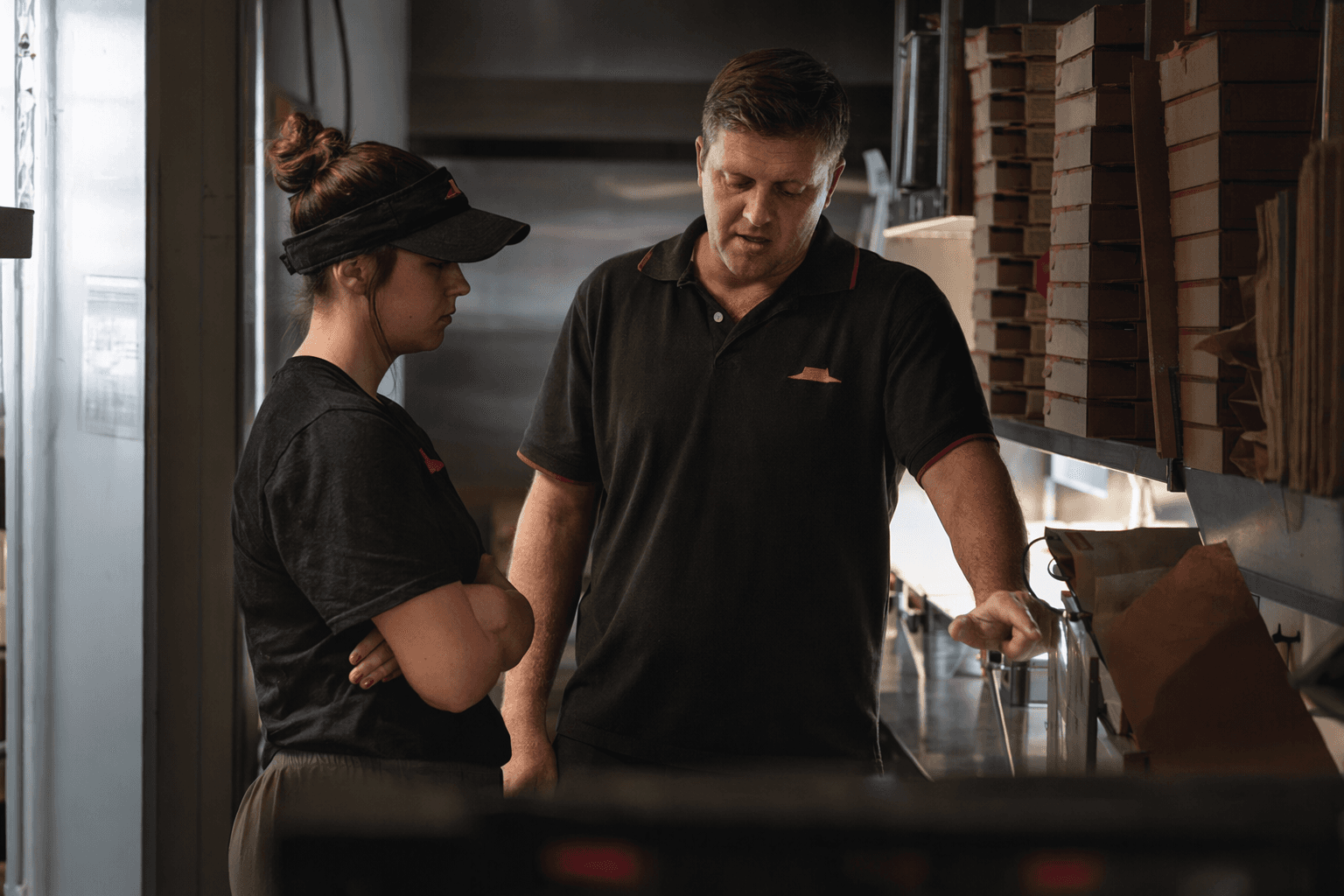
For employees, that kind of trimming can ripple well beyond the shuttered stores. Some teams will be displaced, some hours will be redistributed, and nearby restaurants may absorb more volume without gaining much breathing room. That is where the pressure becomes operational: managers have to stretch fewer people across more tickets, keep the labor model in line, and still protect service scores when the rush hits.
The fact that this is happening as part of a broader reset tells you the company is not just pruning weak units. It is trying to rework how the brand runs, which means performance targets, staffing expectations, and franchise oversight are all likely to become stricter, not looser, for the stores that remain open.
The sales picture is already soft
The numbers behind the closures show why the company is moving. Pizza Hut’s global system sales fell to $3.47 billion in full-year 2025 from $3.61 billion in 2024, and its global unit count slipped to 19,974 from 20,225. Global same-store sales declined 1% in 2025 after falling 4% in 2024, and U.S. same-store sales were down 3% in the fourth quarter of 2025.
Those are not just investor figures. They are the kind of results that shape how much breathing room a store gets on labor, how aggressive the promotional calendar becomes, and how hard managers are pushed to squeeze more volume out of the same shift. In a flat-to-down environment, the easiest move for executives is to lean on value deals and digital traffic; the harder part is making sure the kitchen and delivery side can absorb it without service breaking down.
Longer-term data makes the slowdown look even more structural. Reporting based on industry data says Pizza Hut’s domestic system sales have declined nearly 2% over the past 10 years and its domestic footprint is down nearly 17%. That is a shrinking base, not just a bad quarter.
Customer satisfaction and digital execution now matter more
The customer side is just as tight. The American Customer Satisfaction Index put quick-service restaurant satisfaction at 79 on a 100-point scale, and Pizza Hut and Papa Johns both scored 79 in the pizza chain category, ahead of Domino’s at 78. In a business this close, a one-point edge does not settle the market, but it does show how small the gaps are between the major chains.
That is why technology is now part of the labor story, not separate from it. Yum! said in its 2024 annual report that it generated more than $30 billion in digital sales and that more than half of system sales came through digital channels. It also said Pizza Hut U.S. was already operating on Byte by Yum!, the company’s digital ordering platform. More digital sales can make ordering easier, but they also create a different kind of pressure on store teams: faster order flow, tighter timing expectations, and less room for a sloppy handoff between the screen and the make line.
For drivers, digital growth means more volume can come through the system without a customer ever talking to the store, which raises the bar on accuracy and speed. For kitchen crews, it means more tickets arrive in bursts, often tied to promotions or app traffic, and managers have to keep the line calm while the platform keeps feeding it.
What 2026 looks like on the floor
The broad industry picture is the one that should concern Pizza Hut workers most. The market is still large, but it is crowded, flat in revenue, and packed with both national chains and a deep independent base that can win customers on speed or value. Against that backdrop, a strategic review, a 250-store closure plan, and a heavier digital push all point in the same direction: tighter operations, tougher labor discipline, and less patience for stores that cannot hit the numbers.
For crews, that usually means the pace does not slow down even when the headcount does. For managers, it means every schedule, every delivery window, and every labor decision carries more weight. And for Pizza Hut as a brand, 2026 is shaping up as a year when execution inside the store matters more than any corporate slogan about technology or scale.
This article was produced by Prism’s automated news system from verified source data, official records, and press releases, then run through automated quality and moderation checks before publishing. The system is built and supervised by the people who set the standards it runs under. Read our full AI policy.
Did this article answer your question?