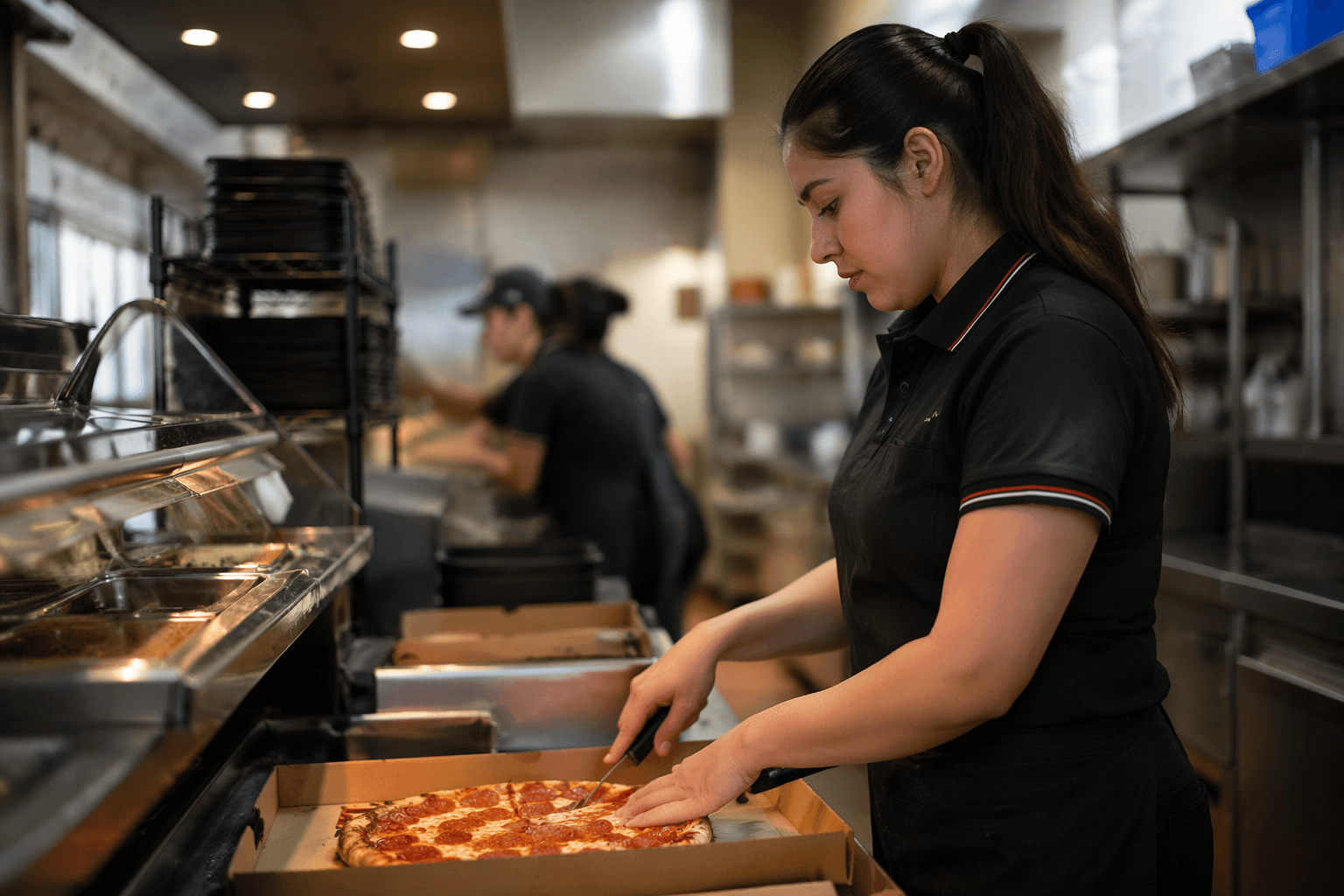
Pizza Hut's shift from dine-in failed to spark growth
Pizza Hut traded table service for speed, but the labor shift left stores leaner and franchisees weaker, not growing. The old red roofs faded faster than sales improved.

Pizza Hut’s pivot was supposed to modernize the brand. Instead, it exposed how much of the chain’s labor model had been built for a different era.
The company’s move away from full service was not a quick rebrand or a cosmetic cleanup. It was a structural shift away from the sit-down format that made Pizza Hut famous, and it changed everything from staffing to scheduling to the way local operators think about profit. For workers, that meant fewer waitstaff jobs in many markets, more pressure on kitchen speed, and a heavier reliance on drivers and dispatch to keep orders moving.
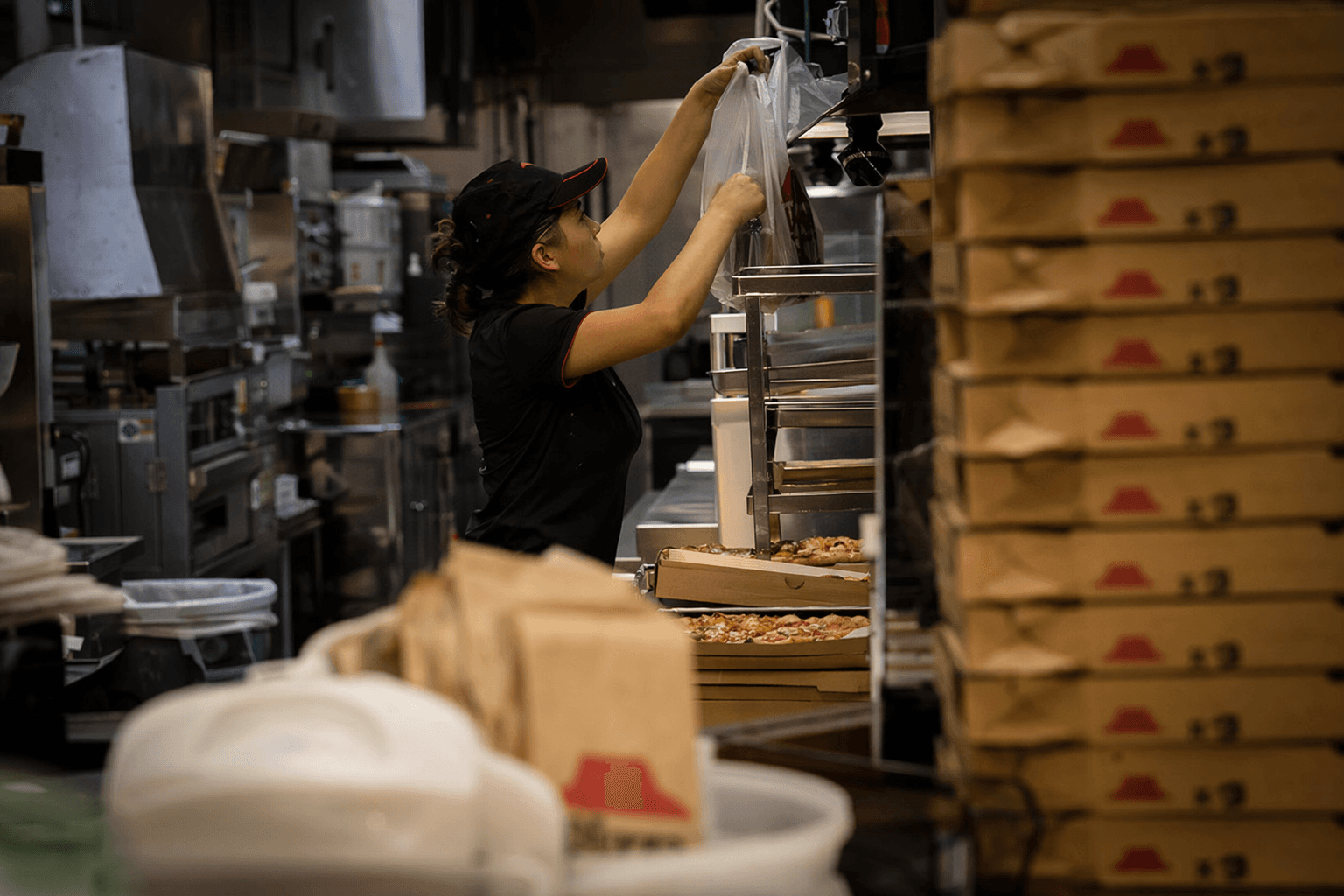
How the red-roof era shaped the old labor model
Pizza Hut’s distinctive building style was formalized in the late 1960s and early 1970s as a standardized sit-down restaurant format, and the red roof became part of the brand image in 1971. That old model was built around a different kind of shift: more dining room coverage, more table service, and more labor tied to the dine-in experience. It was also a model that gave managers more moving parts to coordinate, from host stand to server sections to kitchen tickets.
The brand still likes to remind people that it was the first to bring pan pizza to America and the first to deliver pizza in space. That history matters because it shows Pizza Hut was never static. But the company’s later push away from full service marked a deeper operational rewrite, not just another menu innovation. It changed what a store was supposed to do and who it needed to do it.
What changed for crews inside the store
By 2018, dine-in accounted for only about 10% of Pizza Hut’s U.S. sales, even though about half of its domestic locations still had wait staff. That mismatch is the heart of the labor story. You had stores carrying the staffing logic of a dining room business while most customer demand had already moved toward delivery and carryout.
For kitchen crews, the shift raised the value of speed and consistency. A store built for dine-in can tolerate a slower rhythm, but a modern delivery-heavy operation cannot. Orders stack up differently, timing becomes tighter, and the people on the line have less room for error. For drivers, the same change meant a bigger role in the business, because the store’s success depended more on how fast food left the kitchen and reached the customer.
The transition also left managers with awkward tradeoffs. A location might still have the footprint, labor rules, and legacy expectations of a full-service restaurant, while the business inside it increasingly behaved like a takeout and delivery shop. That is not just a branding problem. It is a scheduling problem, a labor-cost problem, and a training problem.
Why the model failed to create the growth Pizza Hut wanted
Restaurant Business argued in February 2026 that Pizza Hut’s shift away from full service was the biggest service-model change in restaurant history, but that it did not deliver the growth the company hoped for. The chain stagnated over the past 20 years, and a typical Pizza Hut location now generates less revenue than comparable pizza chains. In other words, the company changed how it operates, but the payoff never fully arrived.
That matters for employees because growth drives hours, raises, promotions, remodels, and new store openings. When a brand stalls, operators usually respond by squeezing labor, tightening schedules, and expecting the same crew to cover more ground. The company’s pivot was meant to match consumer demand, but it also left a lot of legacy stores stuck between old payroll structures and new expectations.
Another piece of the problem was the asset base. Pizza Hut had many units built for dine-in, and by 2018 delivery and carryout were outperforming dine-in by 7 to 10 points. That meant the company was carrying restaurants designed for a business that no longer mattered nearly as much. Even after the shift, about 40% of locations were still built for the old dine-in model, which helps explain why the turnaround was so hard.
The closure wave showed how costly the transition had become
In 2019, Yum! Brands said Pizza Hut would close as many as 500 older dine-in restaurants in the U.S. over two years and replace them with modern delivery and carryout units. Trade reporting at the time put the U.S. system at about 6,100 traditional restaurants and about 1,350 express units. That is a major operational reset, and it was also a blunt admission that the old footprint could not carry the chain forward.
For workers, closures usually mean more than one store disappearing. They can mean reduced hours in nearby locations, transfers that disrupt schedules, and a management team trying to maintain service while the system gets reshaped around it. For franchisees, closures can be the only way to stop losses from piling up.
NPC International made the strain impossible to ignore
The biggest warning sign came from NPC International, once the largest Pizza Hut franchisee. When it filed for Chapter 11 bankruptcy in 2020, NPC operated more than 1,227 Pizza Hut units, or about 16% of the U.S. system. That scale made its distress impossible to treat as an isolated operator problem. It was a systemwide stress test.
NPC said it planned to close up to 300 Pizza Hut locations as part of its restructuring. In 2021, a bankruptcy court approved the $801 million sale of NPC’s Pizza Hut and Wendy’s restaurants, and Flynn Restaurant Group took over 925 Pizza Hut locations. For managers and crew, that kind of ownership shuffle often means new leadership, new expectations, and another round of adjustments just to keep stores stable.
The lesson for today’s stores
David Gibbs, Yum! Brands’ chief executive, said the chain needed to modernize its asset base because dine-in stores were at a competitive disadvantage for delivery. That is the real story behind Pizza Hut’s shift: it was an attempt to align the restaurant with how people actually buy pizza now. The problem is that the labor model changed faster than the business could grow.
Pizza Hut’s history still matters, but only as a reminder of how much was lost in the transition. The red roof defined a generation of restaurants. The current business is built around a different promise, one that asks fewer people to do more work, faster, in stores that were often built for a service model that no longer exists.
This article was produced by Prism’s automated news system from verified source data, official records, and press releases, then run through automated quality and moderation checks before publishing. The system is built and supervised by the people who set the standards it runs under. Read our full AI policy.
Did this article answer your question?