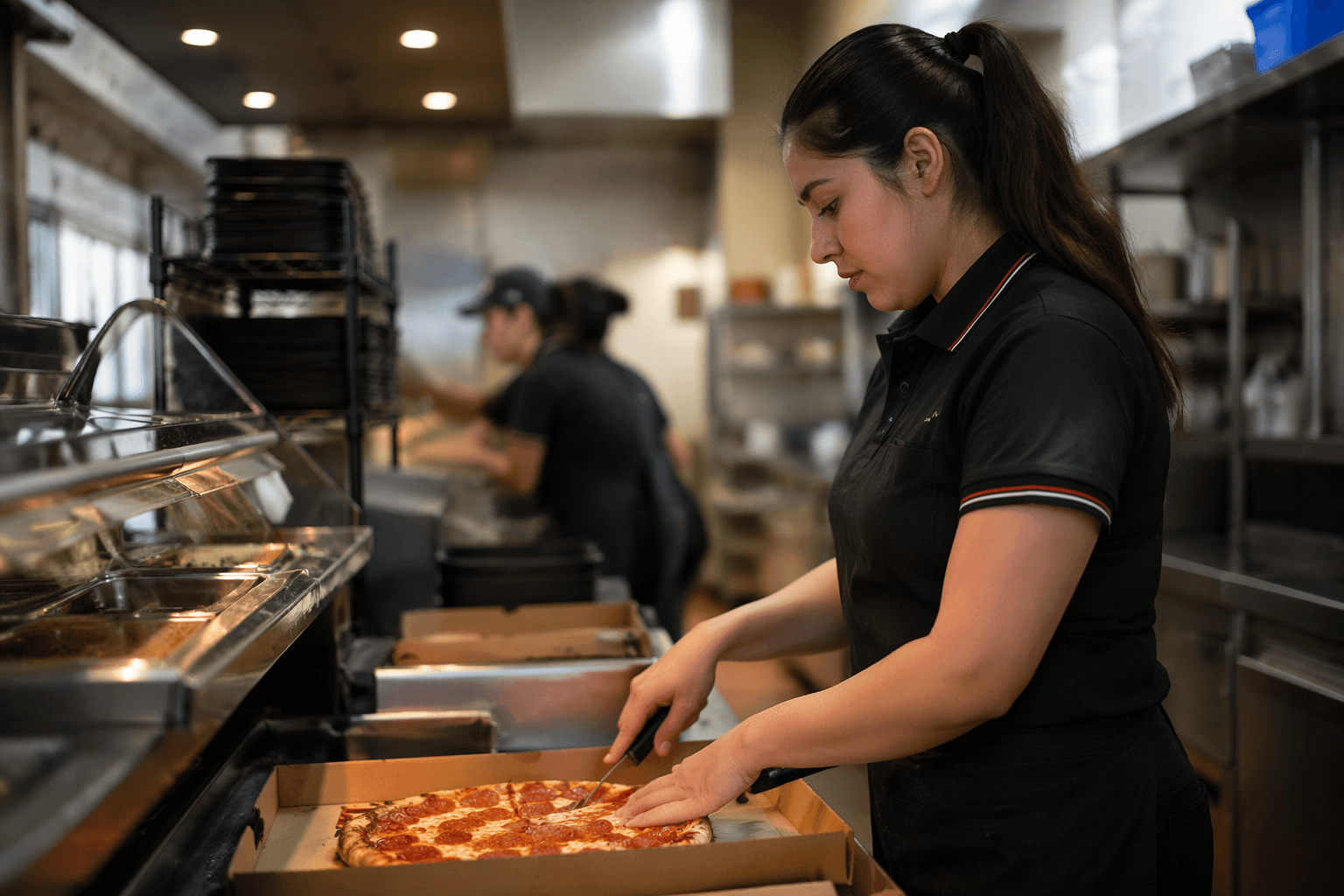
Pizza Hut highlights clear career paths to keep restaurant workers engaged
Pizza Hut's best retention tool may be the simplest one: make the next rung obvious, and workers are more likely to stay long enough to climb it.
The retention problem hiding in plain sight
The smartest lesson in a recent Nation’s Restaurant News column is not about pay, perks, or slogans. It is about visibility. A hospitality professional described meeting an operator in Finland with unusually low turnover and a stubborn belief that everyone in the restaurant should be able to see a path forward, and that is exactly the point Pizza Hut has to make work for its own crews.
In restaurants, where turnover is high and many jobs are treated as temporary, vague talk about “career growth” does not keep people around. What does keep them is a ladder they can picture from the make table, the driver seat, or the expo line. At Pizza Hut, that matters because the brand’s labor model is built on entry-level roles, first jobs, and local managers who need people to stay long enough to learn the business.
What Pizza Hut is already signaling
Pizza Hut’s own careers messaging already points in the right direction. The company says it has a history of people fulfilling career paths, including cooks going to corporate offices and drivers becoming franchise owners. That is more than a recruiting line. It is a statement that frontline work is supposed to lead somewhere, not just fill a shift until something better comes along.
The brand also breaks its restaurant workforce into friendly Team Members, energetic drivers, everyday leaders, and management team members. That language matters because it makes the ladder visible before a worker ever fills out an application. If you are on the line or taking deliveries, you can see the next step, and if you are a shift lead, you can see that the next step is not an abstract promise but a move toward running a store or leading more than one.
This also sits inside a franchise system that puts the people closest to the store in charge of the day-to-day employment relationship. Pizza Hut’s jobs site says franchisees are the exclusive employers of restaurant employees and are solely responsible for employment matters in their restaurants. In other words, the career path is not just a corporate concept. It lives or dies with local operators and the managers who decide whether someone gets coached up or simply scheduled again.
Yum! Brands frames that bigger picture as part of its own strategy. The company says it creates thousands of restaurant jobs each year and that these are part-time, entry-level opportunities to grow careers. It also says its business strategy is grounded in creating “good growth” for stakeholders, including employees and franchisees. For a Pizza Hut worker, the useful part of that language is not the corporate phrase. It is the promise that the job can be the start of something larger.
When the path is visible, promotions stop being luck
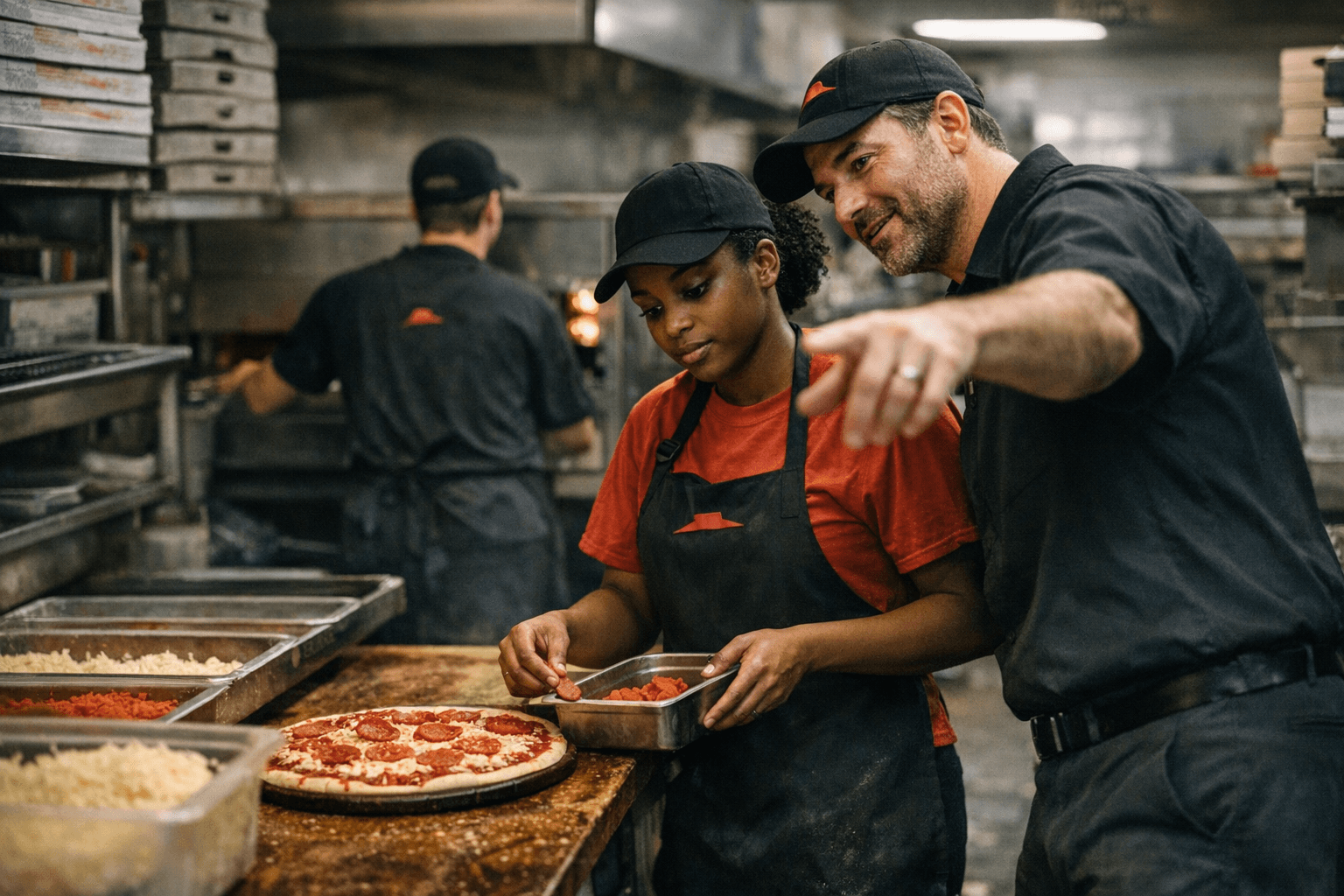
The clearest signal Pizza Hut can send is not that growth exists, but exactly what it looks like. Its training-path materials say a Team Member is promoted to Shift Leader through a defined training path. That is the kind of concrete step many restaurants never make obvious, even when they are desperate to fill leadership gaps.
Pizza Hut’s management-careers examples make the ladder feel real. One woman says she started as a server in 2011, became a shift leader within 12 months, moved to assistant manager a year later, and was running her first restaurant within six more months. Another testimonial says a worker moved from customer service representative to general manager in 18 months, then later became an area director and an HR business partner. Those are the kinds of internal moves that tell a crew member the company is not talking in abstractions.
That is also why the best growth plans cannot be one-size-fits-all. The article’s central insight is that growth paths can be role-based, aspiration-based, or both. A good manager does not assume every driver wants the same future, or that every cook wants to lead a store. The real job is to ask about skills, ambition, and interest, then map the path from there.
For Pizza Hut, that could mean a driver seeing a route from delivery to shift lead, a cook moving into training, or a trainer preparing to run a shift and eventually a store. It could also mean a worker who wants something broader, such as franchise ownership, knowing what stepping stones make that possible. The point is not to promise the same destination to everyone. It is to make sure everyone can see a next step.
Why the ladder is a retention system, not just culture
This is where the business case gets sharper. A restaurant with a real growth ladder wastes less time refilling the same opening over and over. It also creates more internal candidates who already know the menu, the pace of service, the standards, and the realities of a Friday night rush. In food service, that institutional knowledge is worth money because it cuts training friction and keeps service steadier when labor is tight.
Pizza Hut’s franchise FAQ reinforces that seriousness on the ownership side. Franchisees and key operators must complete an 8-to-12-week operations training program in a certified training restaurant in Plano, Texas before opening. Franchise qualification also requires successful retail or restaurant ownership experience, a willingness to be hands-on, and the ability to build a team and grow capabilities. That is a reminder that Pizza Hut expects operators to know the business from the floor up, not just from the spreadsheet side.
The practical lesson for managers is simple. If people cannot picture the next rung, they leave. If they can see how a first job turns into a better job, they stay long enough to become the person who trains the next hire. For a brand like Pizza Hut, that is not a soft culture point. It is one of the most powerful pay raises a restaurant can offer, because it turns a shift into a future.
This article was produced by Prism’s automated news system from verified source data, official records, and press releases, then run through automated quality and moderation checks before publishing. The system is built and supervised by the people who set the standards it runs under. Read our full AI policy.
Did this article answer your question?