Pizza Hut managers face K-shaped economy, balancing value and premium demand
Pizza Hut’s split customer base is forcing managers to chase deals without breaking labor, margins, or service in stores already under sales pressure.
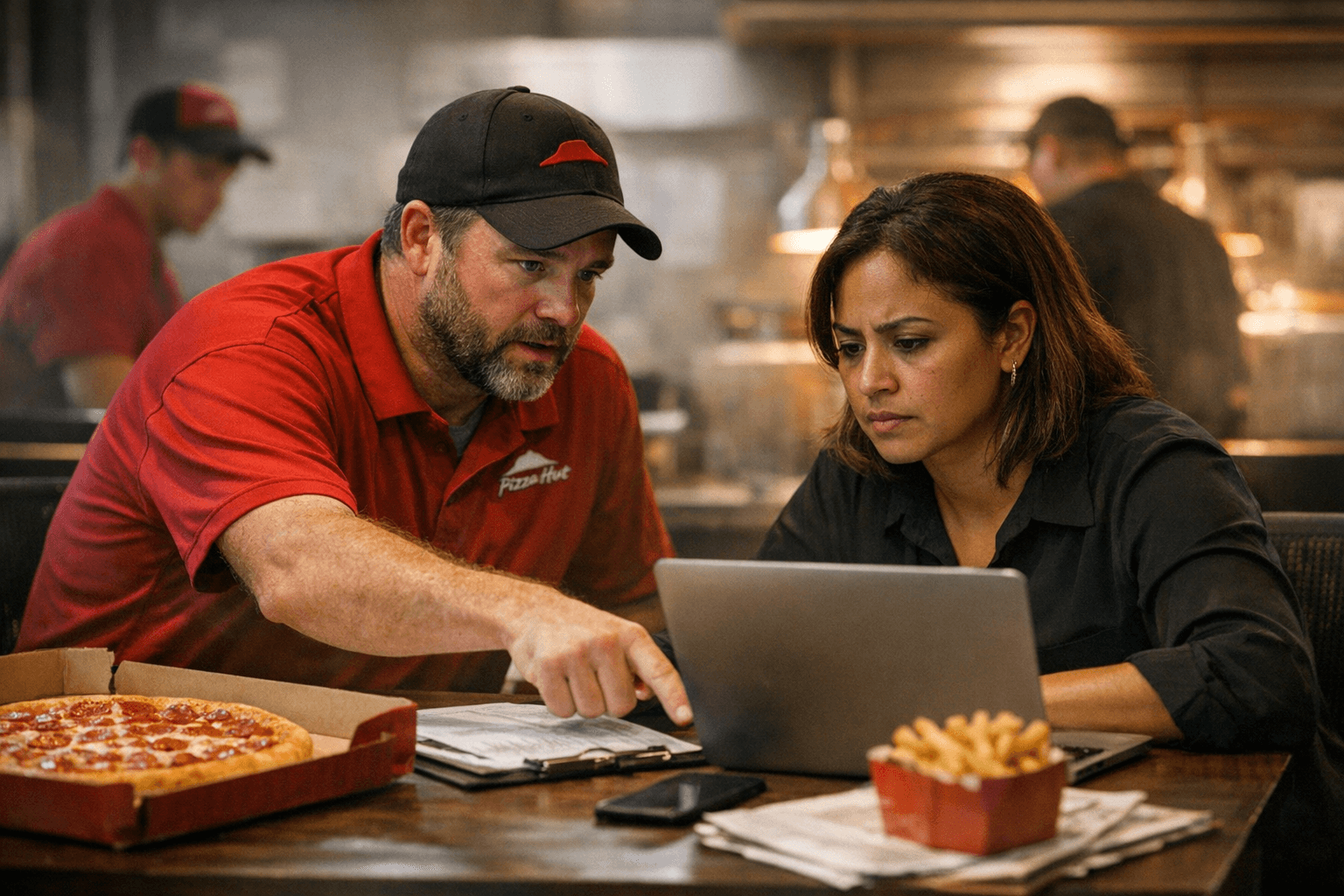
Pizza Hut managers face a customer split they can feel before they can explain it. Some guests still spend on add-ons, convenience, and premium items. Others are trading down hard to deals, bundles, and predictable prices, and that gap is reshaping everything from staffing to scheduling to how fast a store can turn cash into payroll.
That is the K-shaped economy in restaurant form. The dining room can look busy, the drive-thru or delivery queue can keep moving, and the closeout report can still tell a softer story because labor and food costs are high and the average check is not keeping pace. For Pizza Hut crews and drivers, that is not an abstract boardroom trend. It is the reason a “good sales day” can still feel tight on hours, pressure, and service speed.
A brand under pressure and under review
Pizza Hut is not facing this moment from a position of calm. Yum! Brands announced a formal review of strategic options for the chain on November 4, 2025, saying the goal was to maximize shareholder value and help Pizza Hut reach its full potential. Yum said the review was meant to benefit franchisees, consumers, employees, and shareholders, which is a reminder that the brand’s future is being judged on both financial performance and operating stability.
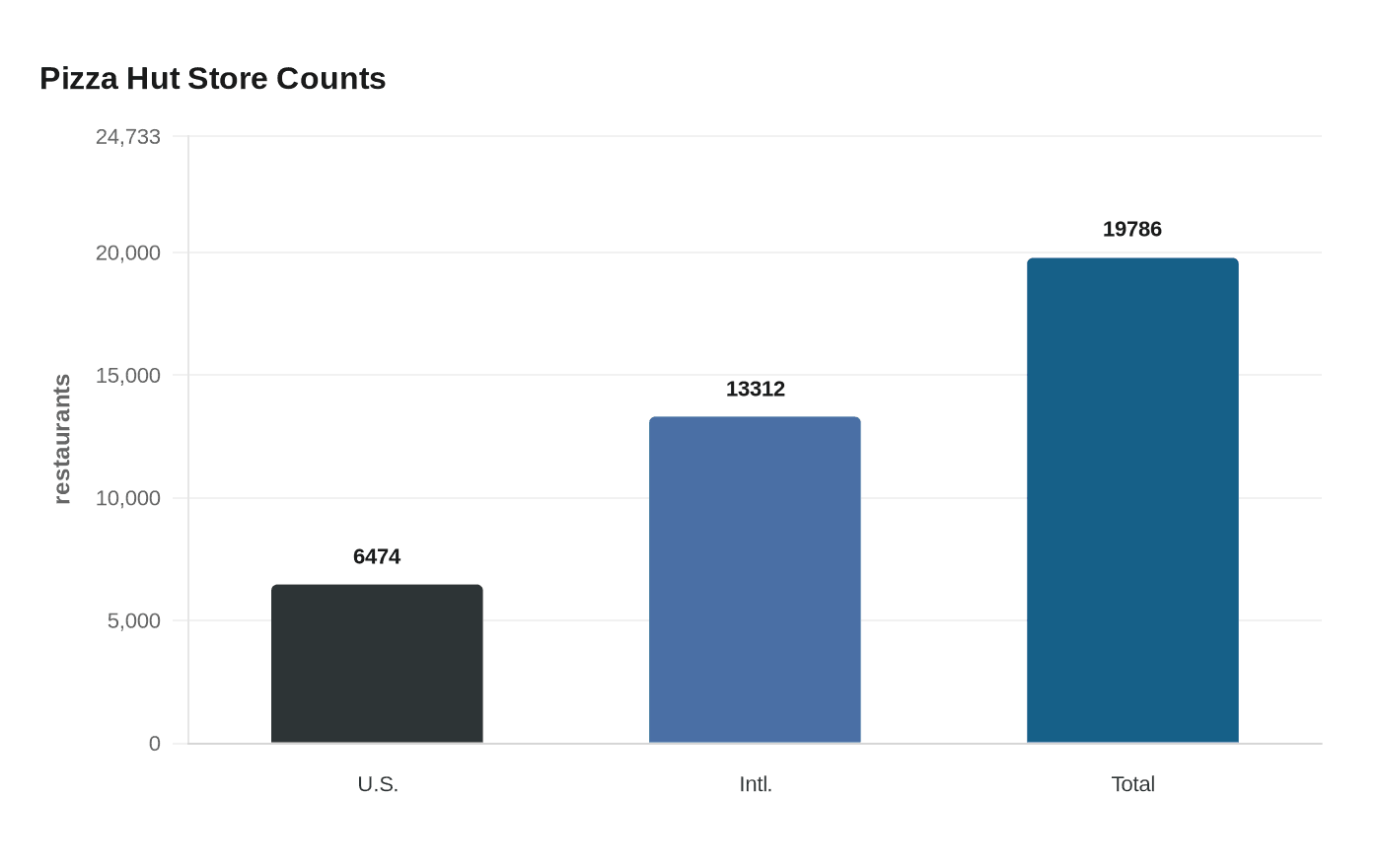
The scale of the problem is large. Yum! Brands says it operates more than 61,000 restaurants in over 155 countries and territories across its portfolio, but Pizza Hut remains a brand in transition inside that system. By the end of Q1 2025, Pizza Hut had 6,474 U.S. restaurants and 13,312 international restaurants, for 19,786 total units globally. Later reporting also said the chain shuttered 375 domestic units in fiscal 2025, underscoring how much footprint adjustment is still part of the turnaround.
For workers, those numbers matter because store counts and ownership changes shape the everyday job. After the EYM Group bankruptcy, 77 Pizza Hut restaurants were transferred to new owners in April 2025. That kind of transfer can change local leadership, labor expectations, and the pace of menu execution long before a corporate strategy deck reaches the store.
The two customers Pizza Hut has to serve at once
The heart of the current challenge is not just that traffic is uneven. It is that the customer base is behaving differently at the same time. One group still wants the full experience, including premium toppings, wings, or convenience-driven orders that add to the ticket. Another group is shopping like every dollar matters, looking for deals, value bundles, and prices that feel stable enough to trust.
Pizza Hut has been trying to answer both camps with a long-standing “3D” strategy: distinctive offerings for group occasions, dependable everyday value, and disruptive innovation. That framework only works if stores can execute value without turning the operation into a margin trap. A strong deal can bring in traffic, but if it is poorly timed, poorly staffed, or too labor-heavy, the store may win the order and lose the economics.
That is why the chain’s value tools have become so central. Pizza Hut has leaned on offers such as the $7 Deal Lover’s Menu, Wing Wednesday, and a $2 Personal Pizza promotion. Those offers are not just marketing. They are the operating test of whether the brand can attract budget-conscious guests while still giving managers enough room to protect margin, keep lines moving, and keep service from slipping when volume spikes.
What the K-shaped economy looks like on the floor
In practical terms, the K-shape is visible in the ticket mix. A family ordering a bundle and a couple adding wings or a premium pizza put different pressure on the line than a guest who is stretching every dollar and only buying the discounted item. The first customer can help the average ticket. The second can help traffic but make labor, packaging, and delivery timing much harder to manage.
That matters because the money does not stop at the register. When the mix shifts, cash flow shifts too, and that affects how quickly a store can cover payroll, rent, and vendors. For managers, that can mean tighter schedules, less overtime, and more pressure to hit service metrics with fewer hours. For kitchen crews, it can mean the same peak rush with less margin for error. For drivers, it can mean more deliveries chasing fewer profitable minutes, with tips carrying more of the income load while gig apps keep setting a tough price benchmark in the market.
Pizza Hut’s own sales trends help explain the strain. In Q1 2025, U.S. same-store sales declined 5%, and worldwide same-store sales declined 2%. In Q2 2025, U.S. same-store sales were again down 5%. By Q3 2025, U.S. same-store sales were down 6%. That is a long enough slide to turn every promo decision into a staffing decision, and every staffing decision into a service risk.
Why leadership keeps circling back to value
The sales pressure has also been paired with transition costs. Pizza Hut’s operating profit growth in Q1 2025 was affected by expenses tied to franchise-entity changes and technology spending, which adds another layer of strain to stores already trying to run promotions efficiently. In plain terms, the brand has been paying to reshape itself at the same time that weaker sales are limiting room for mistakes.
That is why the value debate is bigger than coupon wars. Yum leadership has said Pizza Hut is a global leader in the pizza category, but the strategic review makes clear that scale alone is no longer enough. The brand is being asked to prove that it can serve franchisees, consumers, and employees at the same time without letting any one group absorb the costs of the others.
For workers, the lesson is straightforward. Value is no longer a slogan handed down from headquarters. It is a daily operating choice that affects prep, labor, delivery timing, and the size of the check. Managers who can tell the difference between a bargain hunter and a convenience buyer will have a better shot at balancing staffing and service. Managers who cannot will keep seeing the same split economy show up in the least forgiving place of all: the store’s bottom line.
Pizza Hut was built in Wichita, Kansas, and now sits inside a far larger Yum system headquartered in Louisville, Kentucky. That history matters because the brand is once again being asked to adapt at scale. The stores that survive the current pressure will be the ones that can read the customer mix clearly and run the floor like that difference matters every single shift.
This article was produced by Prism’s automated news system from verified source data, official records, and press releases, then run through automated quality and moderation checks before publishing. The system is built and supervised by the people who set the standards it runs under. Read our full AI policy.
Did this article answer your question?