Pizza Hut job posts spotlight food safety, driver safety and brand standards
Pizza Hut’s job ads show that safety and brand standards are the real operating system. When stores are busy or short-staffed, those rules shape every order, drive, and handoff.
Pizza Hut’s latest job posts make something plain: food safety, driver safety, and brand standards are not side notes. They are the daily structure of the work, from the kitchen line to the delivery car to the manager’s clipboard.
The standards are the shift
A Team Member posting ties the job to Pizza Hut brand standards and processes that cover food, restaurant, and driver safety, along with CHAMPS, Brand Standards, FSSC, CORE, cash controls, anti-harassment policies, and position-specific training. A Delivery Driver posting uses the same language. A General Manager posting goes even further, saying leaders must ensure the restaurant meets or exceeds brand standards, provide a safe work environment, and keep a clean, organized restaurant that meets health and safety regulations.
That is a big clue about how Pizza Hut wants the job understood. The rules are not just compliance language on a wall. They are part of the operating model, which means a worker’s day is shaped by process whether the store is calm or slammed. When orders start stacking up, those standards stop being abstract and become the thing that determines whether a shift stays controlled or starts to fray.
What the work really asks of crews
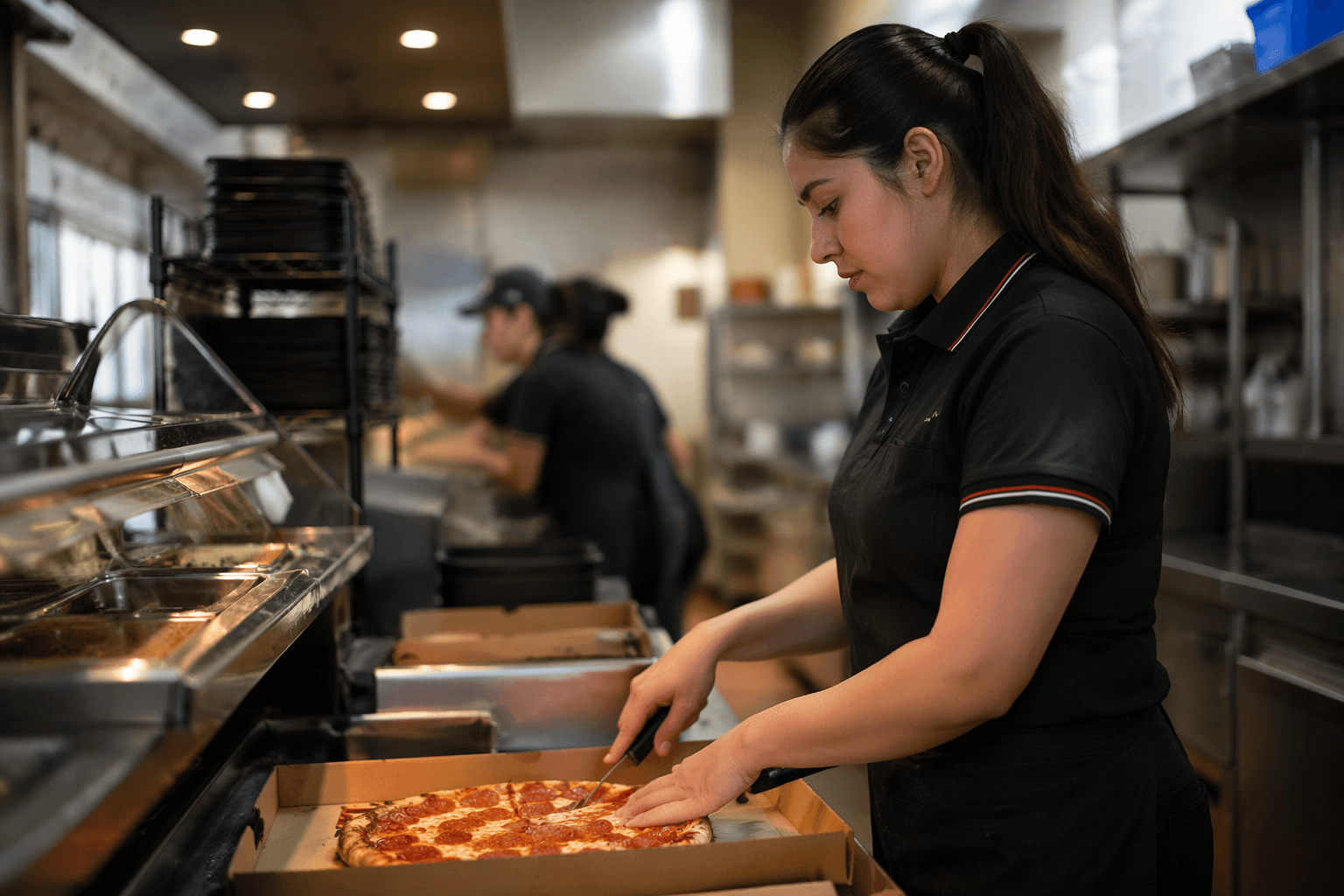
For kitchen staff, the posting language turns basic tasks into a system. One listing describes keeping a clean work area, restocking items, preparing and serving food, and following training processes on the Shoulder 2 Shoulder learning track. That sounds familiar to anyone who has worked in pizza, but the details matter because they show how much of the job is about repetition done the same way every time.
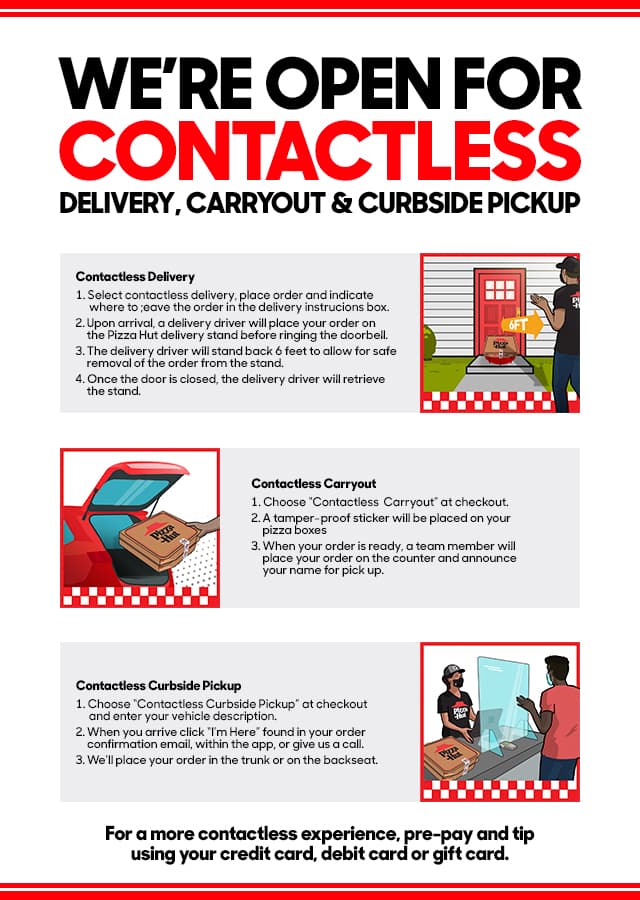
For drivers, the safety piece is just as central. The job postings explicitly fold in driver safety, and that matters because delivery work is never just about speed. A safe handoff, a clean vehicle routine, and a careful route are part of protecting the customer, the driver, and the store’s service time. In a rush, a skipped step can turn into a wrong order, a customer complaint, a tip problem, or something worse.
Managers sit in the middle of all of it. The General Manager posting in Black Mountain, North Carolina, says the leader must maintain a clean, organized restaurant and provide a safe work environment. That is not decorative language. It is a reminder that when a store is short-staffed or trying to catch up on tickets, the manager is still accountable for standards that protect food quality, worker safety, and the brand’s reputation.
Pizza Hut’s history helps explain the emphasis
The company’s own story has always leaned on consistency and speed. Pizza Hut says it began in 1958 in Wichita, Kansas, when the Carney brothers borrowed $600 from their mom to open a pizza place. The name, the company says, came from the sign having room for only eight letters. Pizza Hut’s history materials also say the brand was built on the idea that pizza night should be special, and on service principles centered on food customers are proud to serve and delivering it fast with a smile.
That origin story still shows up in the brand’s culture. The franchise site now describes Pizza Hut as a 65-year-long pizza party, which tells you how much the company wants its history to function as a shared identity for franchisees and workers. But the practical lesson for employees is less sentimental: if the brand is built on consistency, then standards are the mechanism that makes that possible in thousands of separate restaurants.
The scale is enormous. Pizza Hut’s store locator says the brand has 6,000-plus locations. Yum! Brands says its four brands operate 63,000-plus restaurants in 155-plus countries and territories, primarily through about 1,500 franchisees. At that size, the company cannot rely on personality or local habit to deliver the same customer experience everywhere. It needs procedures, training, and clear expectations embedded in the job itself.
Training is how the model holds together
Pizza Hut’s franchise FAQ says franchisees and or key operators are required to attend and complete Pizza Hut operations training before opening a restaurant. The job postings reinforce that approach by repeatedly requiring workers to follow all Pizza Hut and franchisee brand standards and processes, including food, restaurant, and driver safety, CHAMPS, Brand Standards, FSSC, and CORE. They also require the Shoulder 2 Shoulder training track and Learning Zone courses.
That tells you the company is trying to make standards routine, not occasional. The goal is not just to tell people what the rules are on day one. It is to build a store where the rule set is the default way of working. The postings also mention professional image, highly ethical conduct, cash controls, and anti-harassment policies, which shows how broad the expectations are. A Pizza Hut worker is not only making pizzas or dropping them off. They are operating inside a controlled environment where conduct, safety, and brand identity all sit in the same workflow.
For workers, the most useful way to read all of this is simple. The fastest shift is not the one where you cut corners. It is the one where everyone knows the process well enough to move quickly without breaking it. Clean station, safe route, correct order, clear handoff. That is the real hidden reality of Pizza Hut work, and it is what the brand is trying to standardize across every store.
This article was produced by Prism’s automated news system from verified source data, official records, and press releases, then run through automated quality and moderation checks before publishing. The system is built and supervised by the people who set the standards it runs under. Read our full AI policy.
Did this article answer your question?