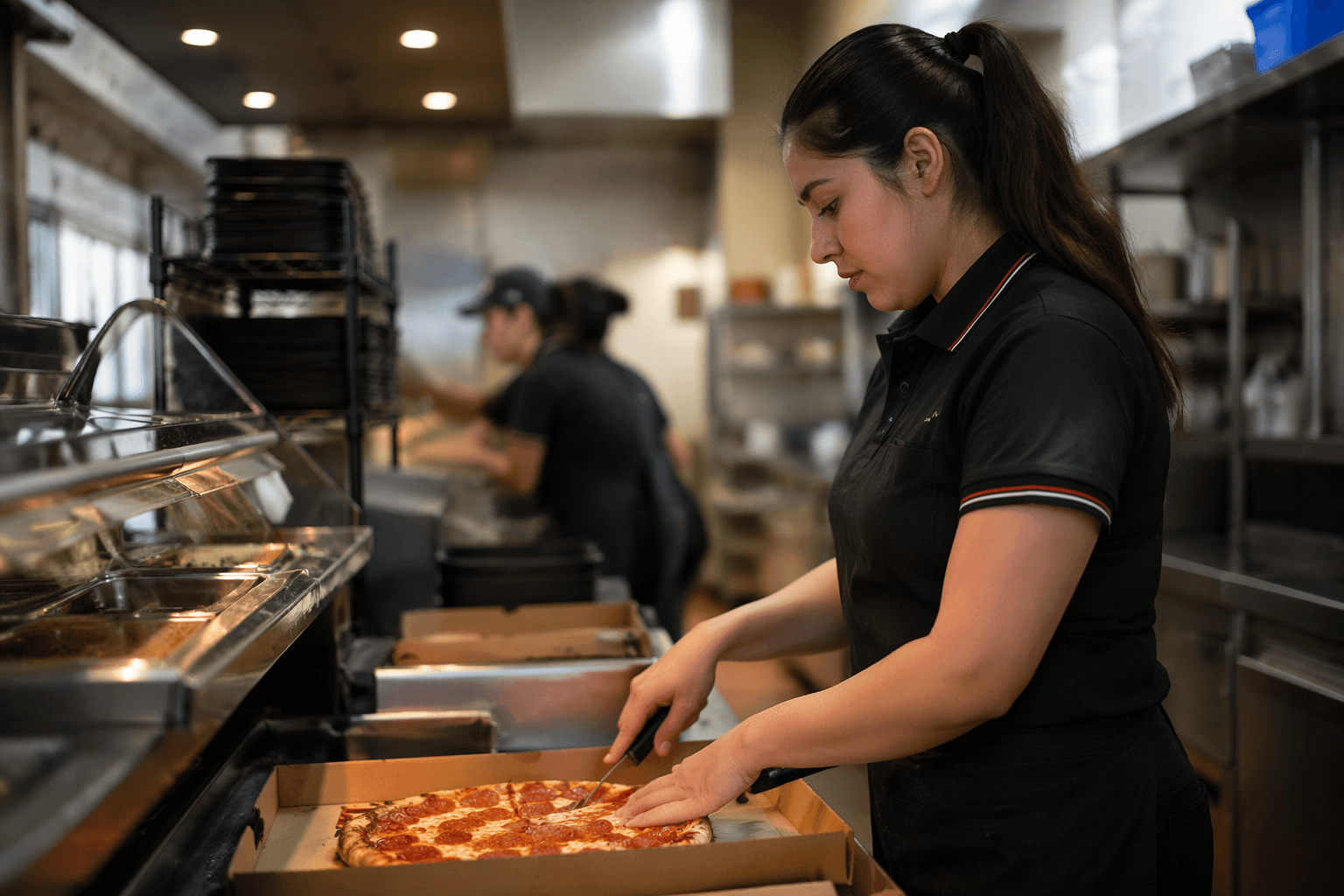
Pizza Hut managers urged to make handwashing a visible priority
One missed handwash can move norovirus across a Pizza Hut shift. Managers are being pushed to make sinks, soap, and stop-points impossible to ignore.
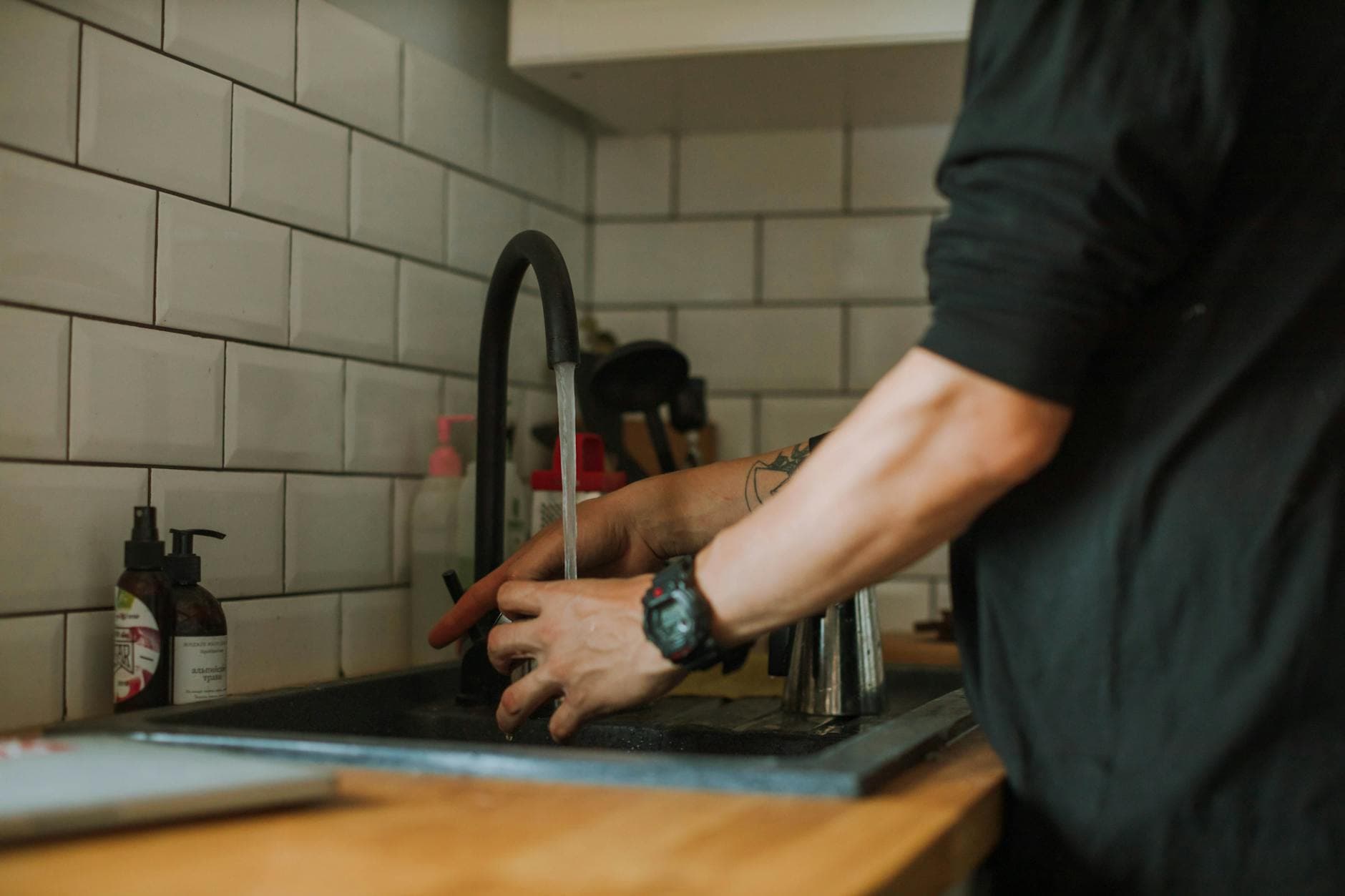
Handwashing is the seam that holds the shift together
At Pizza Hut, handwashing is not a polite reminder. It is the reset button between delivery, the cut table, the register, prep, and trash runs. One driver who comes back from a drop and starts helping with boxes, one cashier who moves from cash to food, one kitchen worker who grabs the garbage and goes back to prep without washing, and the whole line has a problem that can turn into customer complaints, sick coworkers, and a stopped-up rush.
That is why the most useful advice is also the simplest: make handwashing visible, easy, and non-negotiable. ServSafe says food handlers should stop and wash after using the restroom, taking out garbage, handling chemicals, clearing tables, touching raw meat, eating or drinking, sneezing or coughing, touching the face or body, and handling money. The wash itself should take at least 20 seconds. At a busy Pizza Hut store, those are not abstract rules. They are the exact moments when a clean hand turns into a contamination risk if nobody pauses.
The exact moments crews need to stop
The line breaks down when people treat handwashing like something they will do “in a minute.” The important moments are the handoff points, when one job becomes another:
- After the restroom, before touching anything food-related.
- After taking out garbage or handling chemicals, before returning to prep or dishes.
- After clearing tables or bussing, before moving to boxes, cut work, or make line tasks.
- After touching raw meat or dirty equipment, before touching ready-to-eat food.
- After eating, drinking, sneezing, coughing, or touching the face or body.
- After handling money, before touching food, packaging, or utensils.
That matters in a Pizza Hut store because people cross roles all the time. A driver helping on the inside, a cashier jumping onto make line, or a cook moving from trash to prep are all normal moments in a short-staffed rush. If handwashing is skipped at the seam between those tasks, the mistake does not stay small. It spreads into the cut table, the box stack, the make line, and the food that goes out the door.
Why one missed wash can snowball into a bad night
The Centers for Disease Control and Prevention says germs spread from the hands of food workers to food are a common cause of restaurant foodborne-illness outbreaks, and that hand contamination accounts for nine of ten outbreaks in which food was contaminated by food workers. In its restaurant handwashing summary, the CDC found workers washed when they should only about one in three times. It also found workers did about nine handwash-worthy activities per hour but washed only about two to three times an hour.
Those numbers explain why the problem is not just “somebody forgot.” It is that restaurant work creates more handwashing moments than crews can casually remember. The CDC found only 1 in 4 workers washed after preparing raw animal products or handling dirty equipment, and only 1 in 10 after touching their face or body. In a Pizza Hut kitchen, that is exactly the kind of gap that can move from a single dirty hand to a line of complaints about speed, safety, or food quality.
The operational hit is real. When one employee gets sick, another has to cover. When a guest complains, managers have to investigate, remake, or comp a ticket. When a whole shift loses trust in the line, everything slows down. Clean hands do not just protect customers. They protect the schedule.
Norovirus is the scenario managers should fear most
Norovirus is the reason this issue deserves more than a reminder sign near the sink. The CDC says norovirus is very contagious, and hand sanitizer alone does not work well against it. That means the sink, soap, and the full 20-second wash are the real defense, not a quick pump of sanitizer before going back to the make line.
The CDC also says food workers should not prepare or handle food, or care for others, when sick, and should wait at least 48 hours after symptoms stop before returning. That matters in a restaurant where a worker may still feel pressure to come in and “push through” a shift. With norovirus, that pressure can backfire fast because the virus can still be shed in poop for 2 weeks or more after someone feels better. One person coming back too soon can turn a bad day into a store-wide problem.
For Pizza Hut crews, that means managers need to treat vomiting, diarrhea, and stomach illness as a stop sign, not a staffing puzzle. The cost of covering a shift is lower than the cost of contaminating a whole night’s production.
What visible handwashing looks like on a Pizza Hut line
The CDC’s restaurant guidance points to something store leaders can actually control: visibility and access. Food workers washed more often when they were not busy, when restaurants provided food-safety training, and when there was more than one hand sink and a sink the worker could see. That is a big clue for Pizza Hut managers. Compliance is not just about telling people to wash. It is about designing the room so washing is hard to ignore.
A strong handwashing setup in a Pizza Hut store should mean:
- Soap stocked and easy to reach.
- Sinks that work every time, not only when someone complains.
- Enough paper towels that crews do not skip the wash because drying is a hassle.
- Hand sinks placed where workers can see them, not hidden behind the line.
- Managers who model the pause themselves instead of treating it like a rookie mistake.
The CDC also said food-safety programs should address barriers like sink inaccessibility and time pressure. That is where a lot of food-service policies fail. A store can preach handwashing all day and still set crews up to miss it if the sink is blocked, the soap dispenser is empty, or the rush is so chaotic that stopping feels impossible.
Pizza Hut’s own standards show this is part of the job
Pizza Hut has already framed hygiene as part of the operating system, not a side note. The company says its kitchens have contactless soap and contactless hand sanitizer at every sink location, and that it made over 10 million non-surgical masks available for restaurant employees during its COVID-era safety response. It also says pizza leaves the oven and slides hands-free into the box, a workflow meant to cut down on unnecessary contact.
That matters because hand hygiene is not just a personal habit at a franchise chain. It is built into brand standards, labor routines, and the way a store trains people from day one. Pizza Hut says its franchise operations training lasts 8 to 12 weeks and happens in a certified training restaurant in Plano, Texas. If handwashing is stressed there, it should show up the same way on the dinner rush line in every franchise store.
The real test is whether managers make the pause normal
The biggest mistake is treating handwashing like an exception, something people do only after they are caught or reminded. The better store culture is the opposite: stopping to wash is professionalism. It says a worker is protecting the team, the guest, and the rest of the shift.
That is the standard Pizza Hut managers need to enforce. A clean hand at the right moment is not slowing the line. It is what keeps the line from breaking in the first place.
This article was produced by Prism’s automated news system from verified source data, official records, and press releases, then run through automated quality and moderation checks before publishing. The system is built and supervised by the people who set the standards it runs under. Read our full AI policy.
Did this article answer your question?