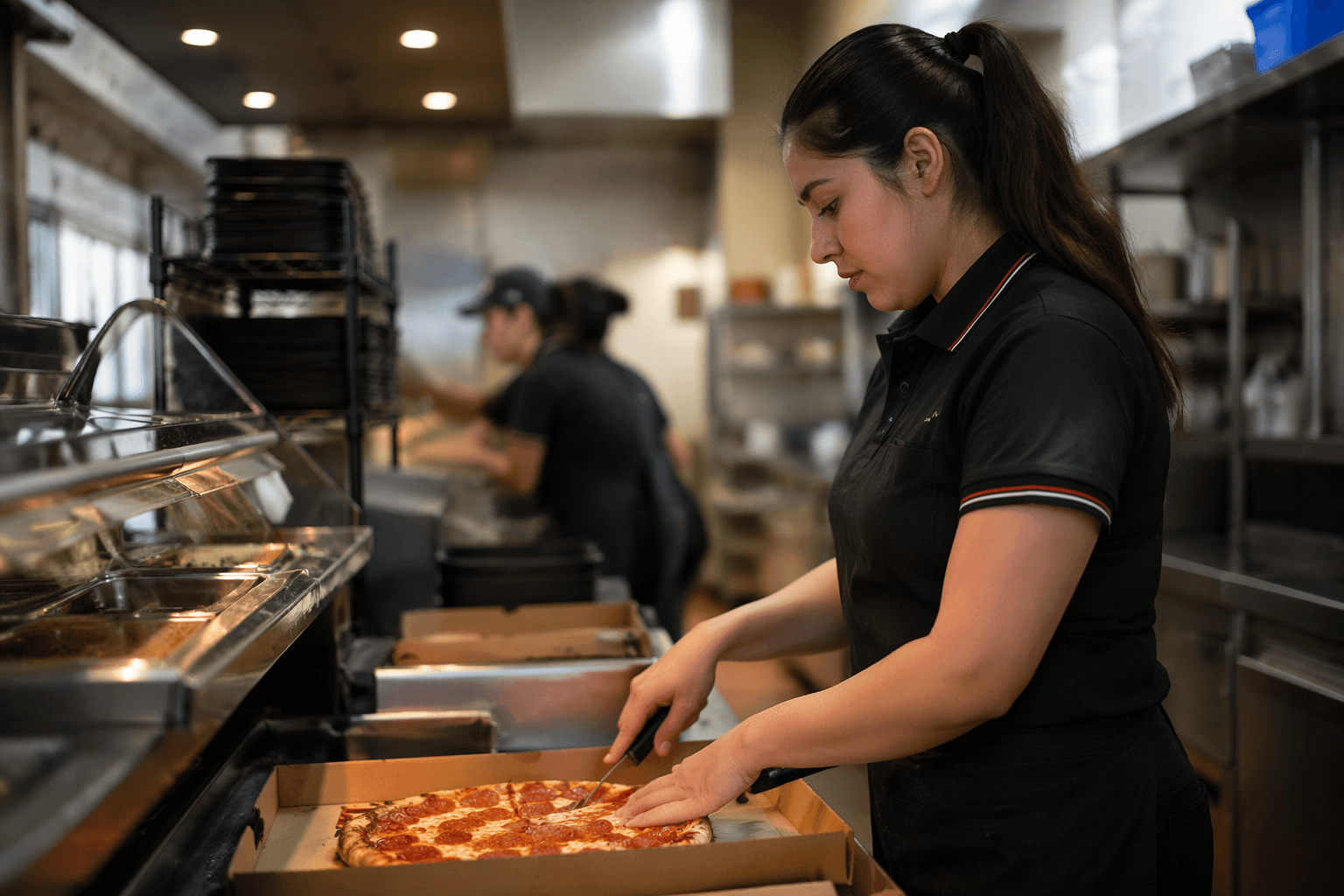
Pizza Hut menu bundles drive upselling and kitchen workload challenges
Pizza Hut's bundles are not just sales tools. They reshape ticket complexity, upsell pressure, and line speed from prep to handoff.
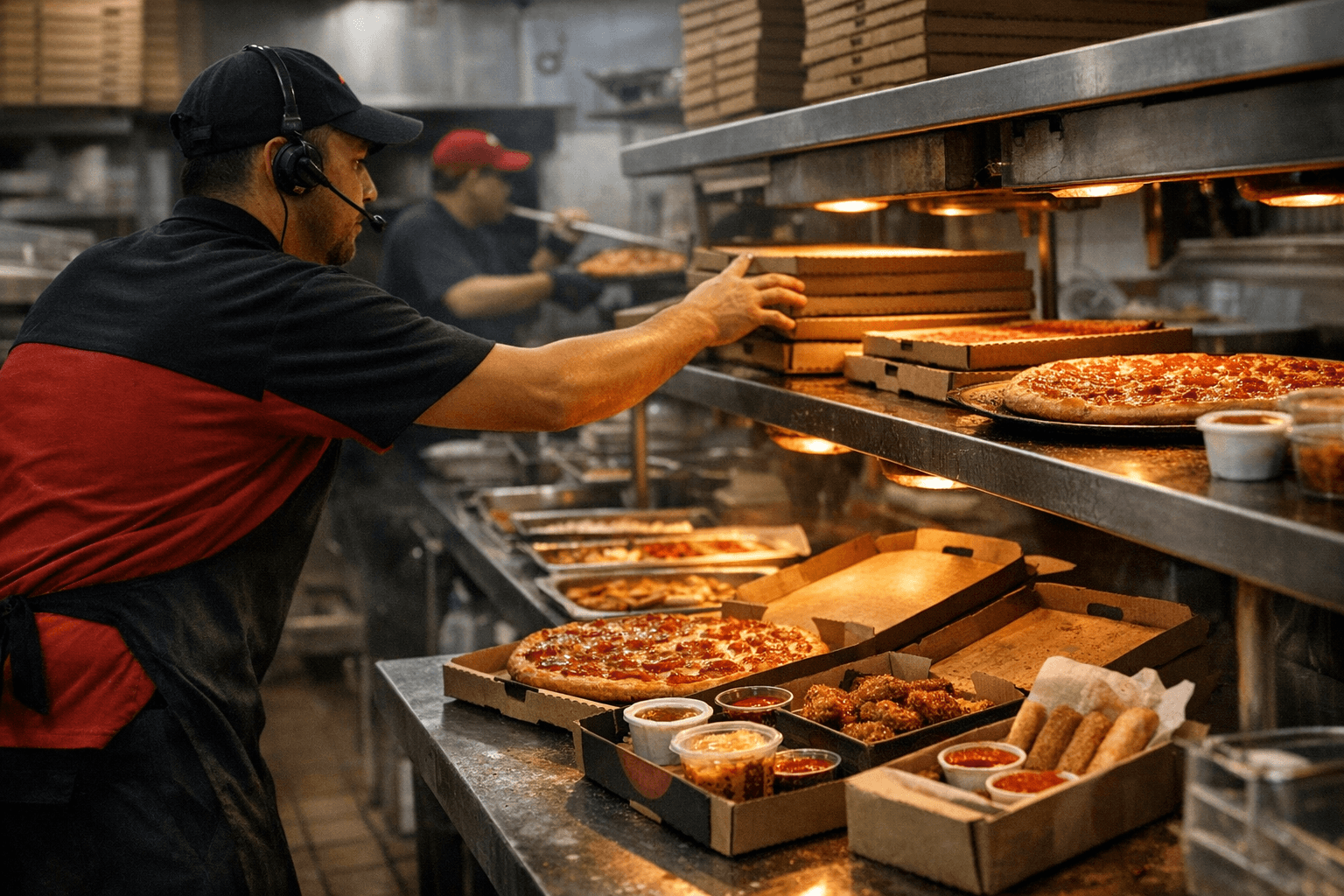
Pizza Hut's menu is an operations map
Pizza Hut’s menu is built less like a simple list of items and more like a system for moving bigger baskets through the store. The brand splits the menu into pizza, pizza melts, wings, sides, pasta, desserts, dips, and drinks, while the home page pushes offers such as the Ultimate Hut Bundle, Big Dinner Box, My Hut Box, and local deals. That structure tells you a lot about how the job really works on the line: crews are not just making one product at a time, they are assembling combinations that can pull from several different stations in one ticket.
For restaurant teams, that matters because the work comes in clusters. A single order can include pizza, breadsticks, wings, dips, and dessert, all of which have to be staged together and handed off in the right sequence. The menu itself becomes a kind of flow chart for the kitchen, showing where tickets can slow down if prep, labeling, and bagging do not match the promo mix.
Bundles turn sales into ticket complexity
The big operational shift with Pizza Hut bundles is that discounts are also assembly instructions. The Ultimate Hut Bundle, Big Dinner Box, My Hut Box, and local deals are designed to move guests into larger orders, but for the crew they create more moving parts on every ticket. A bundle may look efficient on the menu board, yet it can require more oven space, more side-item prep, more packaging, and more careful handoff timing than a simpler order.
That is why the real workload does not always show up in the number of tickets alone. Two orders can look similar on the screen and still take very different amounts of time if one is a straight pizza run and the other is a bundle with multiple add-ons. Managers who read the menu this way can spot where the line will bunch up, especially when a rush fills the make line with mixed product families instead of one high-volume item.
The result is a quieter kind of pressure for kitchen staff. Crew members have to think about sequence, not just output: what goes in the oven first, what needs to be boxed next, what has to be labeled separately, and what can wait until the last second without throwing off the promise time.
Upselling is built into the menu architecture
At Pizza Hut, upselling is not an extra sales tactic layered on top of the menu. It is part of the menu architecture itself. The current deal structure nudges guests toward bigger baskets by combining core items with sides, drinks, and desserts, which helps drive higher ticket averages. For managers, that means the menu is also a coaching tool: the best recommendation is often the one that fits the promotion while keeping the order realistic for the store’s capacity.
That can put frontline employees in a familiar bind. The same offer that makes the check larger also raises the odds of a more complicated kitchen path, especially when guests add wings, dips, or dessert onto a bundle. For team members taking orders or building tickets, the challenge is to balance the upsell script with what the store can actually execute without backing up the line.
The official site’s emphasis on deals also shows how much the business depends on turning a routine meal into a larger basket. In practice, that means the upsell conversation is not just about revenue. It affects labor demand, oven usage, bagging workload, and the speed at which orders can be safely released to drivers, delivery apps, and counter customers.
Rush-hour stress rises when promos stack up
Bundle-heavy menus create pressure even when sales volume looks normal on paper. When a store gets a wave of promo-driven orders, the bottleneck is often not one single station but the handoff between them. A rush built on bundles can hit the oven, the side-item prep area, and the expo table at the same time, which is where small mistakes start to multiply.
That matters for order accuracy as much as speed. If a bundle includes several product families, the risk is not only a late ticket. It is also a missing dip, a mislabeled side, or a dessert that gets left out of the bag because the order was staged too quickly. For workers, that kind of error creates more rework, more remakes, and more tension during the busiest part of the shift.
The stress also lands differently across roles. Kitchen crew feel it in the pace of production, drivers feel it when handoff delays cut into route time, and managers feel it when the lobby, delivery rack, and oven all get crowded at once. In a business where timing is part of the customer promise, the menu mix can determine whether a rush is manageable or chaotic.
Why local execution matters so much
Pizza Hut’s own menu information makes one point clear: prices, participation, delivery areas, and minimums can vary by location. That is a reminder that the same promotion does not land the same way in every franchise, and local management has to adjust the operation accordingly. A store with a heavy delivery zone, a different labor pattern, or a busier dinner window may need to handle the exact same deal in a very different way.
For managers, that variation makes the menu a planning document as much as a sales tool. Understanding which deals are active helps them coach staff on what to recommend, what to clarify, and how to set realistic order promises. It also helps them decide where to position labor, since one promo mix may demand more oven time while another may spike sides, dips, or bagging.
That franchise-level flexibility is a big reason the menu deserves attention from anyone on the clock. It tells the story of how Pizza Hut actually makes money, where complexity enters the operation, and where a store can lose speed if prep does not line up with the current deal mix.
What workers should watch on the line
For Pizza Hut teams, the practical lesson is simple: watch the menu before the rush starts, because the promo mix shapes the entire shift. When bundles are front and center, the store is not just selling pizzas. It is moving assembled meals that demand tighter coordination from order taking through final handoff.
- Check which bundles and limited-time deals are active before peak hours.
- Match prep to the likely basket mix, not just to pizza volume.
- Watch for tickets that combine multiple product families, since they usually need more staging time.
- Treat upsells carefully, because a bigger check can also mean a more complex build.
- Use local pricing, participation, and minimums to set accurate expectations with guests.
That is the real operations story behind Pizza Hut’s menu. The food still matters, but the deal math matters just as much, because it shapes training, order accuracy, and the pressure everyone feels when the line gets busy.
This article was produced by Prism’s automated news system from verified source data, official records, and press releases, then run through automated quality and moderation checks before publishing. The system is built and supervised by the people who set the standards it runs under. Read our full AI policy.
Did this article answer your question?