Pizza Hut pay ranges show tight wages, uneven benefits, staffing pressures
Pizza Hut’s wage bands are tight, but sick time and breaks are uneven. That patchwork may be driving recruiting pressure and turnover risk across franchises.
A tight ladder, not a long climb
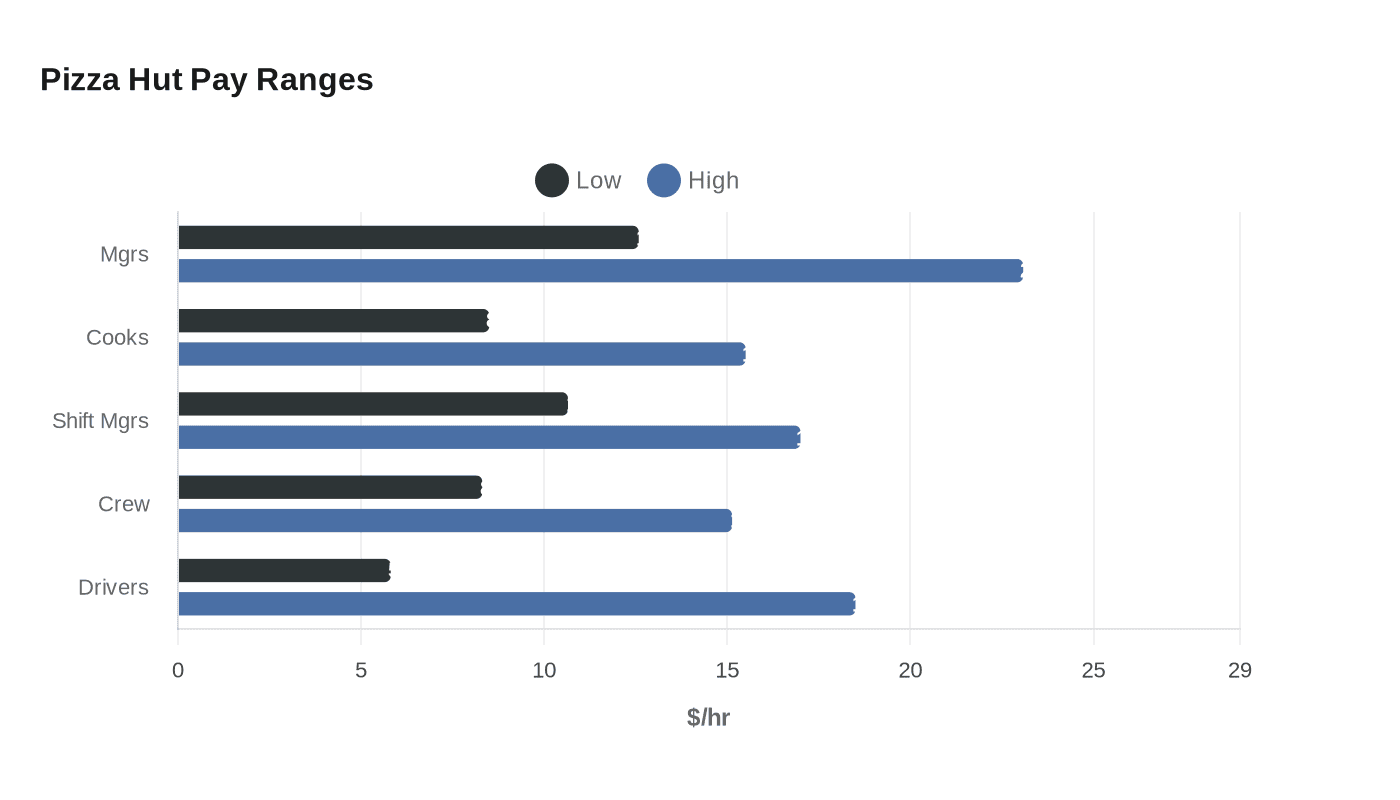
Pizza Hut’s worker pay picture looks less like a clear career path and more like a narrow ladder with a lot of rungs packed together. Breakroom’s dataset, built from 1,346 workers who said they work at Pizza Hut, shows restaurant and food service managers at about $12.58 to $23.08 an hour, cooks at $8.50 to $15.50, shift managers at $10.65 to $17.00, crew members at $8.31 to $15.13, and delivery drivers at $5.81 to $18.50.
That spread matters because it tells you how much Pizza Hut still depends on local labor markets, local owners, and local norms to make the job work. On paper, the brand has more than 21,000 jobs posted across all locations and 6,000-plus U.S. restaurants. In practice, the same job title can mean very different money, different expectations, and very different odds of sticking around.
What the pay ranges say about the job
For kitchen crew and shift leads, the biggest story is how close base pay sits to supervisory pay. A shift manager at $10.65 to $17.00 is not far removed from a crew member at $8.31 to $15.13, especially once you account for the extra stress, the late nights, and the pressure to keep the line moving when a store is short-staffed. That kind of compression can make advancement feel slower than the workload suggests.
For drivers, the range is even more revealing. At $5.81 to $18.50 an hour, delivery work at Pizza Hut still leans heavily on a blend of wages, tips, and whatever the local market will bear. That makes the job vulnerable to gas prices, route density, and competition from DoorDash and Uber Eats, which can offer workers a different way to monetize their cars and their time.
The pay spread also helps explain why retention is such a live issue. When a worker can move a few dollars an hour by changing stores, or by taking a gig app route instead of waiting on in-house delivery runs, the brand has to do more than post openings. It has to make the shift itself feel worth the commute, the wear on a car, and the uncertainty of a slow night.
Benefits that shape whether people stay
Breakroom’s Pizza Hut page says the company pays by the hour, but the real pressure points are the policies around leave and breaks. Most workers do not get paid when they are sick, and paid breaks are only available sometimes. Those details do not sound dramatic on a recruiting poster, but in a restaurant they can determine whether a shift is manageable or miserable.
The page also shows a 50 percent employee discount, which is useful but not the same thing as stable compensation. A discount helps with a meal; it does not cover a missed paycheck, a car repair, or a day home with a fever. For hourly workers, especially drivers and crew members with thin margins, those gaps can matter more than the top-line wage.
For managers, the policy mix is a warning sign. Weak sick leave and inconsistent breaks can drive callouts, turnover, and training churn, which then falls back on the people still on the schedule. In a store that is already juggling delivery demand, dine-in rushes, and late-night cleanup, the difference between a staffed shift and a short-handed one can come down to whether workers trust the system enough to show up.
Why the franchise model creates uneven results
Pizza Hut’s own careers site makes the structure plain: franchisees are the exclusive employers in their restaurants and are solely responsible for employment matters. That means the brand name may be the same from store to store, but the actual pay, leave, and scheduling experience can change sharply depending on the operator. The site’s benefits language also comes with a built-in caveat, because the company says benefits referenced may not be available at all locations.
That franchise setup sits inside a much larger system. Pizza Hut says it has 6,000-plus U.S. locations, while Yum! Brands says its system operates over 63,000 restaurants in 155 countries and territories. Pizza Hut is one of the company’s global leader brands, but the labor experience at street level is still shaped by local owners, local labor markets, and local enforcement.
The capital side tells the same story. Franchise materials list an initial investment estimate of $579,000 to $2,053,500 for a traditional U.S. restaurant. That level of startup cost helps explain why operators are so sensitive to labor expense, and why staffing decisions can feel so tight at the store level. When a franchisee is carrying that kind of investment, every hour of labor gets treated like a line item, even when workers experience it as the difference between a stable schedule and chaos.
Pizza Hut’s own careers copy says workers should feel valued and earn enough to pay bills and enjoy life outside work. That is a useful standard. The problem is that the franchise disclaimer underneath it means the brand can talk about worker value while leaving the real terms to operators whose policies may vary from one market to the next.
The pressure points already showing up
The recent labor history around Pizza Hut shows what happens when wage policy and delivery economics collide. In California, Pizza Hut operators said they would lay off more than 1,200 delivery drivers ahead of the state’s April 2024 fast-food minimum wage increase to $20 an hour from $16. That move made the chain’s dependence on delivery labor plain, and it showed how quickly a wage change can force a rethink of staffing, routes, and service models.
The legal record is just as telling. A Pizza Hut franchisee that owned more than 300 locations later agreed to pay $4,750,000 to settle a delivery-driver class-action wage dispute. For workers, that is a sign that driver pay is not just a scheduling issue. It is a recurring flashpoint that can turn into a costly fight over how the job is structured and who absorbs the costs of getting food to the door.
Taken together, the Breakroom numbers and Pizza Hut’s franchise model point to a labor system that is still highly patchwork. In some stores, the job looks like a straightforward entry point into food service. In others, the math is thin, the benefits are uneven, and the competition from gig apps and other delivery work makes every shift a test of whether the brand can keep people coming back.
For Pizza Hut, the recruiting problem is not just filling openings. It is convincing drivers, crew, and managers that the pay, the leave policy, and the day-to-day reality of the job line up well enough to make the next shift feel worth it.
This article was produced by Prism’s automated news system from verified source data, official records, and press releases, then run through automated quality and moderation checks before publishing. The system is built and supervised by the people who set the standards it runs under. Read our full AI policy.
Did this article answer your question?