Pizza Hut Transactions Rise for 13th Straight Quarter in China
Pizza Hut’s China business logged its 13th straight quarter of transaction growth as delivery rose to 54% of sales and margins held at 18.2%.
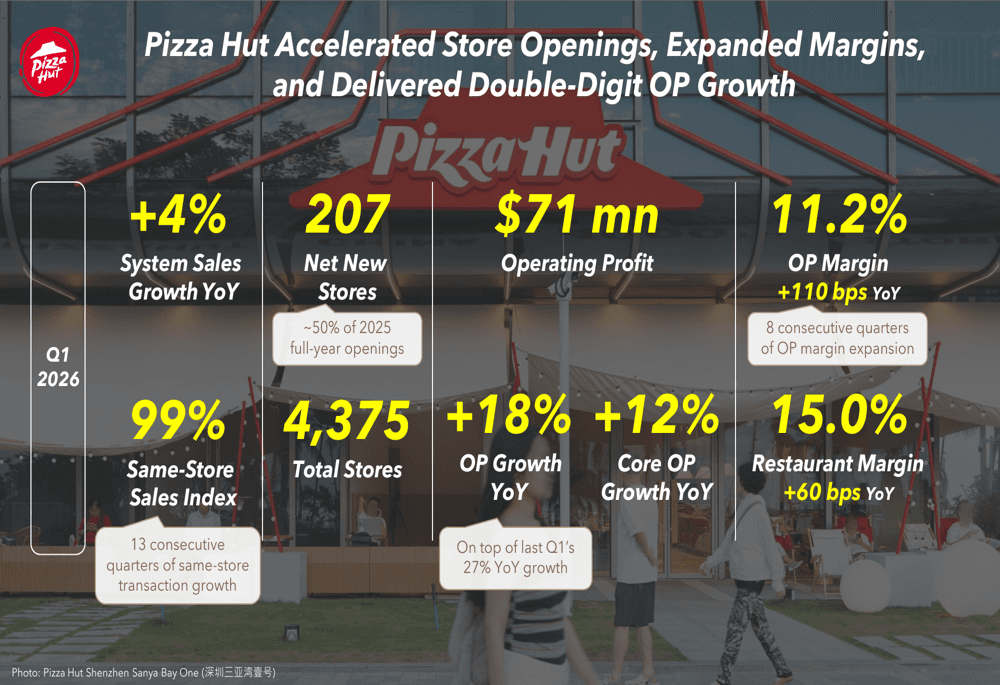
Pizza Hut kept its transaction streak alive in China for a 13th straight quarter, a sign that the brand can still grow when digital ordering, delivery and store execution line up inside the same business. In Yum China’s first-quarter results, same-store transactions rose 2%, delivery accounted for about 54% of total company sales, and active members across KFC and Pizza Hut topped 270 million.
The larger company numbers were strong too. Yum China said first-quarter revenue rose 10% year over year to $3.3 billion, operating profit increased 12% to a record $447 million and the chain opened 636 net new stores, its highest quarterly total ever. Total system sales grew 4% excluding currency effects, same-store sales reached 100% of the prior-year level and total store count reached 18,737 as of March 31, 2026.

For Pizza Hut, the China business is now a useful operating case study, not just a market headline. Yum China says Pizza Hut first opened in Beijing in 1990, had more than 3,200 restaurants in more than 700 cities by the end of September 2023 and reached 4,022 restaurants by September 30, 2025. In its 2025 annual report, Yum China said Pizza Hut was the leading and largest casual-dining restaurant brand in China by 2024 system sales and number of restaurants. That scale matters because it shows how a pizza brand can build frequency through membership, convenience and delivery instead of relying only on dine-in traffic.
The operational lesson is sharper than the growth story. Yum China said delivery drove about 54% of total sales in the quarter, up from 42% a year earlier, and restaurant margin was 18.2%, down 40 basis points, mainly because rider costs rose with the heavier delivery mix. The company also said combined March and April trading met expectations after Chinese New Year fell later and an extra spring break shifted gathering patterns. In other words, demand timing, channel mix and last-mile costs all hit the restaurant floor, where managers have to balance prep speed, packaging, dispatch timing and labor coverage.
That is the blueprint other Pizza Hut markets should watch. Digital reach only matters when it changes what happens inside the store, and Yum China’s numbers suggest that the payoff comes from tighter throughput, a larger loyalty base and a delivery operation built for repeat use. The risk is just as clear: as more sales move through apps and riders, the restaurant has to absorb higher execution pressure without letting margin slip.
This article was produced by Prism’s automated news system from verified source data, official records, and press releases, then run through automated quality and moderation checks before publishing. The system is built and supervised by the people who set the standards it runs under. Read our full AI policy.
Did this article answer your question?