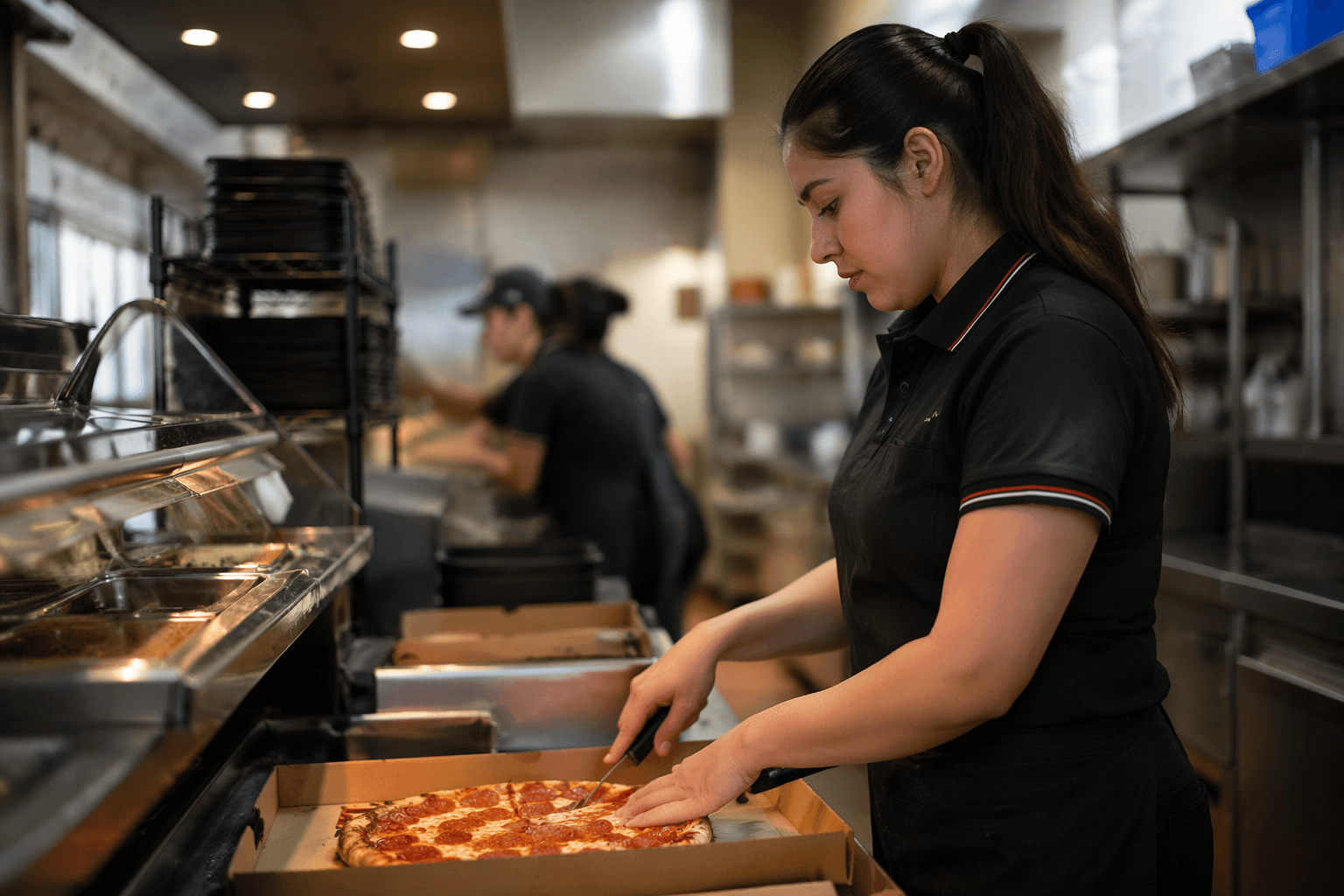
Pizza Hut workers urged to control food temperatures from prep to delivery
Pizza Hut shifts live or die on temperature control: keep food in range from prep to handoff, and you cut waste, delays, and inspection risk.
Temperature is the real shift skill
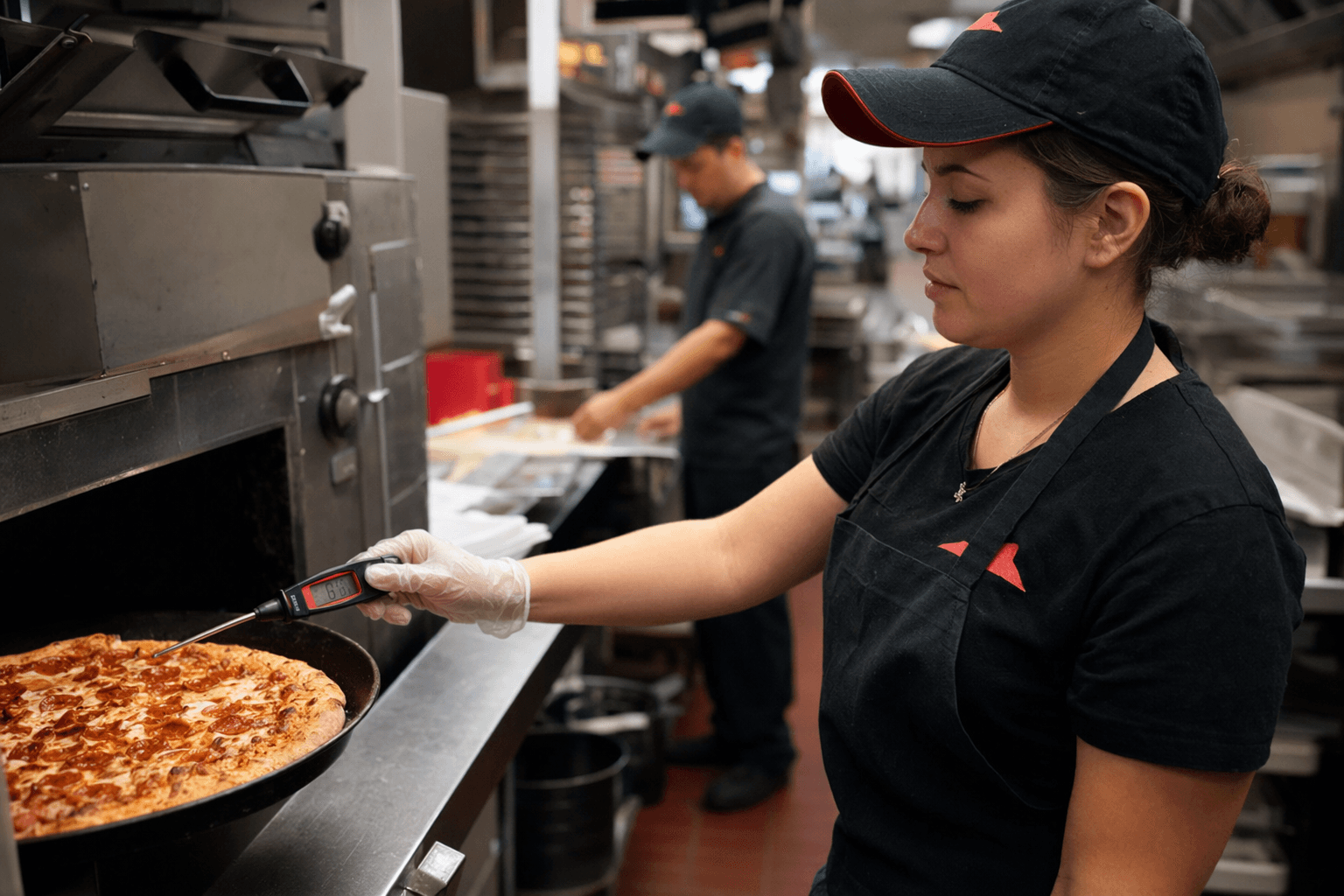
At Pizza Hut, food safety is not a poster on the wall. It is a work habit that shows up in every minute between prep, oven, bag, and door. The Food and Drug Administration puts the danger zone at 41°F to 135°F, which is where time/temperature control for safety foods can become a fast-growing bacteria problem if crews let them sit too long or cool the wrong way.
That matters because pizza service is built on movement. Sauce sits on the make line, toppings get pulled during a rush, wings come off the cook, and a finished pie may wait in a hot bag while a driver tries to stack deliveries. In that kind of operation, temperature control is not separate from speed or quality. It is the thing that protects both.
Why the Food Code matters on a Pizza Hut shift
The FDA Food Code is not just abstract guidance for regulators. It is the agency’s model for retail food-service safety, and the FDA describes it as the best advice for a system that protects food in restaurants, grocery stores, and institutions like nursing homes. It covers the practical issues crews face every day: cooling, ready-to-eat foods, and date marking for time/temperature control for safety foods.
That detail matters on a Pizza Hut line because the clock starts the moment food changes state. A topping tray left warm too long, a pan of sauce not cooled fast enough, or a product that needs to be re-dated can turn into waste, a remake, or an inspection problem. The Food Code is updated over time, which is a reminder that the rulebook is not static, even if the job sometimes feels like it is.
Prep is where the mistakes start
The easiest temperature problems usually begin before the oven. If sauce sits too long on the make table, or if toppings stay out during a lunch or dinner surge, the kitchen can drift toward unsafe temperatures without anyone noticing right away. That is why managers need crews to know which foods must be cooled, which ones need date marking, and when a product is no longer safe to serve.
For line workers, the practical rule is simple: do not assume that food is safe just because it still looks fine. Ready-to-eat foods have to be handled with the same discipline as cooked items, and time out of range matters as much as the temperature on a display. If the prep table becomes a holding area by accident, the whole shift starts to pay for it later in waste and speed.
Holding, boxing, and transport are one chain
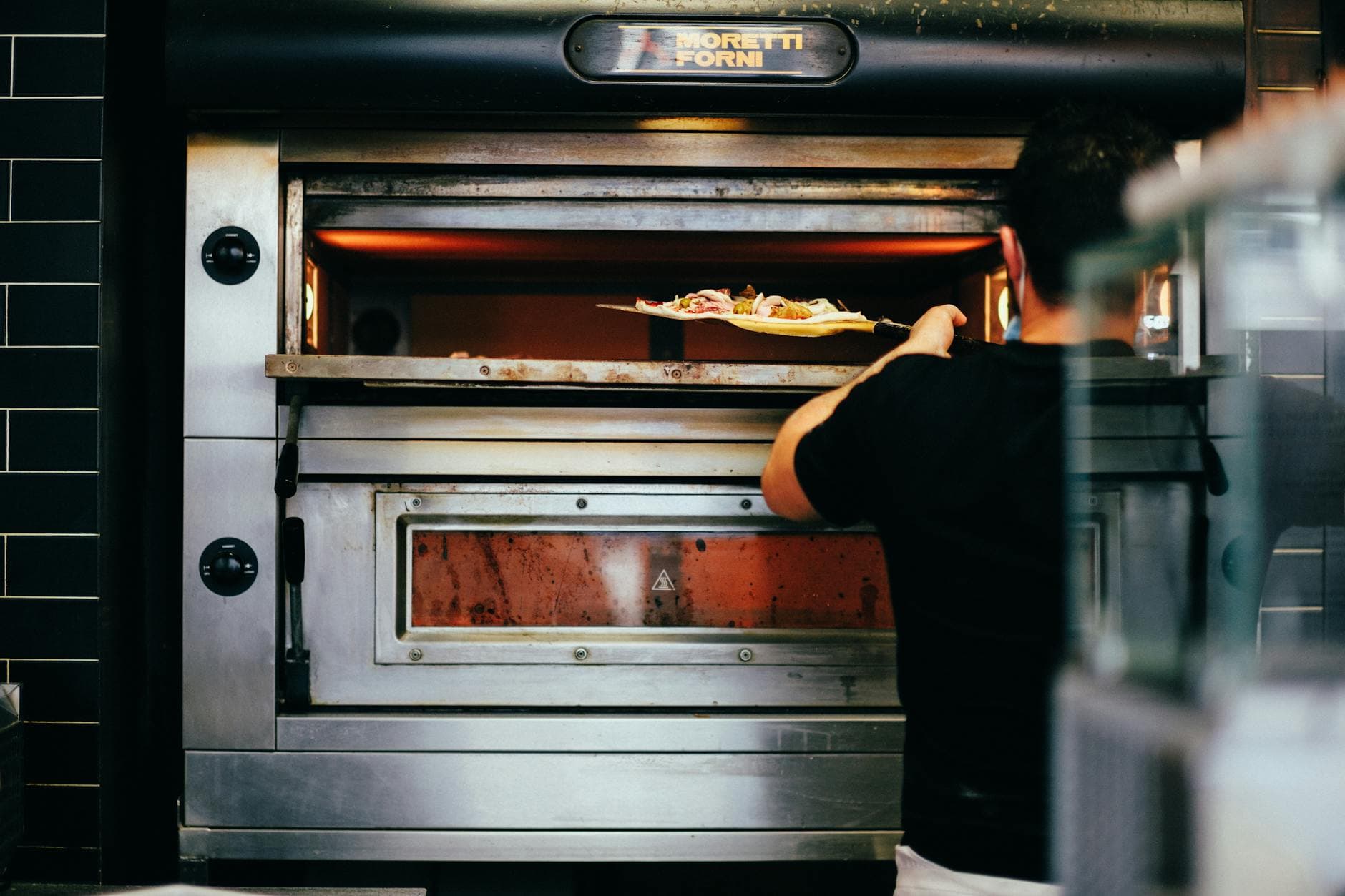
Pizza Hut has long framed hygiene as part of the product itself. During the pandemic, the company said pizza leaves a 400-plus-degree oven and slides hands-free into the box, a detail that highlights how the brand thinks about reduced handling and food protection. In April 2020, it also said it was adding pre-shift temperature checks, safety seals, counter shields, and nearly 13 million masks for employees, which shows how tightly it linked food safety to daily operations.
The USDA’s take-out guidance sets a clear benchmark: once food is cooked, it should be held hot at 140°F or above. That is especially important for delivery work, where a pie can be right at the edge of safe holding before the driver even starts the route. A hot bag is helpful, but it is not magic. If a driver stacks too many stops, or if the restaurant hands off food that is already cooling down, the bag only slows the problem.
What this means for drivers
Delivery is where temperature control becomes customer experience and risk management at the same time. A late pie is not just a service miss. It is more likely to arrive soggy, lukewarm, or unsafe, which means the store absorbs the cost through remakes, refunds, or lost repeat orders.
For drivers, that makes timing part of food safety. The hot box, the route, the stop order, and the handoff all matter. If the food leaves the store in range and reaches the customer in range, it is safer and it tastes better when the box opens. That is the difference between a clean delivery and a redelivery conversation with a manager.
Why Yum! pushes training and technology
Yum! Brands says food safety and quality are foundational to customer trust, and it says it uses technology to get visibility across restaurants and suppliers. That matters in a system like Pizza Hut, where local managers, franchise owners, kitchen crews, and drivers all touch the product before it reaches the customer. The company also gives Pizza Hut employees food-safety training access through Hut Link and ServSafe pathways, which shows that it treats food safety as an operating standard, not a one-time orientation video.
That approach makes sense because the problem is rarely ignorance alone. It is drift. People get busy, a rush hits, a tray sits out a little too long, or a driver tries to save time on a double delivery. Technology and training help, but the real difference comes from whether the shift treats temperature as a live metric.
The daily playbook that actually protects the store
- keep prep items cold until they are needed
- cool cooked food fast enough to stay out of the danger zone
- date-mark ready-to-eat items so nothing sits in limbo
- hold cooked food at 140°F or above before pickup
- move delivery orders quickly enough that the hot bag preserves quality instead of rescuing a bad handoff
The best Pizza Hut operations make temperature control part of every handoff:
That is the job in practical terms. Control the temperature, and you protect safety, speed, waste, and the customer experience at the same time. Let it slip, and the store pays for it long after the ticket is closed.
This article was produced by Prism’s automated news system from verified source data, official records, and press releases, then run through automated quality and moderation checks before publishing. The system is built and supervised by the people who set the standards it runs under. Read our full AI policy.
Did this article answer your question?