Pizza Hut urges rush-ready kitchens to prevent service breakdowns
The fastest way a Pizza Hut store gets in trouble is by treating the rush like a surprise. The fix starts before tickets hit, with clearer roles, cleaner lines, and faster resets.
The rush is won before the first ticket drops
A Pizza Hut kitchen does not break down all at once. It usually unravels in small, preventable ways, a prep table that is not stocked, a handoff area that gets cluttered, a driver waiting on an unclear order, or a manager pulled into the phone while the line starts slipping. That is why a “busy” store is not the same thing as a rush-ready one. Busy can look productive; rush-ready is what keeps service from turning into a remake cycle.
That distinction matters at Pizza Hut because the brand runs on several service channels at once. The company says it operates restaurants for dine-in, carryout, and delivery, so a single bottleneck can ripple across the front counter, the oven line, and the driver queue. With 19,974 restaurants worldwide, 6,307 in the U.S., and 99% of the system franchised as of December 2025, consistency is not a nice-to-have. It is the only way a store in one market can behave like the Pizza Hut customers expect in another.
Set the station before dinner starts
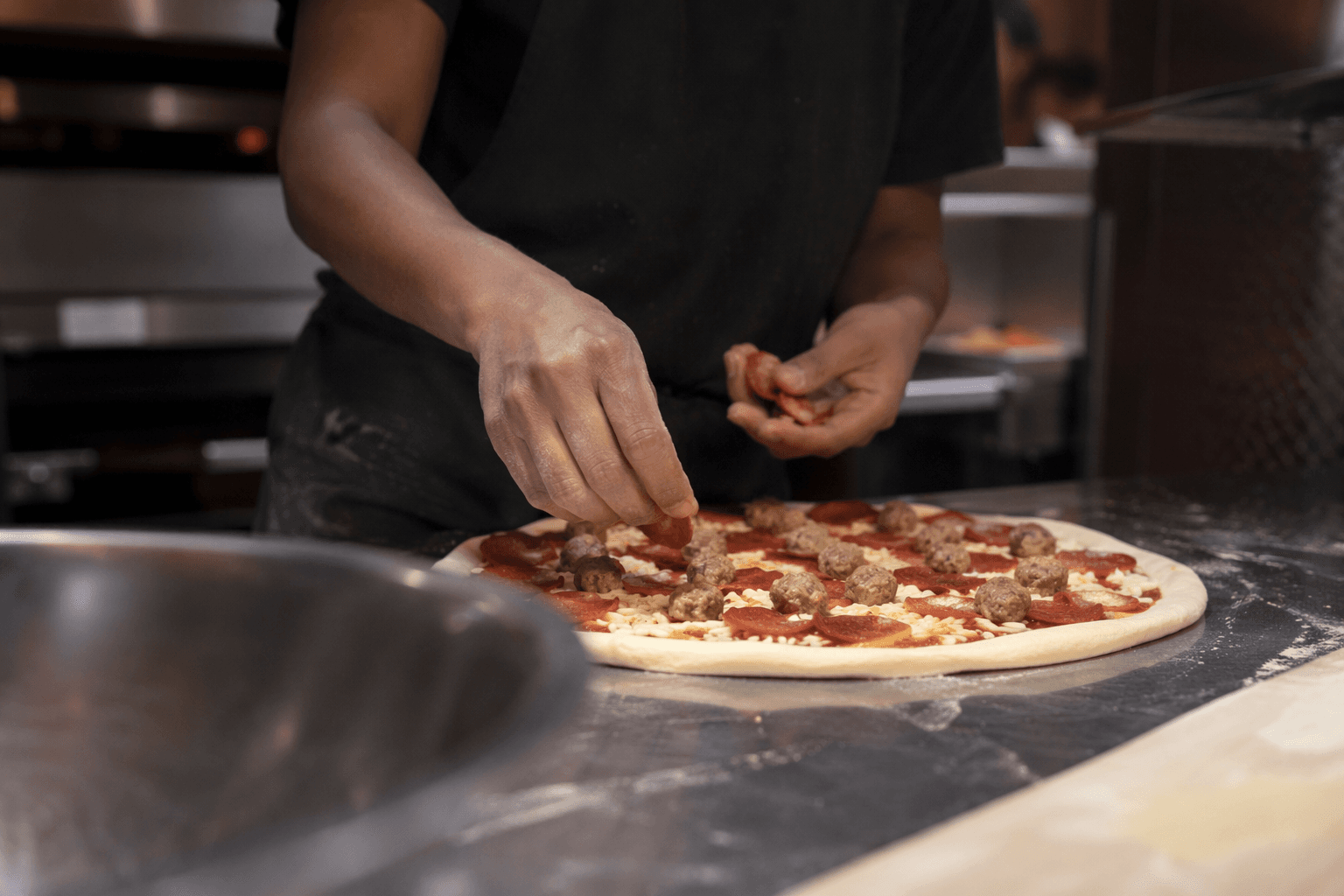
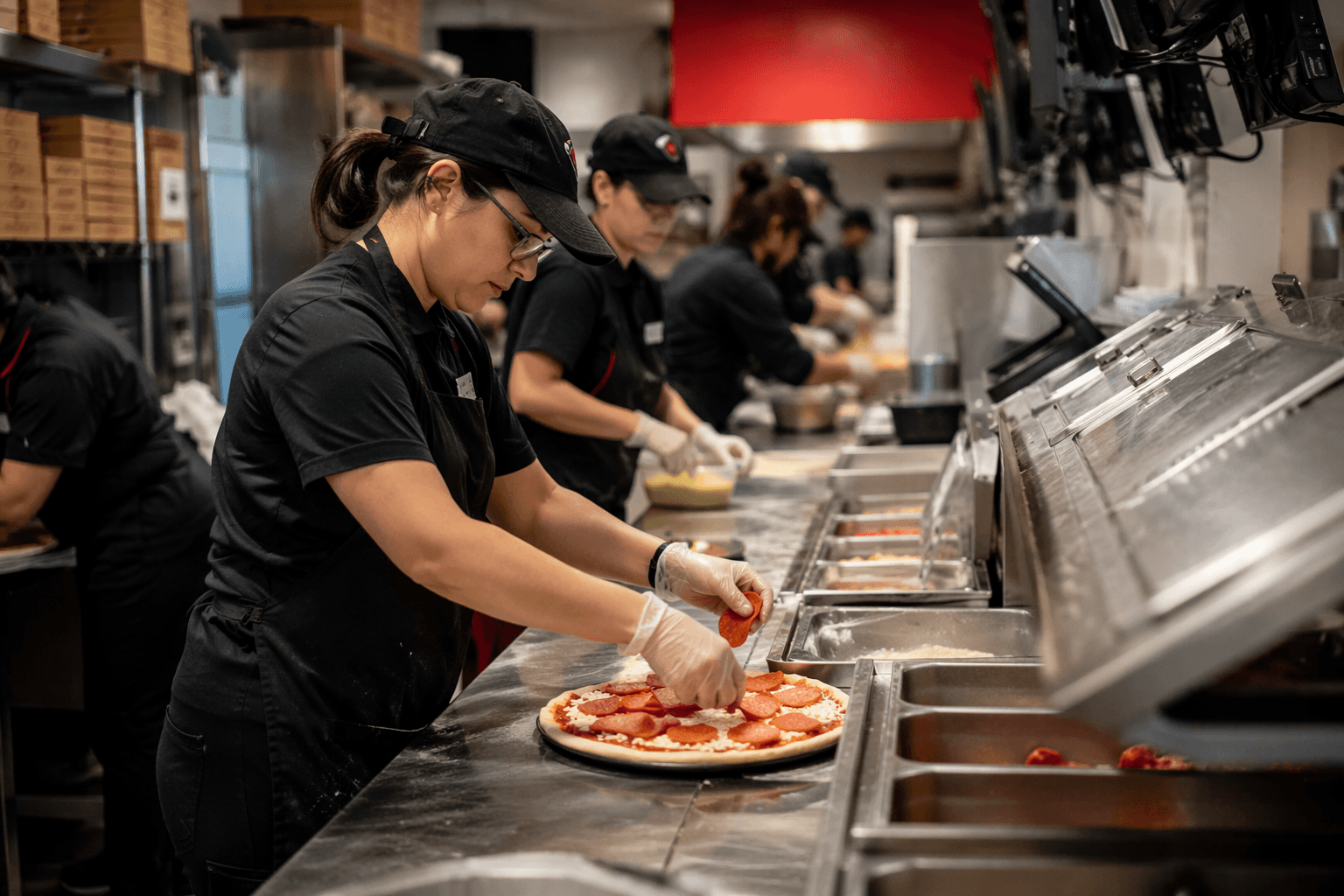
The first job is not reacting to tickets. It is setting the line so the rush has fewer chances to go wrong. That means knowing what has to be prepped before the dinner window opens, which items need to sit closest to the line, and what tools should already be in reach so nobody wastes time hunting for them when orders stack up.
Pizza Hut’s restaurant formats are not one-size-fits-all. The franchise model includes traditional and non-traditional opportunities, and public franchise materials describe delivery-based and delivery-carryout concepts as part of the system. That means the exact setup will vary by store layout, but the underlying expectation stays the same: ingredients, packaging, and equipment need to be ready before the first wave lands.
A practical pre-rush reset can look simple:
- stock the top-moving ingredients before the window opens
- stage boxes, bags, and labels at the handoff point
- check hot and cold lines so the crew is not bouncing back and forth
- make sure tools for portioning, packaging, and finishing are where the team actually uses them
- confirm which person is covering each station if the rush runs long
This is where managers earn their keep. The best shift leads do not wait to discover a missing item during peak volume. They build a layout that makes the right move the easy one.
Communication has to happen early
Pizza Hut’s public checklist and training materials put a lot of weight on communication, and that emphasis makes sense. In a kitchen under pressure, silence is expensive. If one station gets slammed, the team has to say so before tickets are late, not after the problem has already spread to the next order and the next driver.
Clear role calls matter just as much as speed. Someone needs to be watching order accuracy, someone needs to keep packaging tight, and someone needs to know when a remake or guest issue should be handed off instead of being improvised in the middle of the line. The checklist language around greetings, payment handling, speed of service, ingredient availability, and equipment readiness points to the same thing: service quality depends on people knowing what comes next.
That is especially important in stores where the manager is doing too much at once. If the phone starts ringing, the front counter is backing up, and the oven line is getting buried, the store cannot afford a vague “everybody help” approach. It needs a simple callout system, a clean division of labor, and a rule that problems get spoken aloud early.
Recovery is part of the rush plan
The stores that stay calm do not just survive the peak. They know how to reset after it. Recovery is its own discipline, and it starts the moment the rush eases. Clear the area. Refill the essentials. Confirm the next wave of orders. Check that drivers are leaving with complete bags, not partial orders that will come back as customer complaints.
That matters because a bad reset turns one hard hour into a bad night. A cluttered handoff area slows down drivers. A missing ingredient creates substitutions or remakes. An incomplete bag sends a delivery driver back to the store and eats into the next run. When the line is organized, drivers can move faster, which can also mean better use of their time on the road. When the line is not organized, everyone pays for it, from the crew member on makeup to the driver trying to protect earnings against delay.
For managers, recovery should be handled like a checklist, not a vibe. A strong post-rush routine includes:
- clearing the handoff area
- restocking the most-used items first
- checking order accuracy on the last wave out
- confirming whether any station ran short
- adjusting the next shift if one hour was clearly overloaded
That kind of reset is what keeps a dinner rush from becoming a dinner disaster.
Why this matters to drivers, crew, and managers
For delivery drivers, rush readiness changes the entire economics of a shift. A clean kitchen means less waiting, fewer corrections, and more predictable route timing. In a market where gig platforms and delivery competition have already made customers expect speed, the store cannot afford to waste driver time with incomplete bags or unclear orders.
For kitchen crew, it is the difference between working a system and fighting chaos. When the station is set, the tools are ready, and every person knows their job, the shift becomes manageable. People spend less time searching, less time redoing, and more time keeping food moving.
For managers and franchise operators, the stakes are bigger than one bad order. Pizza Hut’s 2025 franchise disclosure document puts estimated initial investments between $462,000 and $2,053,500 depending on format, which makes operational discipline a direct business issue. The disclosure also says prospective franchisees must receive it at least 14 calendar days before signing a binding agreement or making a payment, a reminder that owning or operating a unit is a serious commitment with real financial exposure.
Why the brand keeps pushing discipline
Pizza Hut’s operational culture has long been tied to repeatable procedures. The company traces its origins to 1958 in Wichita, Kansas, says its U.S. restaurants have been operated since 1958 and franchised since 1959, and notes that Pizza Hut Express has been operated by the company since 1987. It also says the brand reached 1971 as the largest pizza restaurant business in the world by sales and restaurant count, which helps explain why the system places so much weight on consistency.
That consistency is not just about tradition. Pizza Hut reported $12.7 billion in 2025 global system sales, so every breakdown in a store is part of a much larger picture. The menus may vary, the formats may vary, and the local labor mix may vary, but the core expectation stays the same: the rush gets won before the first ticket drops. The stores that understand that do not just survive the dinner wave. They control it.
This article was produced by Prism’s automated news system from verified source data, official records, and press releases, then run through automated quality and moderation checks before publishing. The system is built and supervised by the people who set the standards it runs under. Read our full AI policy.
Know something we missed? Have a correction or additional information?
Submit a Tip