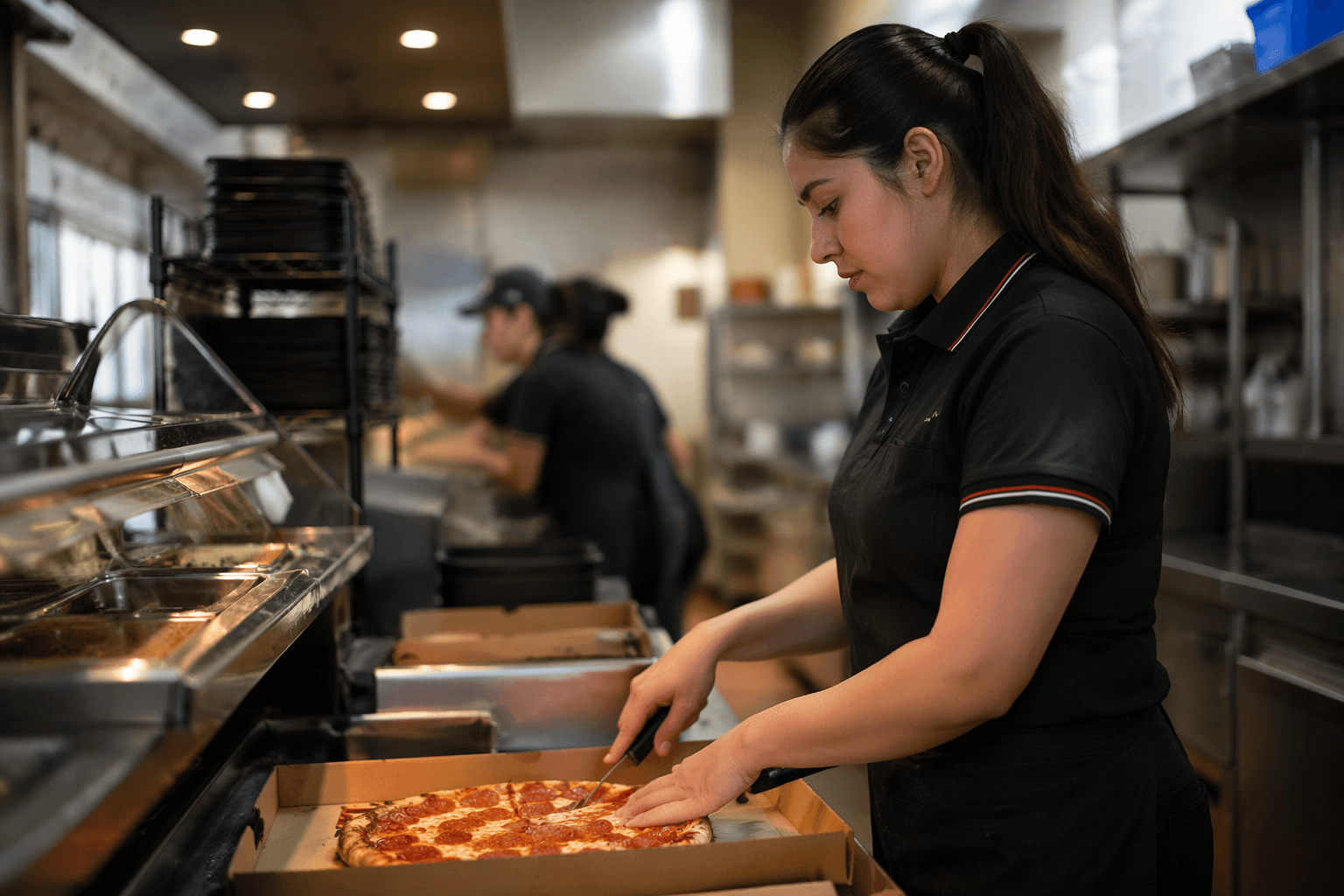
Pizza Hut workers rely on FDA food code for safer prep, date-marking
The seven-day clock on a prep pan can decide whether a Pizza Hut rush stays safe or turns into waste, write-ups, and customer complaints.
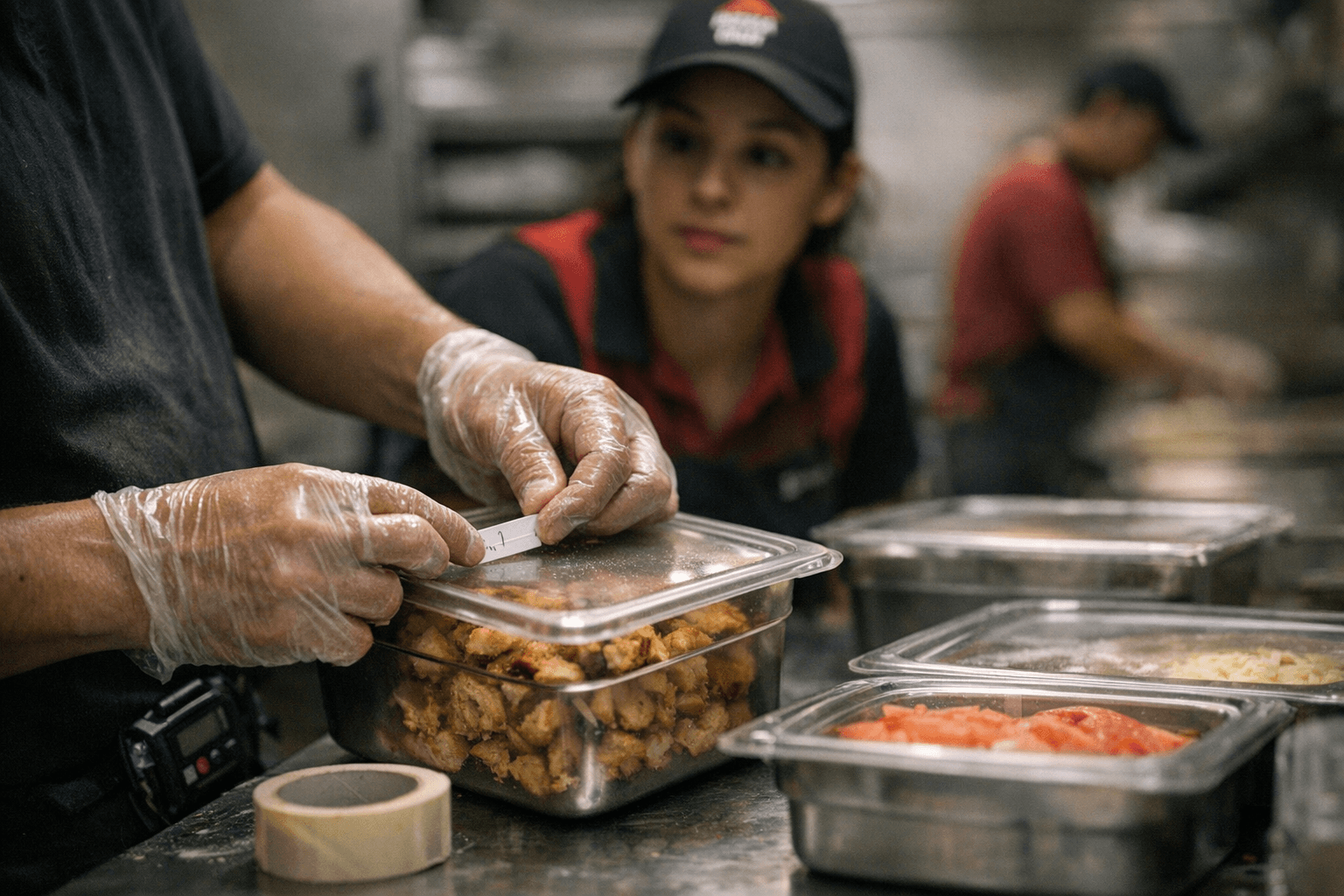
The hidden rulebook on the Pizza Hut line
The seven-day clock starts the moment a pan is made, and at Pizza Hut that can decide whether a topping goes on a pie or into the trash. The FDA Food Code sits behind that kind of split-second decision, shaping the labels, cooler checks, and rotation habits that keep a busy store from drifting into bad calls when the line is moving too fast.
FDA describes the Food Code as a model for safeguarding public health and making sure food is unadulterated and honestly presented when it reaches the customer. It is also the common framework local, state, tribal, and federal regulators use to build restaurant and grocery-store food safety rules, which is why it matters far beyond any one health inspection.
Why date-marking matters more than it looks
For Pizza Hut crews, the clearest Food Code rule is the one that lives on a sticker. Section 3-501.17 says ready-to-eat time/temperature control for safety food prepared in a food establishment and held longer than 24 hours must be date-marked when it is kept at 41 degrees Fahrenheit or below, and the maximum holding time is seven days, counting the day of preparation as day 1.
That rule sounds simple, but it is the backbone of a real shift. It tells line workers when a sauce, cheese, or topping tray is still usable, when it needs to be rotated forward, and when it has crossed the line from “still here” to “throw it out.” It also keeps managers from relying on memory, which is exactly where mistakes start when tickets stack up and the dinner rush is hitting every screen at once.
The Food Code treats date marking as part of active managerial control, the system restaurants use to manage time and temperature before a problem becomes a complaint or an illness risk. In plain terms, the sticker is not paperwork for paperwork’s sake. It is how a store keeps cold-held food from quietly becoming unsafe while everyone is focused on firing pizzas, answering phones, and pushing deliveries.
What the FDA rulebook looks like in a Pizza Hut kitchen
Pizza Hut’s own food safety checklist shows how the code turns into store-level habits. It calls for cold temperature management of maketable units, walk-in coolers, refrigerators, and salad bar refrigeration at 33 degrees Fahrenheit to 41 degrees Fahrenheit, and it says food should be correctly date-labeled and FIFO should be followed.
FIFO, first in, first out, is the operational side of the Food Code that crews feel all shift long. The older pan gets used first, the fresher pan goes behind it, and nobody gets to improvise just because a rush is hitting hard. That routine protects guests, but it also protects workers from the kind of preventable mistake that can turn into a write-up, a remake, or a manager having to explain why product sat too long.
The same discipline reaches beyond labels. The Food Code’s broader logic also supports handwashing, hot holding, cross-contamination prevention, and cleaning routines, because all of those controls depend on the same idea: food safety is something a store manages every minute, not something that appears only when an inspector walks in. At Pizza Hut, the line between a smooth shift and a messy one often comes down to whether the crew follows the process when things get busy.
The gap between policy and practice is still real
The CDC’s work on date marking shows why this rule matters operationally, not just on paper. In observed practice, almost 1 in 4 restaurants did not date-mark refrigerated ready-to-eat foods, while restaurants with strong date-marking policies were five times more likely to do it.
That gap tells you something important about the pressure inside a real kitchen. Most crews know what the sticker is for, but a slammed line, a short-staffed shift, or a manager who lets small shortcuts slide can make the rule feel optional. Once that happens, the store is no longer just risking a health code issue. It is risking food waste, a bad guest experience, and the kind of safety lapse that can snowball fast in a chain built on speed.
For delivery operations, the stakes are even more visible. One bad cooler check can mean a remake, a delayed handoff, and a longer wait for drivers already dealing with the pressure of app-based competition from DoorDash and Uber Eats. In a business where minutes matter, a date label and a proper rotation system are not tiny details. They are part of what keeps the whole delivery chain moving.
Why Yum! Brands treats food safety as a trust issue
Yum! Brands, which operates more than 50,000 restaurants in 150 countries under brands including Pizza Hut, says maintaining food safety and quality is foundational to customer trust. The company describes food safety as a public health imperative, not a competitive advantage, which is an important distinction for workers who are usually measured on speed, sales, and labor control before they ever hear praise for clean execution.
That mindset also reaches upstream. Yum! says it has pushed suppliers toward GFSI-recognized certification to strengthen quality assurance and risk management across the supply chain. For store teams, that means the food safety system starts well before product reaches the make line, and it keeps going after the box leaves the store.
Pizza Hut’s current food safety standards are housed in its Food Safety Compliance Check manual, which is where the company translates broad rules into the checks managers expect from crews. The message for workers is blunt: the Food Code is not a distant government document, and it is not just a health department tool. It is the operating system that tells a Pizza Hut store when a pan stays, when it goes, and how a rushed kitchen keeps from turning speed into a safety problem.
When the sticker, the thermometer, and the rotation order all line up, the rush is manageable. When they do not, the cost shows up fast, on the line, in the cooler, and at the customer’s door.
This article was produced by Prism’s automated news system from verified source data, official records, and press releases, then run through automated quality and moderation checks before publishing. The system is built and supervised by the people who set the standards it runs under. Read our full AI policy.
Did this article answer your question?