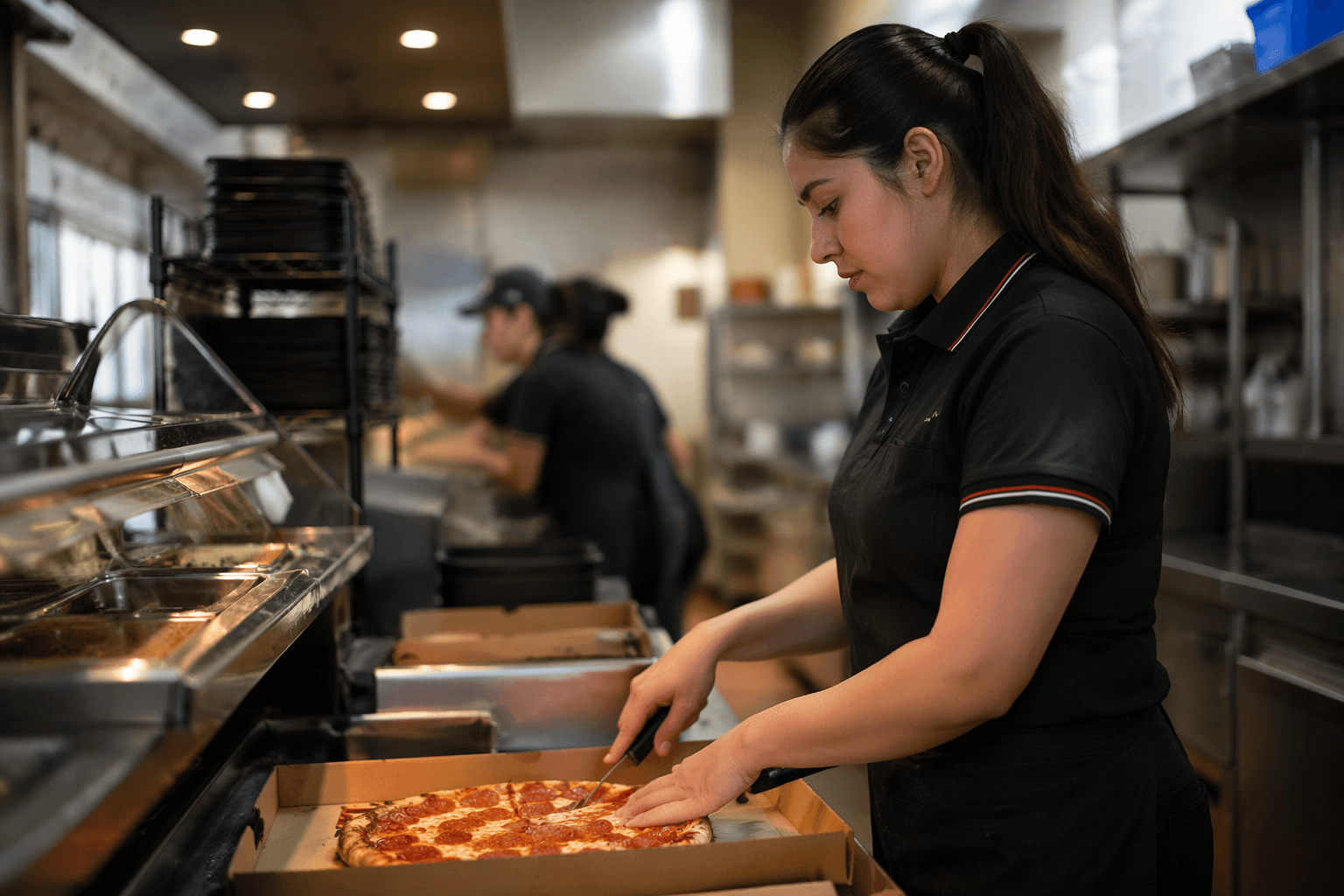
Pizza Hut workers should keep their own hours record, DOL says
The fastest way a Pizza Hut store gets in trouble is a bad time record. Keep your own log of every shift, break, and off-the-clock task so short pay and overtime errors do not snowball.
The fastest way a Pizza Hut store gets in trouble is a bad time record. A missed clock-in, a trimmed delivery run, or a closing shift that runs long can turn into short pay, overtime mistakes, or a fight over breaks. The U.S. Department of Labor says employers have the legal recordkeeping duty, but Pizza Hut workers still need their own backup if the payroll record and the reality of the shift do not match.
The reason is simple: restaurant work is messy in ways a pay stub rarely captures cleanly. Drivers are juggling dispatches, kitchen crews are cleaning up after the rush, and both sides often do side work, prep, and waiting time that can be easy to forget once the night is over. At a brand like Pizza Hut, founded in 1958 in Wichita, Kansas, those small gaps matter because labor time is one of the biggest business costs, often running 25% to 35% of restaurant expenditures, according to the National Restaurant Association.
What the law says the store should already be keeping
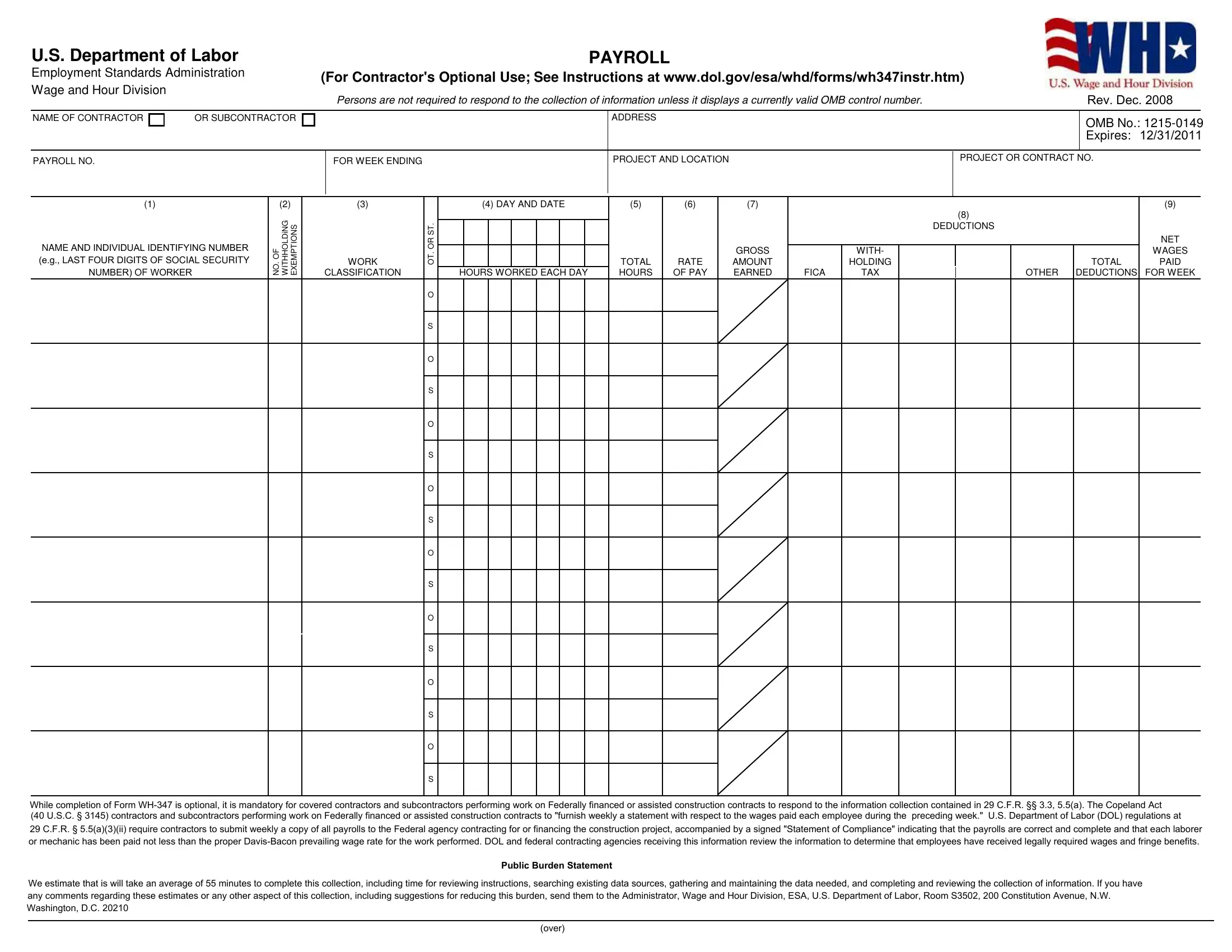
Under the Fair Labor Standards Act, every covered employer must keep accurate records for each covered, nonexempt worker. That official file is supposed to include the hours worked each day, total hours worked each workweek, the basis on which wages are paid, the regular hourly pay rate, straight-time earnings, overtime earnings, additions or deductions from wages, total wages paid, and the date and pay period covered by each payment.
There is no required form, but the information has to be accurate. The Department of Labor also says payroll records generally should be kept for at least three years, while records used to compute wages, such as time cards, wage-rate tables, work schedules, and records of additions to or deductions from wages, should be retained for two years. For workers, that means the company file may exist, but it is not smart to assume it will always be complete, easy to read, or easy to get when a dispute starts.
The department also says workers should keep their own record of the employer’s name, address, phone number, and the hours worked. That is not busywork. It is the simplest way to create a second set of facts if payroll records are edited, misplaced, or built from memory after the fact.
What to write down after every shift
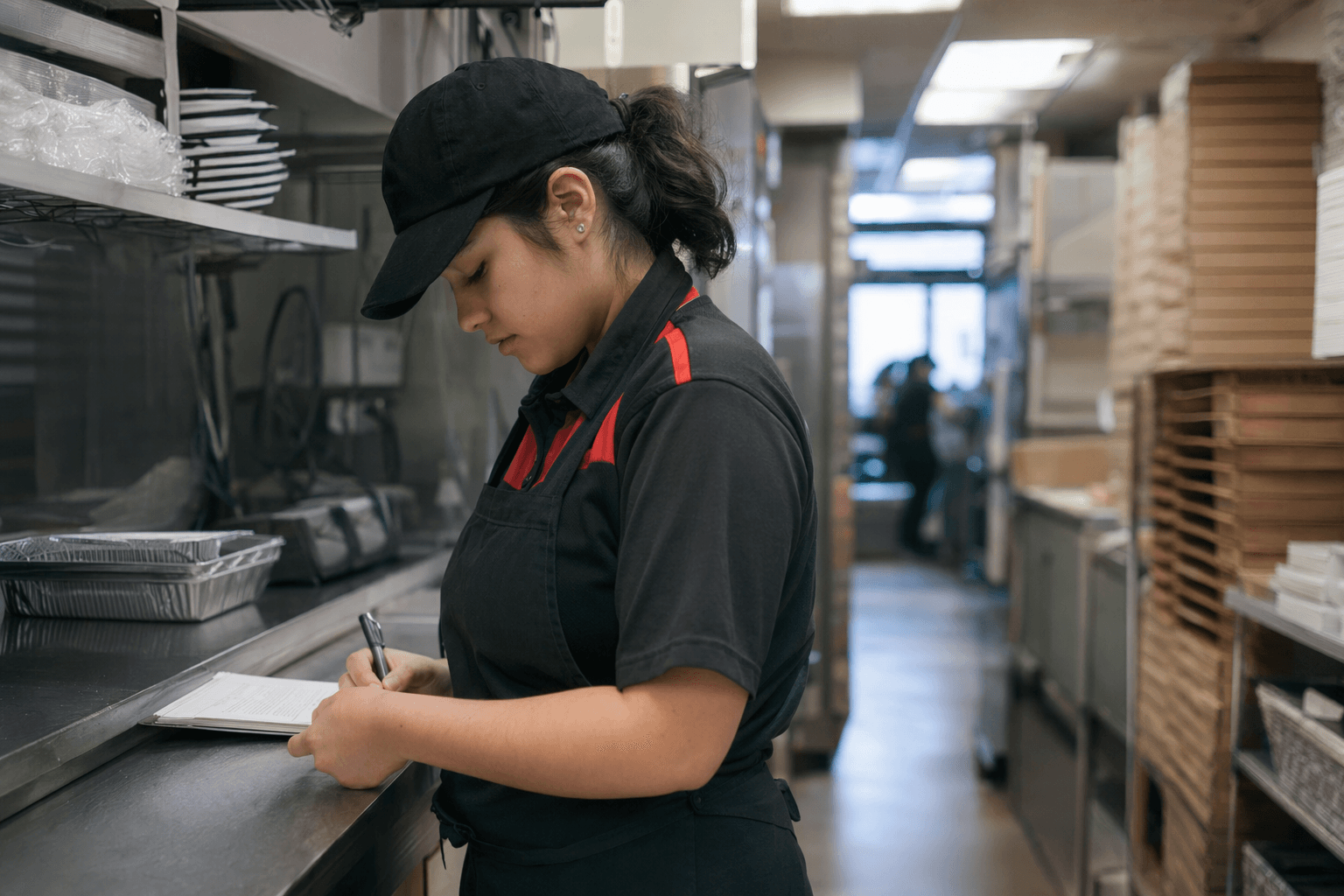
If you work at Pizza Hut, your own log should be boring, specific, and consistent. It does not need to be fancy. It does need to be complete enough that you can compare it to a pay stub and spot where the numbers drifted.
Track these items every shift:
- Start time and end time
- Meal and rest breaks, including whether they were paid or unpaid
- Any time spent doing prep before opening or cleanup after close
- Off-the-clock tasks you were asked to do
- Delivery runs that started before you clocked in or ended after you clocked out
- Cash tips, card tips, and any tip pool details you can see
- Name of the store manager or shift lead on duty
- Schedule screenshots or photos of the posted schedule, if possible
That record matters when a timecard is missed, a clock-in is edited, a delivery run goes uncounted, or a closing shift runs long. It also matters when a worker is tired, because the last thing a pizza crew member wants to do at the end of a late night is reconstruct the shift from memory two days later.
Why tipped work and side work need extra attention
The Fair Labor Standards Act allows a tip credit for tipped employees, but that does not make timekeeping less important. The Department of Labor says tipped employees are workers who customarily and regularly receive more than $30 a month in tips, and it has said that when an employer takes a tip credit, tipped workers can only spend limited time on non-tipped side work.
That point matters in a Pizza Hut store because a single shift can mix customer-facing work with tasks that do not generate tips. Drivers may spend time on the road, then come back to help fold boxes, prep ingredients, or clean the store. Counter workers and servers may jump between guest service and behind-the-scenes jobs. The Labor Department finalized limits in 2021 on how much non-tipped work can count as part of a tipped occupation, so the line between tipped and non-tipped tasks is not just an internal policy issue. It can affect wages.
If your job includes tipped work, write down when you are doing it and when you are shifted into other duties. That is especially important if your store uses a tip credit, because the hours tied to non-tipped side work can become a wage dispute later.
Why Pizza Hut workers have extra reason to keep records
Pizza Hut is part of Yum! Brands, but day-to-day wage problems often happen at the franchise level, where local managers control schedules, edits, and timekeeping. That is where a worker can get hurt by small assumptions: a driver told to wait on a run without being fully paid, a cook asked to stay late for cleanup, or a closing crew member cut loose after the register is balanced but before the last tasks are done.

Recent enforcement and litigation show why those details matter. In October 2024, a Pizza Hut franchisee agreed to pay $4.75 million to settle claims by delivery drivers who said unreimbursed gas, vehicle upkeep, and other costs pushed their actual earnings below minimum wage. In February 2024, the Department of Labor recovered $159,525 in back wages for 26 restaurant workers. Those numbers are a reminder that wage problems in restaurants rarely stay small if no one checks them early.
For drivers in particular, the pressure is sharper because delivery work sits at the intersection of mileage, tips, fuel costs, and fast turnaround times. When gig platforms like DoorDash and Uber Eats compete for the same labor pool, drivers have more options, but they also have more reason to scrutinize whether a pizza paycheck is still worth the wear on the car.
How to use your own log if payroll does not match
The point of personal records is not to fight every small mistake. It is to catch the ones that keep repeating. Compare your notes with each pay stub, and look for patterns such as missed overtime, short breaks, uncounted prep time, or delivery hours that were rounded down.
When the numbers do not match, use your log as the first comparison point. Bring the specific dates, times, and tasks to a manager or HR contact, because concrete records are harder to wave away than a general complaint that something feels off. If the store’s records conflict with yours, your notes can show what really happened on the floor and help resolve the issue before it becomes a bigger wage problem.
That is why managers should treat recordkeeping as protection, not paperwork for paperwork’s sake. Good records make payroll less error-prone, help resolve disputes faster, and protect the store during audits or investigations. They also help avoid the kind of expensive cleanup that follows a payroll system nobody trusted until the lawsuit arrived.
For Pizza Hut workers, the safest habit is plain: write down your hours, keep your schedules, save your pay stubs, and compare the numbers before the gap gets wider. In a restaurant built on speed, the slowest and smartest move is to keep your own record.
This article was produced by Prism’s automated news system from verified source data, official records, and press releases, then run through automated quality and moderation checks before publishing. The system is built and supervised by the people who set the standards it runs under. Read our full AI policy.
Did this article answer your question?