Pizza Hut workers urged to track hours, breaks, and pay details
Your best pay protection starts after each shift: log hours, breaks, tips, mileage, and manager changes before small gaps turn into wage disputes.
The paper trail that protects your paycheck
The safest habit at Pizza Hut is also the simplest: write down what actually happened after every shift. If your schedule says one thing but closing runs late, a driver waits on orders, or a manager asks you to stay past the clock-out, your own notes can be the difference between a quick correction and a lost paycheck.

That matters in a franchise system as large as Pizza Hut’s. Yum! Brands says the chain has more than 19,000 restaurants in over 110 countries, which means small payroll errors can multiply fast across a huge hourly workforce. In a business built on speed, late-night turns, and last-minute changes, the worker who keeps clean records is usually the one with the strongest case.
What to write down after every shift
The Department of Labor says workers should keep their own record of the employer’s name, address, phone number, and hours worked. At Pizza Hut, that should become a routine, not a one-time fix. Your notes do not need to be fancy, but they do need to be complete, current, and accurate.
Keep a shift log that includes:
- scheduled start and end time
- actual clock-in and clock-out time
- meal and rest break start and end times
- any time spent waiting for orders, loading out deliveries, or closing the store
- tips received, whether cash or card
- mileage or other vehicle costs for delivery work
- any side work done before or after runs
- names of managers who changed the schedule or asked you to stay late
- copies of the schedule, pay stub, and timecard for that pay period
That record is especially useful if a manager later says the schedule was the only thing that mattered. The Department of Labor’s guidance is clear: if you work longer or shorter than the posted shift, the employer must record the actual hours worked.
Why the clock is not the whole story
Restaurant work rarely fits neatly into a clock-in, clock-out box. Closing tasks can spill past the end of a shift, a driver may spend unpaid minutes waiting for an order, and a kitchen crew member may be asked to help with cleanup after the rostered hours are supposed to end. The Department of Labor says minor discrepancies between clock records and actual hours can happen, but major discrepancies should be discouraged.
For Pizza Hut workers, that means the schedule is only one piece of the picture. If you were on the job longer than the roster showed, or if a manager cut a break short, your own notes can help show the real sequence of events. Under the Fair Labor Standards Act, overtime is generally owed at one and one-half times the regular rate after 40 hours in a workweek.
Delivery drivers need a second set of records
For drivers, the paycheck issue stretches beyond hours to expenses. The Department of Labor has said that time spent on the employer’s premises, on duty, or at a prescribed workplace ordinarily counts as hours worked, and it has also addressed pizza delivery drivers who use personal vehicles, including how reimbursement for actual expenses or a reasonable approximation of expenses can matter for minimum-wage compliance.
That makes a driver’s record more than a time sheet. It should include when you loaded out, when you got back, how long you waited between runs, and what you spent to keep the car on the road. If a franchisee is shorting mileage reimbursement or treating unpaid vehicle costs like they do not exist, your notes are often the first evidence that the hourly wage did not really match the work.
Drivers should also track tips carefully. In a delivery job, tips, mileage, and wait time can shift the real value of a shift more than the base wage does, especially when gig competitors like DoorDash and Uber Eats are pulling at the same labor pool and making every slow, underpaid run harder to justify.
How the Department of Labor wants records kept
The Department of Labor does not require a special form for recordkeeping. Employers covered by the Fair Labor Standards Act must keep accurate records of hours worked and wages earned, but the agency says there is flexibility in the method as long as the records are complete and accurate. Employers may use any timekeeping system they choose, including letting employees track their own work hours.
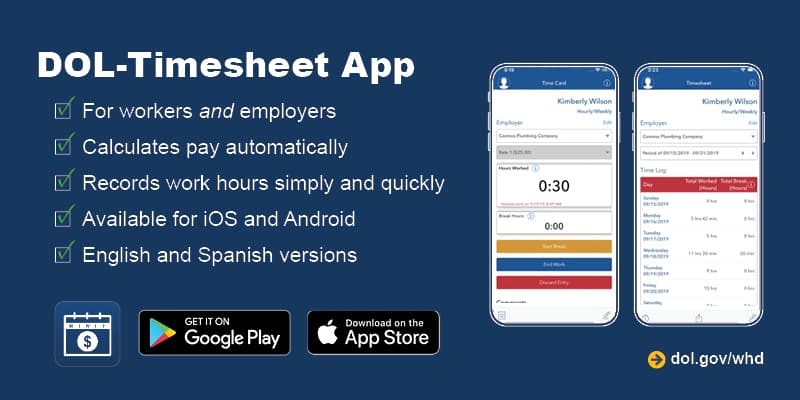
That is where a tool like the DOL-Timesheet app fits in. The app is designed to help employees and employers track regular hours, break time, and overtime, and it can calculate pay automatically. For workers who move quickly between dough, ovens, ovenside cleanup, deliveries, and closing chores, that kind of running record can catch mistakes before the end of the pay period.
The bigger point is not the app itself. It is the habit. A worker who logs time every day is far better positioned than someone trying to reconstruct a week from memory after a double shift and a late-night closing rush.
If the paycheck looks short, evidence beats memory
When a paycheck comes in light, the first move is to compare three things: what was scheduled, what was actually worked, and what was paid. That sounds basic, but it is where many disputes fall apart, because memory gets fuzzy fast and managers often rely on whatever the time system says without checking whether it reflects reality.
Good records can also help a worker act before a claim goes stale or money gets delayed. The Department of Labor’s Workers Owed Wages database exists because the Wage and Hour Division sometimes holds back wages for workers it cannot immediately locate, and after three years any unclaimed back wages are sent to the U.S. Treasury. In other words, documentation is not just about winning a disagreement. It can help a worker claim money before it disappears into bureaucratic limbo.
The stakes are real, and the cases keep coming
Recent enforcement shows this is not a theoretical problem. In April 2026, the Labor Department said it recovered $63,645 for eight Austin restaurant workers who were denied overtime wages. In another 2026 case, the agency said a Little Caesars operator in Redwood City agreed to pay $409,457 in back wages to 32 workers after investigators found violations.
Pizza Hut has also been part of that broader wage-pressure story. In October 2024, a reported settlement involving a Pizza Hut franchisee totaled $4.75 million and centered on claims that unreimbursed gas, vehicle upkeep, and other costs pushed delivery drivers below minimum wage. For workers, that is the practical lesson: when a job depends on fast runs, split-second breaks, and a manager’s shifting instructions, the only reliable protection is a record you keep yourself.
The strongest defense is the one you build every shift
Pizza Hut workers do not need to wait for a payroll problem to start acting like accountants. A daily habit of logging hours, breaks, tips, mileage, and manager changes is the cleanest way to catch missing pay before it snowballs. In a restaurant system this large, where the work is physical, the pace is unforgiving, and the margin for error is thin, careful recordkeeping is not paperwork. It is wage protection.
This article was produced by Prism’s automated news system from verified source data, official records, and press releases, then run through automated quality and moderation checks before publishing. The system is built and supervised by the people who set the standards it runs under. Read our full AI policy.
Did this article answer your question?