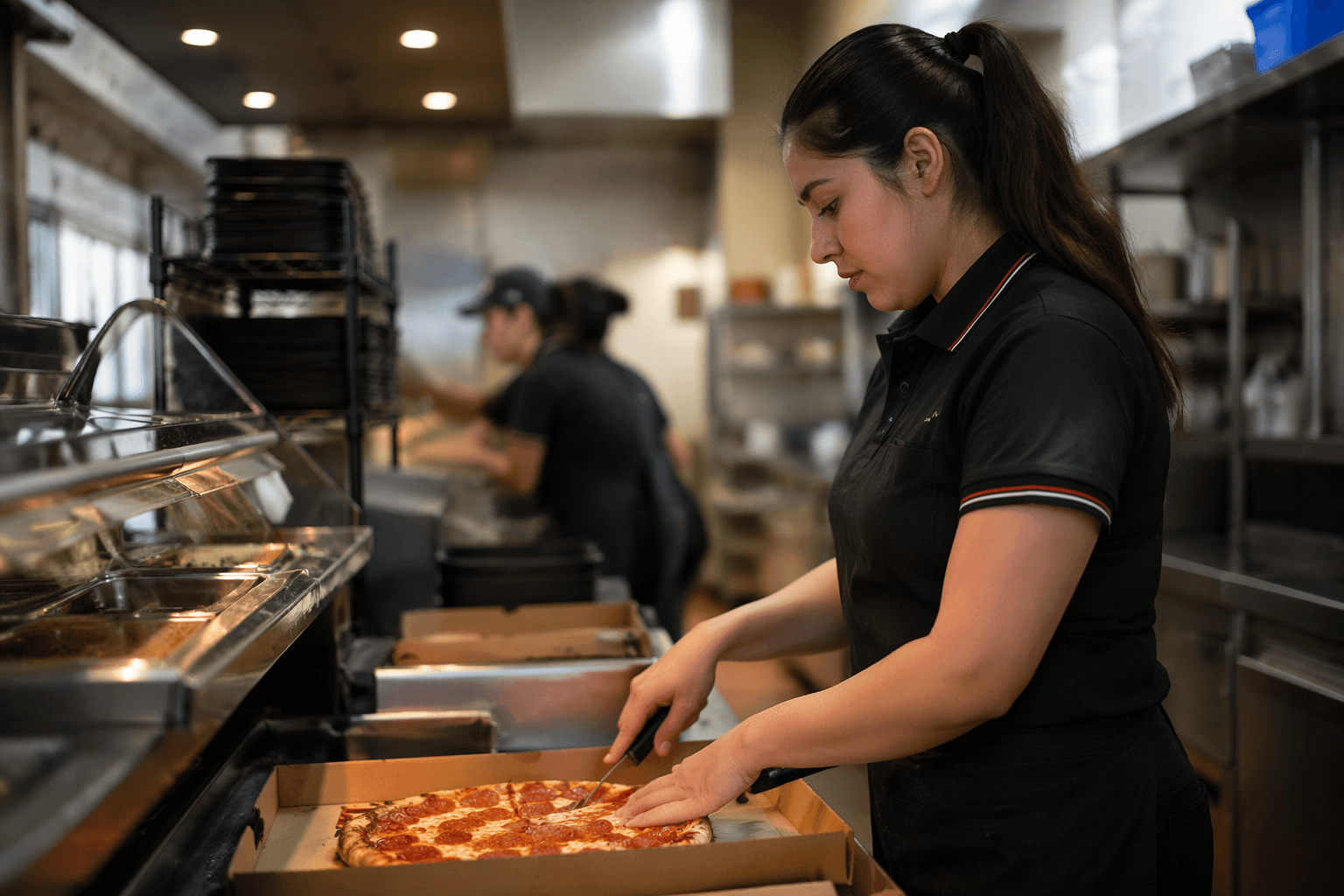
ServSafe credential helps Pizza Hut crews standardize food safety training
ServSafe gives Pizza Hut crews a shared food-safety standard that can help with promotions, inspections, and day-to-day credibility. The credential now lines up with the latest FDA food-code supplement and is built into Yum’s training system.
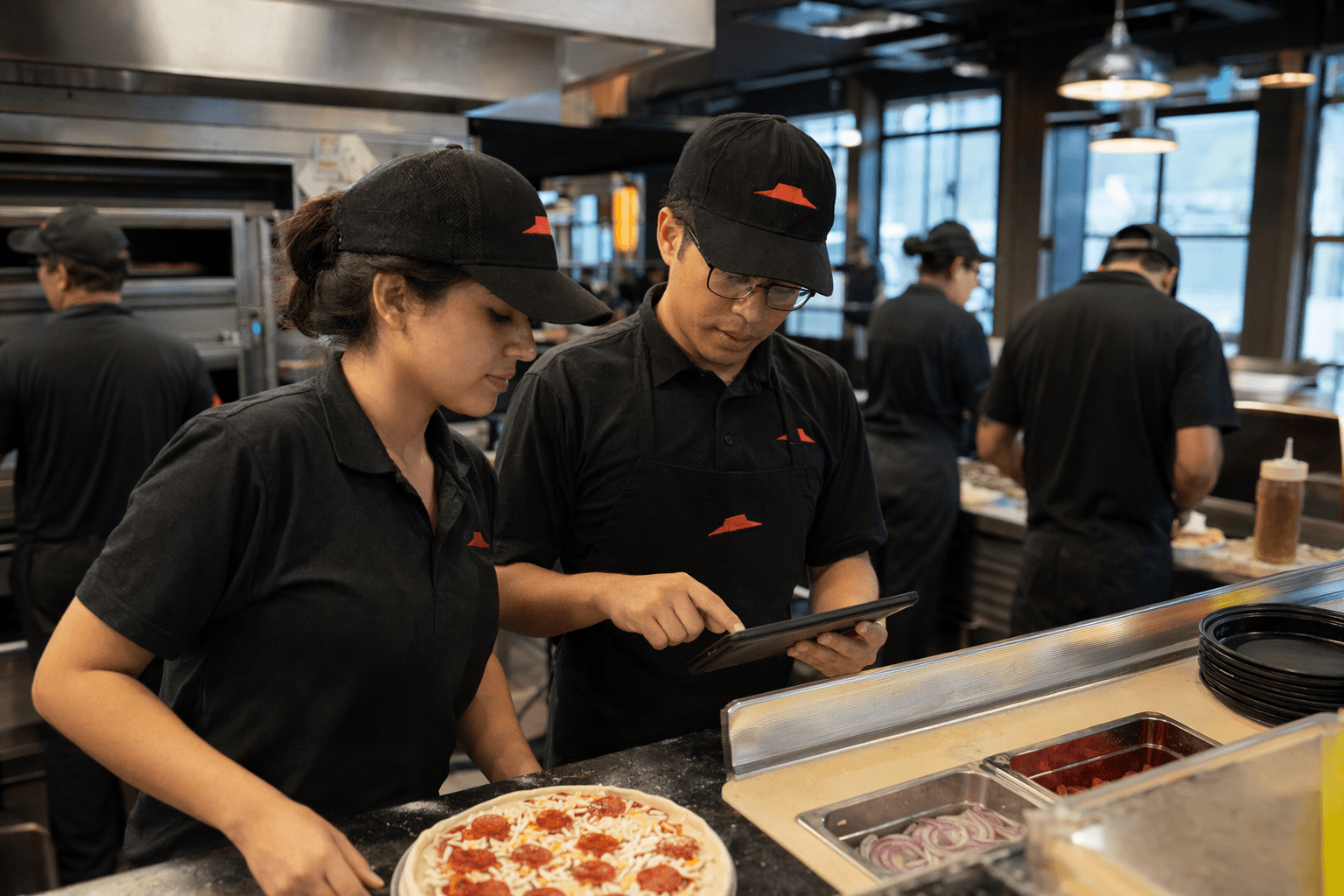
At Pizza Hut, ServSafe is more than a certificate to hang on a wall. It gives crews and managers a common language for hygiene, temperature control, and cleanup, which matters in a business where one missed step can ripple across a whole shift.
That matters because the stakes are not small. The CDC estimates that 9.9 million domestically acquired foodborne illnesses from known pathogens hit the United States each year, leading to 53,300 hospitalizations and 931 deaths. For a Pizza Hut team juggling delivery times, dine-in rushes, carryout volume, and constant turnover, a standard like ServSafe can be the difference between routine execution and a preventable problem.
Why ServSafe carries weight in a Pizza Hut store
ServSafe is the National Restaurant Association’s food safety training and certification brand, and the association says its programs are designed to help teams serve food and alcohol safely. The 2026 ServSafe Manager 9th Edition is aligned to the Supplement to the 2022 FDA Food Code and the current ServSafe content blueprint, which means the material is not frozen in time. It reflects the latest food-safety expectations now being used to guide retail and foodservice controls.
That alignment matters for restaurant workers because food safety rules are not just about passing a test. The FDA says the Food Code and its supplement provide practical, science-based controls for reducing foodborne illness risk in retail and foodservice establishments. In plain terms, that gives Pizza Hut managers a defensible standard when they are coaching a new hire, correcting a prep mistake, or preparing for an inspection.
What the 9th Edition teaches crews to do right
The ServSafe Manager curriculum is broad for a reason. It covers personal hygiene, time and temperature control, preventing cross-contamination, cleaning and sanitizing, safe food preparation, receiving and storing food, thawing, cooking, cooling, reheating, HACCP, and food-safety regulations. Those topics map directly onto the kinds of breakdowns that happen in a busy pizza shop: sauce or topping contamination, food left in the danger zone too long, mislabeled product in the cooler, or a clean tool touching a dirty surface.
That breadth is useful because restaurant failures usually come from a chain of small misses, not one giant mistake. A store may not collapse because of a single bad act. More often, trouble starts when product sits too long, clean and dirty tools get mixed, or a new hire never gets the same standard the rest of the team uses.
For managers, that makes ServSafe a practical coaching tool. For crew members, it can also be a signal that you understand the system behind the food, not just the task in front of you.
What it can mean for your career path
In a franchise operation like Pizza Hut, credibility travels quickly. A crew member who knows the food-safety language can be easier to trust on a closing shift, during a rush, or when a manager needs someone who can handle more responsibility without constant correction. That is why ServSafe can function as a career asset, not just a compliance requirement.
For crew members
If you are trying to move from entry-level work into a shift lead, trainer, or assistant manager role, the credential can help show that you understand the basics that keep a store running. A person who can explain safe holding temperatures, cleaning order, and cross-contamination control is often more ready for extra responsibility than someone who only knows the narrow task they were hired to do.
For managers
If you already run shifts, ServSafe can make inspection prep and coaching easier because it gives the whole store a common standard. Instead of inventing your own way to explain the rules, you can point to one shared framework that applies across prep, line work, storage, and sanitation. In a high-turnover environment, that consistency is a real operational advantage.
How Pizza Hut workers access it through Yum
ServSafe is not just an outside class that Pizza Hut workers have to find on their own. Yum’s Hut Link food-safety page routes workers to the ServSafe and Yum portal and says they can access the exam at a discounted rate. That setup makes the credential part of the company’s training ecosystem rather than an isolated add-on.
The Hut Link page also says hourly employees must take training only during scheduled work hours. That detail matters. It is a reminder that training time is still labor time, and workers should know when they are expected to complete certification work on the clock rather than on their own time.
ServSafe has also already moved with the industry. In 2020, the National Restaurant Association said the brand expanded to include online, remote-proctored exams. That kind of flexibility matters for Pizza Hut crews who may be balancing split shifts, childcare, transportation, or delivery-side work in a market crowded by DoorDash and Uber Eats pressure.
Why managers should care about the latest update
The 2026 Manager 9th Edition is updated to reflect changes in the content blueprint and the Supplement to the 2022 FDA Food Code. The FDA released that supplement in November 2024, and the update was built into the new edition. For stores, that means the training is meant to track the current standard, not an older playbook that may already be behind the rules.
That is especially important when a store faces health department scrutiny. A manager who understands the current standard can respond faster, correct staff more consistently, and reduce the chance that a small sanitation problem becomes a bigger operational issue. It also gives franchise leaders a cleaner way to standardize training across stores, which is often where a brand’s consistency is won or lost.
The labor politics around ServSafe are part of the story too
ServSafe has also faced criticism from labor advocates. Restaurant Business reported that a union-backed group affiliated with One Fair Wage accused the National Restaurant Association in federal court of using ServSafe certification revenue to support lobbying against wage and benefit increases for restaurant workers. The National Restaurant Association has defended ServSafe as an industry food-safety training and certification resource.
That dispute does not erase the practical value of the credential for Pizza Hut workers. It does, however, raise a familiar workplace question: when a credential is attached to a job, who pays for it, who controls it, and who benefits from it? For hourly workers especially, those questions matter as much as the training itself.
The bottom line is simple. At Pizza Hut, ServSafe is most useful when it does three things at once: it standardizes the language of food safety, it strengthens a worker’s case for more responsibility, and it lowers the odds that a store gets caught flat-footed when safety is under the microscope. In a business built on speed, consistency, and turnover, that kind of credential can carry real weight.
This article was produced by Prism’s automated news system from verified source data, official records, and press releases, then run through automated quality and moderation checks before publishing. The system is built and supervised by the people who set the standards it runs under. Read our full AI policy.
Did this article answer your question?