Pizza Hut workforce strategy shifts to retention, training, and technology
Pizza Hut’s fix is not just hiring faster. Stores that coach new people well, use tech after hire, and give managers room to lead keep crews longer and shifts cleaner.
The real problem is retention, not just recruiting
Pizza Hut’s workforce problem has shifted from filling openings to keeping crews intact long enough for training to pay off. That matters even more now that Yum! Brands has launched a formal review of Pizza Hut’s future, said the brand may work better outside Yum, and later disclosed that about 250 U.S. stores, roughly 4% of the system, would close in the first half of 2026 after U.S. same-store sales fell 3% in the fourth quarter of 2025 and 5% for the full year.
That pressure reaches the floor fast. When a store has too many open shifts, too much turnover, or a manager who is buried in admin, the rest of the operation slows down: training slips, orders back up, service gets choppy, and the people who stay take on more of the load. The National Restaurant Association’s April 2026 brief makes the same point in business terms, arguing that staffing decisions should be treated as a strategic investment, not a short-term cost, and noting that restaurants employ more than 10% of the U.S. workforce, about 15.7 million jobs.
Onboarding is where a new hire becomes useful, or leaves
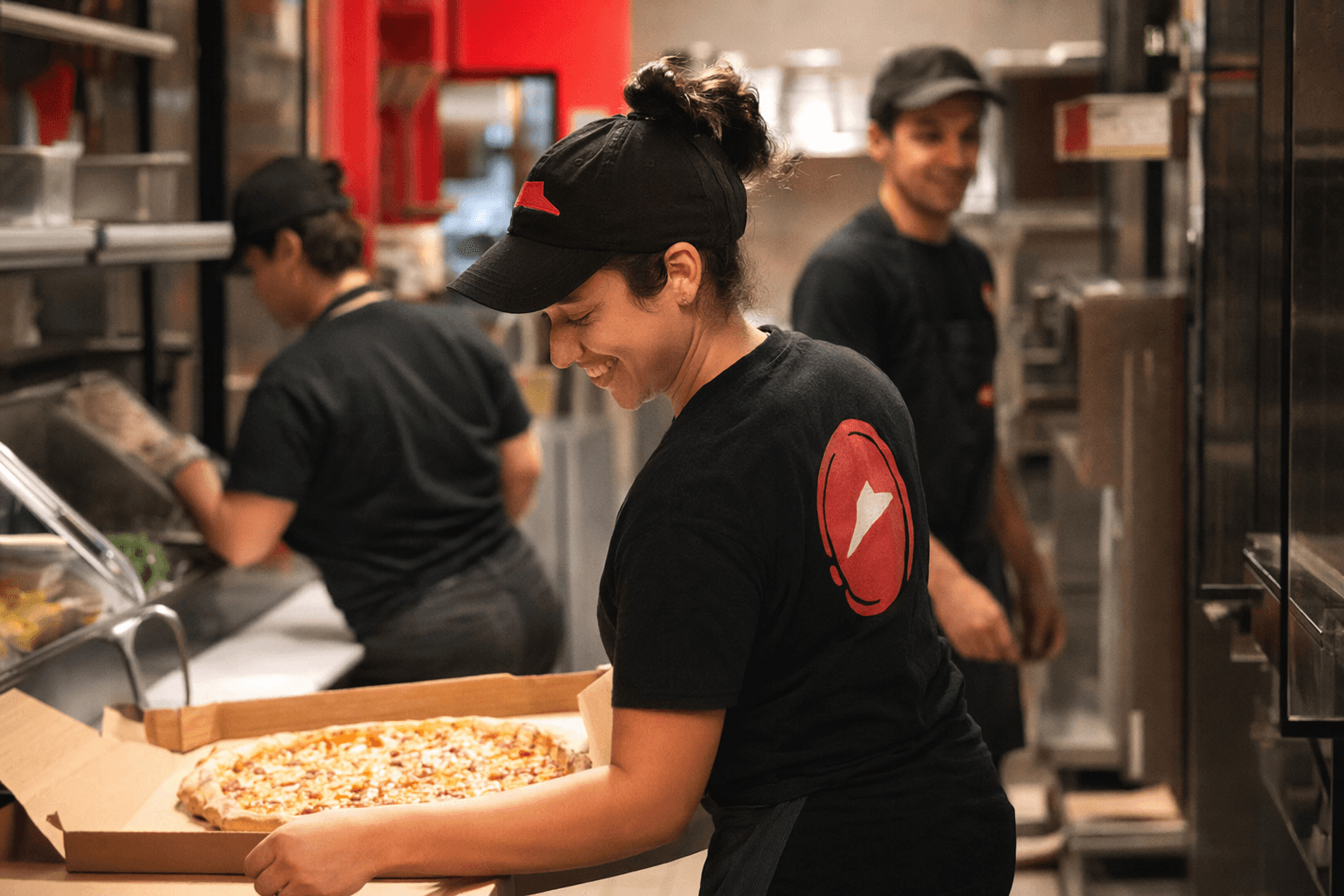
The first days and weeks should not feel like a trial by fire. A strong Pizza Hut onboarding process gives a new hire a clear lane, a real trainer, and enough repetition to survive the first busy rush without guessing at every step. That matters because the research brief says restaurants should focus on ROI, break-even new-hire timelines, and the cost of early turnover and understaffing, the hidden losses that can wipe out the gain from simply putting a body on the schedule.
In a store that does this well, a driver learns the route system before the Friday night wave, a kitchen hire knows the make-line sequence before the tickets stack up, and a shift lead checks understanding instead of assuming it. The practical goal is simple: fewer mistakes, faster learning, and less early churn. If someone is still getting corrected on basic tasks after multiple shifts, the store has not finished onboarding, it has just started counting labor hours.
Managers are the retention tool most stores underuse
The new research puts managers at the center of restaurant economics, not as schedule fillers but as the people who make the shift work. That lines up with what Pizza Hut crews already know: the best stores usually have a manager who can coach, communicate, and keep the team aligned on what matters during the rush. When that leadership is missing, everyone feels it, from the driver waiting on a late pie to the cook trying to clear a backlog with no help.
Black Box Intelligence’s 2024 workforce research backs up the pay-and-leadership connection. Restaurants with top-tier general manager pay saw 6% lower turnover than lower-paying counterparts, and while hourly turnover had eased, management turnover was still above pre-pandemic levels. That is the trap for a chain under pressure: it is easy to chase labor hours, but much harder to replace a strong shift leader who knows how to keep people from quitting in the first place.
Technology helps most after the hire, not before it
The National Restaurant Association’s April 2026 brief is blunt about where technology earns its keep: after the hire. The greatest efficiency and value come from systems that support onboarding, scheduling, training, and manager effectiveness, not from software that merely posts jobs faster or makes headcount look neat on a dashboard. Workday supported the research, and the underlying message is clear: technology should free managers to lead, not trap them in clerical work.
For a Pizza Hut store, that means using tools to reduce chaos on the floor. Scheduling software should help cover peak hours before they become emergencies. Training tools should make it easier to refresh a driver on handoff rules or a kitchen worker on speed and accuracy. And manager-facing systems should cut down on busywork so the person in charge can be visible during the rush, where problems actually show up.
What stronger shift-level leadership looks like in practice
A good manager playbook at Pizza Hut is not abstract. It is built around a few habits that protect new hires and steady the crew:
- Build the first two weeks around repetition, not improvisation. A new hire should see the same core tasks enough times to do them without hesitation.
- Pair onboarding with the busiest realities of the store. Training that only works in a slow hour fails the moment the Friday surge hits.
- Give supervisors the authority to fix small problems early. A missed label, a bad handoff, or an understaffed window becomes a bigger mistake when nobody can stop and coach.
- Track when new hires become net positive. The NRA brief explicitly flags break-even timelines, which means managers should know when a hire stops being mostly training cost and starts carrying real shifts.
- Use technology to protect leadership time. If the system is saving the manager minutes, those minutes should go back into coaching, not disappear into another report.
Why this matters now for Pizza Hut crews
The broader labor market is no longer in the chaos of the Great Resignation in 2021, but staffing is still hard because turnover and competition for skilled roles continue to pressure operators. That is why the old reflex of hiring as many people as possible and hoping the schedule sorts itself out does not work anymore. For Pizza Hut, especially with closures, sales pressure, and a strategic review hanging over the brand, every weak handoff and every avoidable quit is more expensive than it used to be.
The stores that will hold up are the ones that treat onboarding as a performance system, not a paperwork step. They will train faster, keep more people, and run steadier shifts because the manager is leading the floor instead of reacting to it. In a chain that is trying to reset, that may be the difference between another scramble and a store that actually stays staffed long enough to breathe.
Know something we missed? Have a correction or additional information?
Submit a Tip