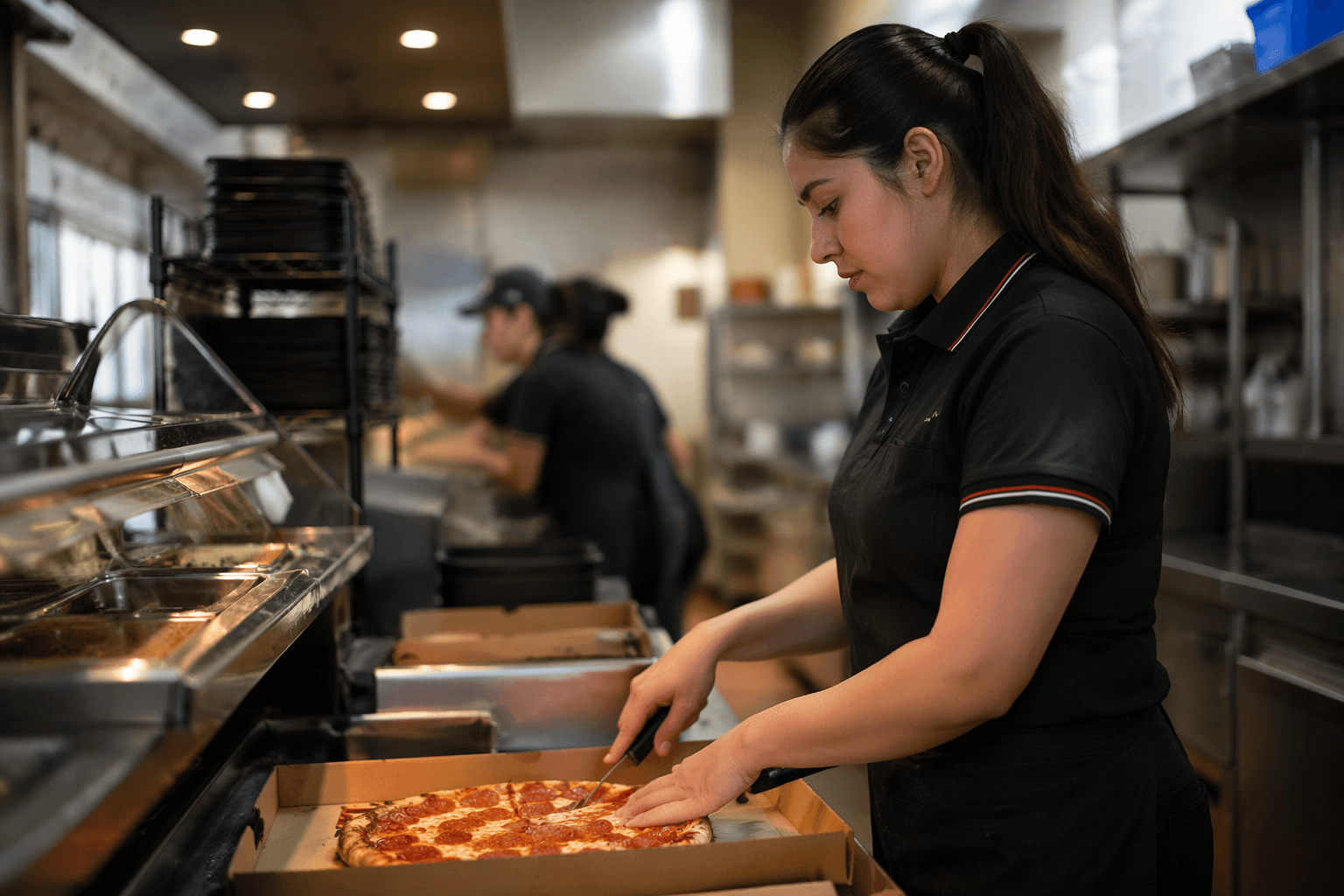
Pizza Hut's Beloved Glasgow Location to Permanently Close Tomorrow
Glasgow's Four Corners Pizza Hut closed on Aug. 23, 2025, then DC London Pie filed for administration two months later, erasing 1,200 jobs across 68 UK restaurants.
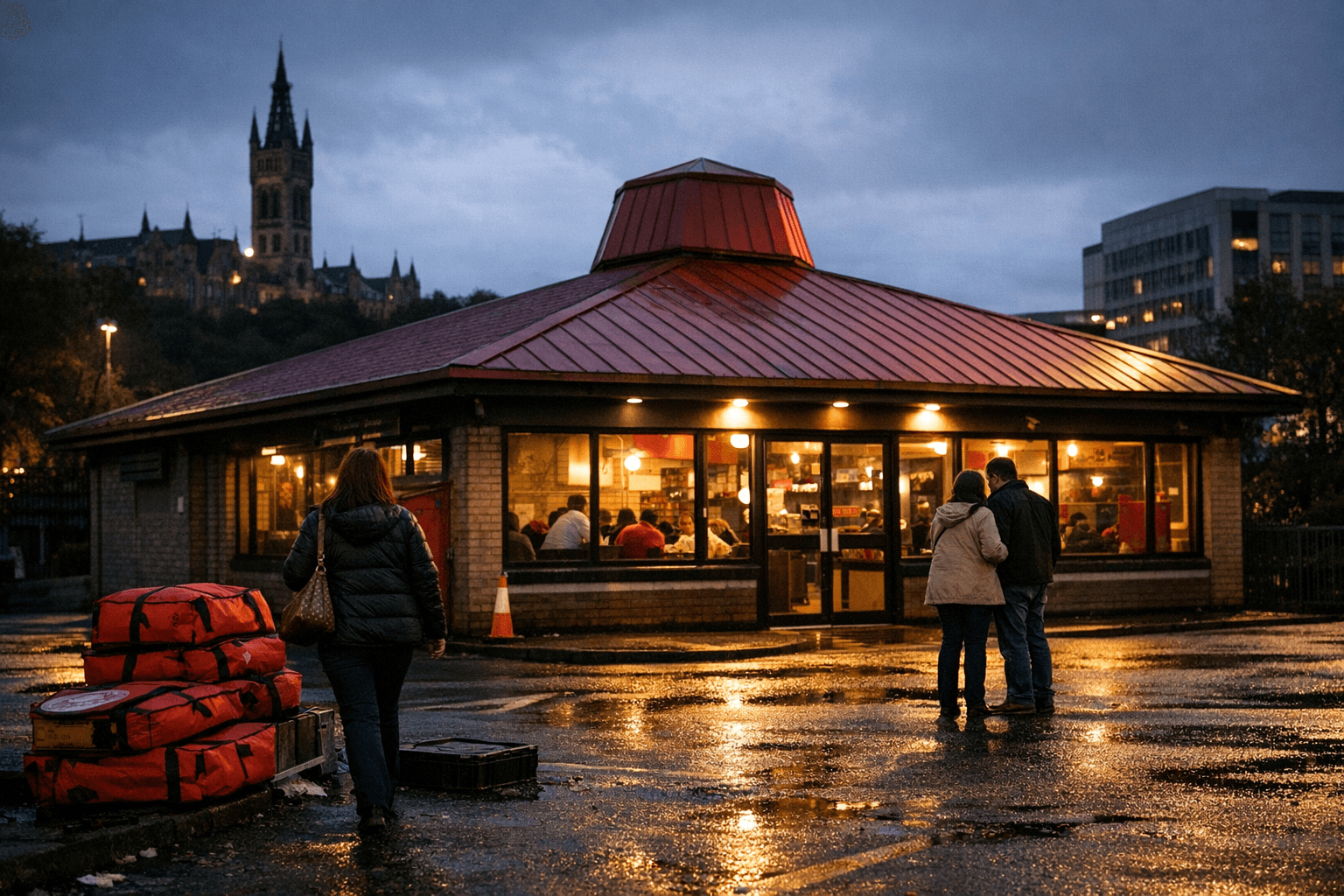
The sign taped to the window of Pizza Hut's Argyle Street restaurant in Glasgow said it simply: "Closed. Last day of trade was August 23, 2025. We appreciate your custom over the years. Thank you, Glasgow. Sincerely, The Pizza Hut - Argyle Street Team." With that, the city's flagship Pizza Hut, a fixture at the famous "Four Corners" junction of Argyle, Jamaica, and Renfield Streets, where KFC, McDonald's, and Tim Hortons still hold their corners, went permanently dark.
It was not an isolated farewell. Two months later, UK franchise operator DC London Pie Limited entered administration on October 20, 2025, triggering the closure of 68 dine-in restaurants and 11 delivery outlets across England, Scotland, and Wales and putting more than 1,200 workers out of jobs. Six Scottish locations were among those shuttered. The two remaining Glasgow restaurants, at Braehead Shopping Centre and Glasgow Fort, were eventually spared when Yum! Brands stepped in to acquire 64 surviving UK locations. Across the Atlantic, Yum! Brands announced a parallel reckoning: roughly 250 US Pizza Hut locations, about 3% of its domestic footprint, are closing in the first half of 2026.
Taken together, the Argyle Street closure and the administration tell a consistent story about the pressures squeezing traditional dine-in pizza operators, and franchise managers can watch for the same signals on their own P&L before a location reaches the same tipping point.
The first number to watch is delivery revenue as a share of total weekly sales. The UK collapse was driven in part by a structural shift away from dine-in formats, yet individual locations still carried full dining-room overhead. When delivery mix climbs past roughly 60% of weekly sales and dine-in traffic is no longer covering fixed occupancy costs, the unit economics start to invert. Every dollar earned through DoorDash or Uber Eats carries a commission drag of 15 to 30 percent, meaning high delivery volume can accelerate losses rather than offset them.
Coupon and discount dependency is the second metric worth tracking. When a location relies on deep promotions week over week to sustain same-store sales, it is masking a demand problem, not solving one. Managers who notice that sales hold only when buy-one-get-one or bundled deals are running should treat that as a structural warning, not a marketing win.
Late-night sales offer a reliable lead indicator of foot-traffic decay. The Argyle Street location was positioned as "convenient for the Hydro and SECC events" due to its proximity to Central Station, meaning post-event and evening covers were central to justifying its rent. A sustained drop in sales after 9 p.m. signals the surrounding footfall that once supported a location is quietly eroding.
Labor cost as a percentage of net revenue is the fourth dial to monitor. As volume softens, a fixed staffing floor means labor percentage creeps upward even without pay increases. When labor consistently lands above 35% of net sales, the buffer for absorbing a rent reset or one-time cost spike largely disappears.
That rent reset is often the final trigger in a closure sequence that was actually years in the making. DC London Pie's administration filings pointed to the need to renegotiate rents as central to its failed restructuring attempt. By the time a location loses its rent negotiation, the delivery mix has usually been unfavorable for months, discounts have become structural, late nights are quiet, and labor is stretched thin. The Argyle Street sign read like a polite goodbye. The P&L told the real story long before the doors closed.
This article was produced by Prism’s automated news system from verified source data, official records, and press releases, then run through automated quality and moderation checks before publishing. The system is built and supervised by the people who set the standards it runs under. Read our full AI policy.
Did this article answer your question?