Third‑party delivery fees keep rising — industry math and what it means for Pizza Hut drivers and franchise managers
Platform fees quietly eat 30–40% of every third-party delivery order, and that math is reshaping shift schedules, tip pools, and pricing decisions at Pizza Hut stores right now.
The fee stack most managers never see in full
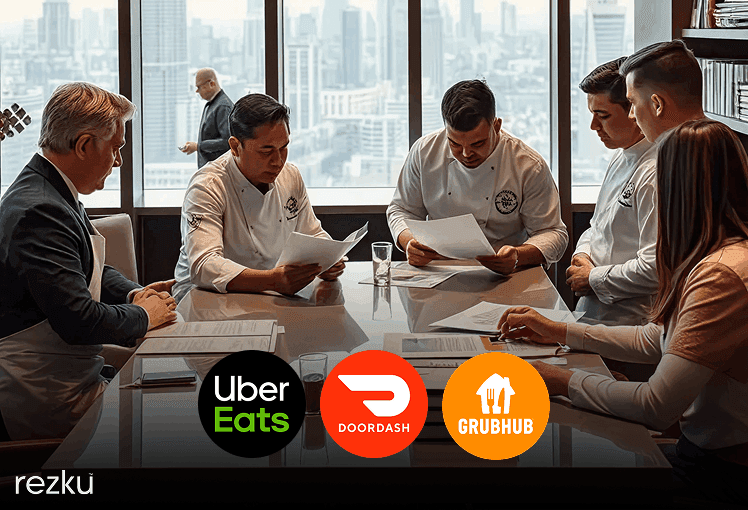
When a Pizza Hut customer taps "order" on DoorDash or Uber Eats, the headline commission is rarely the whole story. A restaurant-operations analysis published in early April 2026 by Rezku walks through the real math, and the numbers are sobering: once base commissions, platform processing fees, promoted listing charges, refund adjustments, and packaging costs are stacked together, operators commonly land at an effective per-order cost of 30% to 40% of gross revenue. That is not an edge-case outcome for a mismanaged store. It is the documented norm across DoorDash, Uber Eats, and Grubhub.
The commission tiers themselves are instructive. All three major apps offer a similar tiered pricing structure with fees ranging from 15% to 30%. But those tiers are only the starting point. Uber Eats raised rates in two of its three pricing tiers by 5% in March 2026, a change affecting certain small and mid-size restaurants. The Lite tier delivery fee rose to 20% from 15%, while Plus-tier restaurants now pay an additional 5% surcharge on orders from Uber One members, on top of the standard 25% rate. For a franchise location running on already-thin food-service margins, that 5-point swing is the difference between a delivery channel that pencils out and one that quietly hemorrhages cash.
Translate that to a concrete ticket. On a $35 Pizza Hut order, a 15% base commission takes $5.25 off the top before a single topping is sliced. Add a processing fee, a promoted-placement charge to stay visible in a crowded app marketplace, and a proportional share of refund credits the platform issues to customers for late or incorrect orders, and the effective cost can climb past $10 on that same ticket, leaving the store with a fraction of what the order value suggested at a glance. Many operators find that the effective cost per order ends up closer to 30% to 40% of revenue, not the advertised rate.
What franchise managers are actually doing about it
The pressure lands squarely on the store manager, not on Yum! Brands headquarters. Franchisees who own one, two, or five locations cannot absorb a 35% revenue cut on their delivery channel without making downstream decisions that affect everyone on the floor. Those decisions tend to cluster around three levers.
The first is menu repricing. Rezku recommends that managers track per-order economics and share realistic expectations with staff about how the store will handle platform commissions, for example whether the store will subsidize delivery fees or reprice menu items on third-party apps to offset the cost. Many operators now maintain a separate pricing layer on aggregator platforms, where a large pepperoni that lists at $16.99 on PizzaHut.com appears at $18.99 or $19.99 on DoorDash. That gap is not price gouging; it is margin recovery.
The second lever is order throttling. During peak Friday and Saturday windows, a store running at capacity on third-party volume is taking on maximum labor cost for minimum margin return. Managers increasingly cap the number of third-party orders they accept per hour, routing that capacity toward direct-channel customers who cost nothing to acquire and generate meaningfully better economics per ticket.
The third is channel steering: actively pushing customers toward PizzaHut.com and the Pizza Hut app. Ordering directly through the Pizza Hut website or mobile app earns Hut Rewards points on every dollar spent and unlocks access to exclusive national deals that third-party apps may not carry. Every customer converted from DoorDash to a direct order eliminates the commission entirely. Rezku's operational guidance points directly at this: optimize for direct-channel volume, limit expensive promoted placements on aggregator apps, and re-evaluate packaging and refund practices that generate avoidable costs.
Why drivers feel this before managers announce anything
The impact on delivery drivers is real, even when nothing official changes. Margin pressure does not always arrive as a formal policy memo; it arrives as fewer scheduled hours, smaller per-delivery reimbursements, or a shift in which orders get prioritized during a busy night.
Pizza Hut delivery drivers earn an average of roughly $15.53 per hour, with a reported range running from approximately $7.45 to over $24 an hour depending on market, hours worked, and tips. That base pay is only part of the picture. Tips, mileage reimbursement, and per-delivery pay structures vary significantly by franchise owner, and those are precisely the variables that come under pressure when a store's delivery-channel economics deteriorate. A franchisee who was allocating a per-delivery bonus to in-house drivers may quietly discontinue it when platform fees consume what the bonus was funded by.
Competition from third-party couriers complicates things further. During peak windows, DoorDash and Uber Eats drivers are covering the same zones as Pizza Hut's in-house fleet, often with more flexible availability and platform-subsidized earnings. Working directly for a restaurant provides structure, a manager to turn to when an order goes wrong, and more stable income from shift to shift; gig-app driving offers flexibility but no guaranteed volume. The practical effect is that in-house Pizza Hut drivers may find their shift hours concentrated in off-peak windows where gig competition is thinner, or reduced in favor of simply routing all delivery volume to third-party couriers, which eliminates the store's driver labor cost entirely but also eliminates the drivers' hours.
For anyone currently working delivery shifts, the Rezku analysis offers a clear takeaway: document your time. Track actual road time, wait time at the store, and mileage on every run. When the conversation about scheduling, reimbursement, or per-delivery pay comes up with a franchise owner or general manager, specific numbers are far more useful than estimates. A driver who can show that half of a Friday shift was spent waiting at the store for third-party orders to be processed is in a much stronger position to negotiate scheduling or compensation terms.
The direct-channel math and what it means for the whole team
Rezku's operational recommendations center on optimizing for direct ordering through app and web channels, limiting costly promoted placements, and re-evaluating packaging and refund practices. For Pizza Hut teams, that translates into specific store-level campaigns: Hut Rewards enrollment pushes at the counter, QR codes on boxes that link directly to the app, and training front-of-house crew to mention the loyalty program on every carryout handoff.
Those direct-channel wins benefit everyone at the store level. A franchise location that successfully migrates a meaningful share of its third-party delivery volume to PizzaHut.com captures the full ticket value, retains the ability to offer in-house drivers more predictable scheduling, and removes the promoted-listing cost that eats into margins even before an order is prepared. The margin saved on a single week of strong direct-order volume can meaningfully offset the labor hours needed to sustain a healthy driver schedule.
Industry analysts advise operators to use fee increases as a forcing function to reassess how they're spending marketing dollars, rather than simply accepting higher platform costs as fixed. For Pizza Hut franchise managers, that reassessment should happen with the full cost stack on the table: base commission, processing, promotions, refunds, and packaging, not just the tier percentage a platform rep quoted at contract signing. The stores that run that math clearly, and share it transparently with their teams, are the ones best positioned to make scheduling and pricing decisions that protect both the business and the people who keep it running.
This article was produced by Prism’s automated news system from verified source data, official records, and press releases, then run through automated quality and moderation checks before publishing. The system is built and supervised by the people who set the standards it runs under. Read our full AI policy.
Did this article answer your question?