This Pennsylvania Pizza Hut Preserves the Classic 1990s Dine-In Experience
A Pennsylvania Pizza Hut still serves the full 1990s dine-in experience, red cups and all, making it one of the last of its kind in the country.

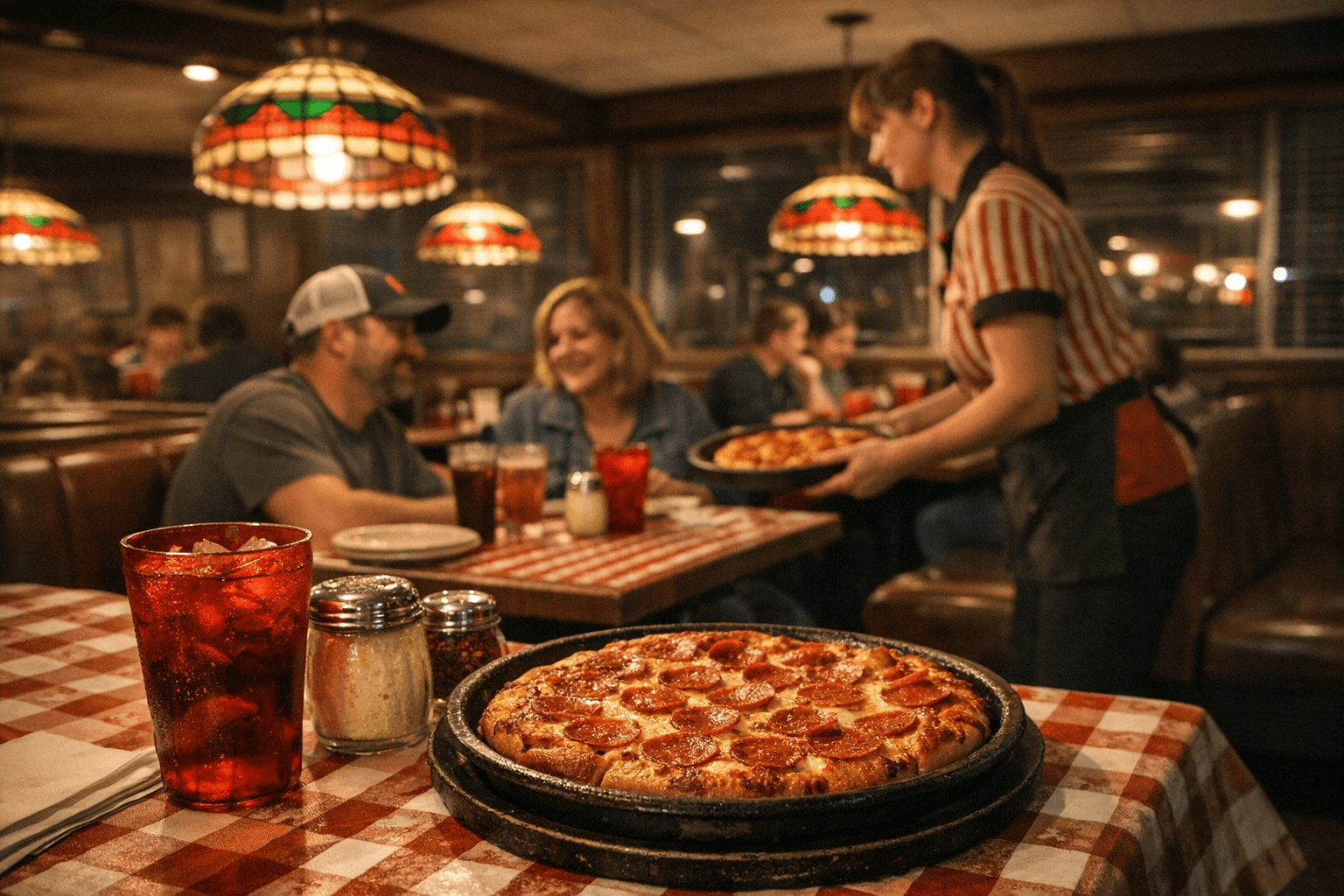
Walk into this Pennsylvania Pizza Hut and the clock stops somewhere around 1994. The salad bar is stocked. The booths are upholstered in the familiar burgundy. A server brings your drinks in those squat red plastic cups that disappeared from most locations before the turn of the millennium. For Pizza Hut workers and longtime customers who watched the chain systematically strip out its dining rooms over the past two decades, a place like this feels less like a restaurant and more like a working museum.
A travel feature spotlighting the location drew significant attention, and it's easy to understand why. At a moment when Pizza Hut's corporate strategy has leaned aggressively into delivery, carryout, and smaller-footprint stores, the survival of a full-service, dine-in location operating on a 1990s model is genuinely newsworthy. It raises real questions about how that survival was possible and what it tells us about the franchise system that Pizza Hut has always depended on.
How a 1990s Pizza Hut Stays Alive in 2026
The short answer is: single-owner franchises with long operational histories. The locations that have held onto the classic dine-in format are almost exclusively independently operated franchise sites, not corporate-run stores. That distinction matters enormously. A corporate location follows the current playbook, which means optimizing square footage for throughput, cutting labor costs by eliminating table service, and converting to a counter-and-carryout model wherever possible. An independent franchisee who has operated the same location for decades has a different calculus.
When you've owned the same building for thirty years, you've seen what your customer base actually wants. In certain Pennsylvania communities, what they want is still the booth, the pitcher of soda, the pan pizza brought to the table. The franchisee who understands that local dynamic has less incentive to gut the dining room and chase a delivery-app demographic that may not even exist in their market. The result is a location that looks and functions the way Pizza Hut was designed to look and function at the height of its cultural dominance.
What the Classic Experience Actually Includes
The 1990s Pizza Hut dine-in model had a specific set of components that made it distinct from every other pizza chain of its era. It wasn't just the food. It was a full-service format built around the idea that eating pizza was a social occasion worth sitting down for. The elements that defined that experience included:
- Red cups and pitchers of soda served tableside
- Deep-dish pan pizza baked in individual serving pans
- The salad bar, a fixture that most locations eliminated years ago
- Booths with high backs and dim lighting that created a sense of occasion even on a Tuesday night
- A server relationship, meaning someone took your order, checked on you, and brought the bill
Each of those elements costs money to maintain. You need more staff for table service than for counter service. You need to stock and manage a salad bar. You need a dining room large enough to justify the footprint. These are the reasons corporate Pizza Hut moved away from this model, and they're also the reasons why the franchisees who kept it are running something that feels genuinely rare.
The Broader Context: What Pizza Hut's Transformation Cost
Pizza Hut's shift away from dine-in wasn't a sudden decision. It was a gradual unwinding of the brand's original identity that accelerated through the 2010s and into the 2020s. The chain that once operated more than 6,000 dine-in locations in the United States has been closing full-service restaurants steadily, replacing them with delivery-and-carryout only units that require far less real estate and far fewer employees per location.
For workers, that transformation has meant fewer full-service positions, reduced tips for servers who no longer exist, and a job profile that shifted from hospitality toward logistics. The pizza is still being made, but the work of delivering the experience, the table check-ins, the upsells, the salad bar restocking, has been eliminated. When a location like this Pennsylvania Pizza Hut maintains the old model, it also maintains those jobs in a form that the broader chain has largely abandoned.
That's worth noting for anyone who works in or near one of these legacy locations. The dine-in format isn't just about nostalgia. It represents a more labor-intensive operation, which means more hours, more positions, and a different kind of customer interaction than the stripped-down delivery model offers.
Why These Locations Matter to the Franchise System
Pizza Hut's franchise agreement gives individual operators a degree of control that corporate chains often try to limit, and the survival of classic dine-in locations is partly a product of that flexibility. A franchisee who owns the real estate outright, has an established customer base, and operates profitably under the legacy model has little reason to undertake a costly renovation that eliminates what's working.
There's also a brand dimension here that Pizza Hut's corporate leadership would do well to consider carefully. These surviving dine-in locations generate a level of press attention and customer affection that no amount of app-based marketing can replicate. A travel feature goes viral because people recognize what's been lost. The Pennsylvania location isn't just serving pizza; it's serving a version of Pizza Hut that millions of Americans grew up with, and the emotional resonance of that is real.
What a Visit Actually Looks Like
If you're planning to seek out this kind of experience, the practical reality is that legacy dine-in Pizza Huts are not evenly distributed. They tend to cluster in smaller markets, rural areas, and communities where the franchise has been in the same family's hands for an extended period. Pennsylvania has historically been a strong Pizza Hut market, and the survival of a classic location there fits a broader pattern of the mid-Atlantic and Rust Belt preserving dine-in formats that coastal markets abandoned earlier.
When you find one, the experience is notably different from a modern Pizza Hut visit. The pacing is slower by design. You're expected to sit. The menu, while it has been updated over the years to reflect current offerings, is served in a context that makes the food taste like a specific memory. For workers staffing these locations, the job description is also different: it's closer to traditional restaurant service than to the assembly-line efficiency of a delivery-focused store.
The Pennsylvania location featured in the recent travel piece is a reminder that the Pizza Hut of the 1990s didn't disappear entirely. It survived in pockets, protected by independent ownership, local loyalty, and franchisees who made a bet that some customers would always prefer a booth to a doorstep delivery. So far, in at least a few corners of the country, that bet is still paying off.
Know something we missed? Have a correction or additional information?
Submit a Tip