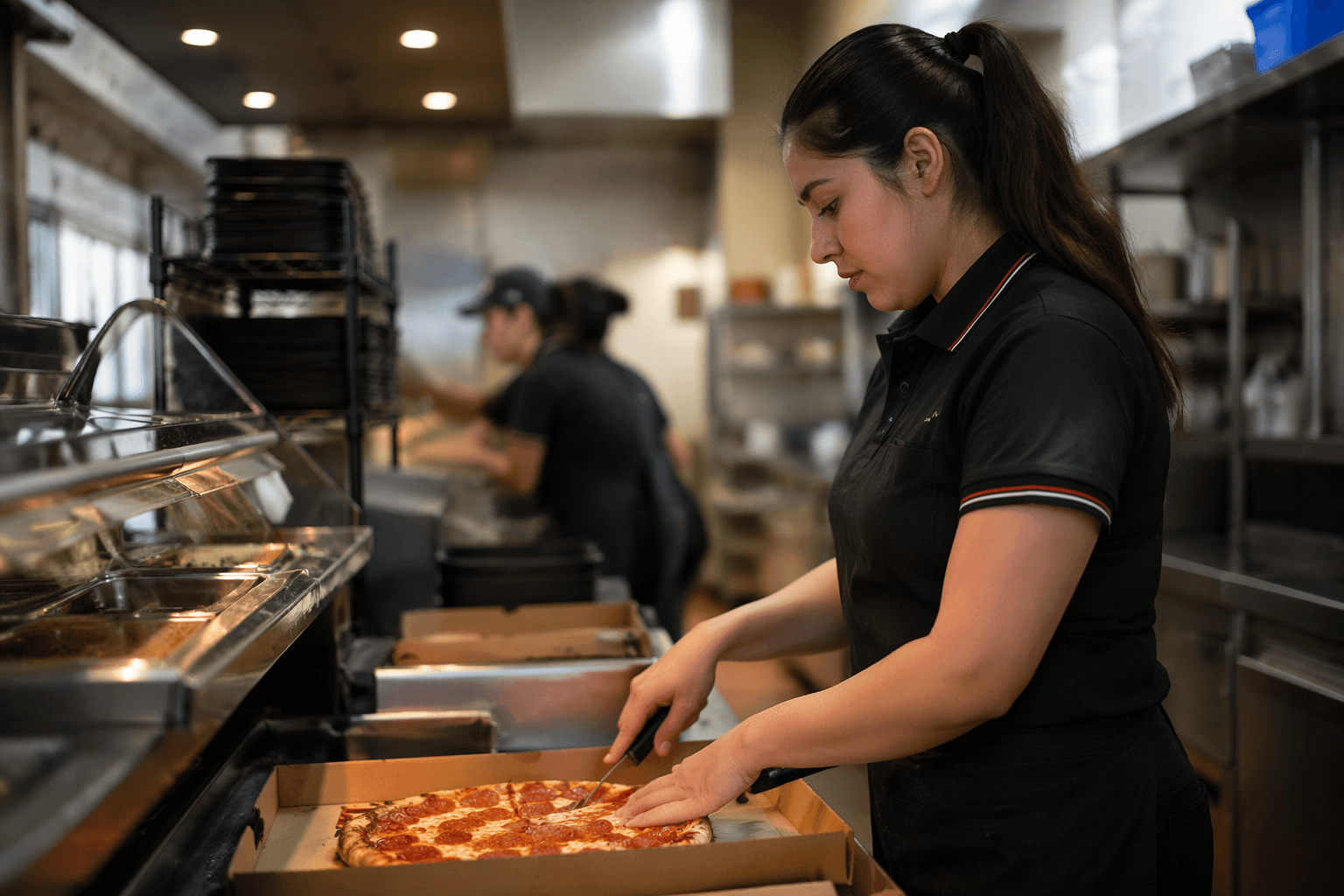
Pizza Hut Franchise Model Splits Employer Responsibility Between Corporate and Local Owners
At Pizza Hut, who signs your paycheck determines almost everything about your rights at work — and the answer depends on which owner is running your location.
Walk into almost any Pizza Hut in the United States and you might assume you're working for the same company regardless of the address on the door. That assumption, reasonable as it seems, is where many Pizza Hut employees run into trouble when questions arise about pay, scheduling, termination, or workplace conditions.
Pizza Hut operates through two distinct structures in the U.S. market: corporate-owned stores managed directly by the parent company, and a far larger network of independently owned and operated franchises. The franchise side of the business represents the majority of Pizza Hut locations, which means most people who work at a Pizza Hut are not, in a legal employment sense, working for Pizza Hut's corporate entity at all.
Who is actually your employer
In the franchise model, the franchisee — the local owner or operating company that purchased the right to use the Pizza Hut brand, systems, and menu — is ordinarily the employer of record. That distinction carries real consequences. It means the franchisee sets wages within applicable federal and state minimums, creates the scheduling policies, handles hiring and firing decisions, administers any benefits, and is responsible for maintaining a legally compliant workplace.
Corporate Pizza Hut, for its part, controls the brand standards, product specifications, training frameworks, and operational guidelines that franchisees are contractually required to follow. What corporate does not typically control is the day-to-day employment relationship between a franchisee and that franchisee's crew. This split is the central tension that defines working life across the Pizza Hut system.
What the two-track system looks like in practice
If you work at a corporate-owned Pizza Hut location, your employer is the corporate entity, and your wages, benefits, and workplace policies flow from corporate-level decisions. Disputes about pay or treatment would involve corporate HR structures and potentially corporate legal accountability.
If you work at a franchised location, your employer is whoever owns that franchise, whether that's a single-restaurant operator running one store or a large multi-unit franchisee operating dozens of locations across several states. The experience of working for a small independent franchisee and a large franchise group can differ dramatically, even though both locations carry the same Pizza Hut branding, wear the same uniforms, and sell the same menu.
This creates an uneven landscape for workers. Two Pizza Hut employees in the same city, working comparable jobs at comparable hours, may have meaningfully different employment experiences based entirely on which ownership structure sits behind their specific location.
Why the franchise structure matters for worker protections
Labor law in the United States generally assigns employer responsibility to the entity that controls the terms and conditions of employment. In a straightforward franchise arrangement, that's the franchisee. This means workers at franchised locations typically cannot hold Pizza Hut's corporate parent directly liable for a franchisee's labor violations, wage theft, or unsafe conditions — at least not without a legal argument that corporate exercised sufficient control over employment practices to qualify as a joint employer.
The joint employer question is one of the most actively contested issues in American labor law and has direct relevance to fast food workers across the industry, including those at Pizza Hut franchises. When corporate entities set granular operational requirements — down to staffing ratios, scheduling software, or discipline procedures — labor advocates argue that the corporate brand should share employer responsibility. The opposing view, favored by franchise industry groups, holds that brand standards are distinct from employment control.
For workers navigating a problem at a franchised Pizza Hut, the practical implication is this: your first point of contact and legal accountability is your franchisee, not corporate. If a franchisee is unresponsive or the problem involves systemic practices across a franchise group, escalating to a state labor agency or consulting an employment attorney becomes important.

How to find out which structure applies to your location
Knowing whether your Pizza Hut is corporate-owned or franchised is not always obvious from the customer-facing storefront, but there are ways to find out:
- Check your pay stub: The legal employer name on your documentation is the clearest indicator of who employs you.
- Ask during onboarding: New hire paperwork typically identifies the employing entity, which may be a named LLC or operating company rather than "Pizza Hut" generically.
- Look up the business registration: Most states maintain public records of business entities. The operating company name associated with your location should appear there.
- Review your offer letter or employment agreement: The signatory entity is your employer.
Understanding who your employer is before a problem arises puts you in a much stronger position if one eventually does.
What corporate standards do and don't cover
Pizza Hut's franchise agreements require franchisees to meet brand and operational standards, but those contracts exist primarily to protect the integrity of the brand, not to protect workers. A franchisee who violates labor law is not automatically in violation of their franchise agreement in a way that triggers corporate intervention on behalf of the affected employee.
That said, large franchise networks operate with reputational stakes that sometimes create informal pressure. Public labor disputes, wage theft findings, or OSHA violations at franchised locations can generate news that reflects on the brand as a whole. Whether that reputational pressure translates into meaningful accountability for workers is a separate and often disappointing question.
The managerial tier in franchise operations
Large Pizza Hut franchise groups often add another layer of complexity by employing regional managers or area directors who sit above individual store managers but below the franchisee's corporate office. Workers in these systems may interact daily with store managers who themselves have limited authority over policy, who report to area managers employed by the same franchisee group. Understanding this internal hierarchy matters when you're trying to resolve a workplace issue, because the person you're talking to may not have the authority to fix it.
The accountability chain in a large multi-unit franchisee organization can feel as bureaucratic as any large corporate employer, while lacking the formal HR infrastructure that a true corporate employer might maintain. That gap is where worker complaints most often fall through.
The franchise model is a foundational feature of how Pizza Hut and much of the fast food industry operates in the United States. For workers, recognizing where the legal lines of employer responsibility actually fall is not just useful knowledge; in a dispute, it can be the difference between directing your complaint to the right entity or spending months pursuing the wrong one.
This article was produced by Prism’s automated news system from verified source data, official records, and press releases, then run through automated quality and moderation checks before publishing. The system is built and supervised by the people who set the standards it runs under. Read our full AI policy.
Did this article answer your question?