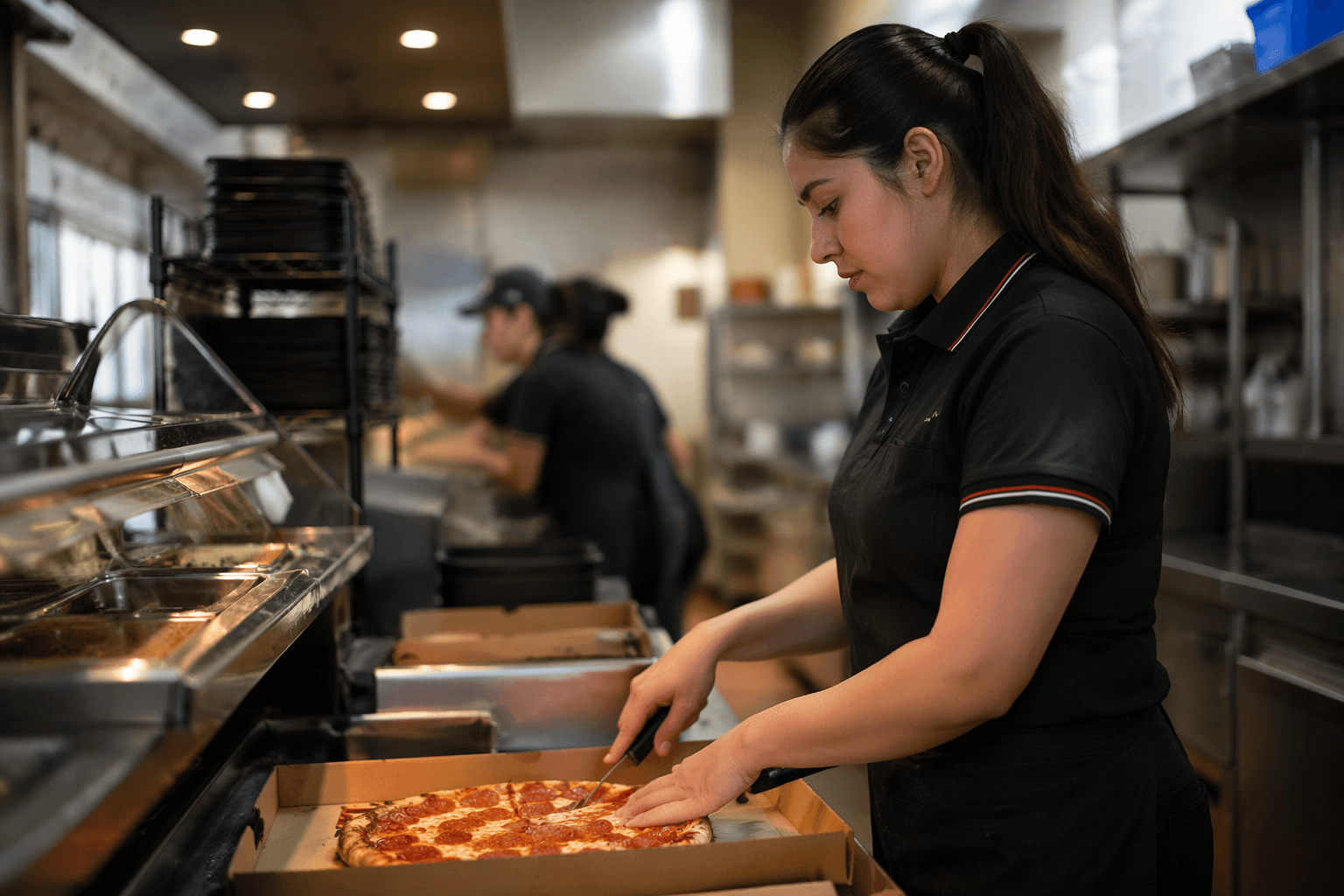
Yum Brands positions Pizza Hut jobs as a path to growth
Yum says Pizza Hut work can lead to bigger roles, but the real test is whether your store offers training, mobility, and a path beyond the shift schedule.

What Yum’s opportunity pitch really means for Pizza Hut workers
Yum! Brands is making a clear claim about the jobs under its umbrella: work at Pizza Hut is not supposed to be a dead end. The company says its purpose is unlocking opportunity for its people, communities, and franchisees, and it backs that up with a scale that matters to anyone thinking about a long-term food-service career: roughly 1,500 franchisees, more than 61,000 restaurants, and operations in over 155 countries and territories. For a Pizza Hut crew member, driver, shift lead, or manager, that message is only meaningful if it translates into a real next step.
The key question is not whether the company talks about growth. It is whether a worker can see a route from the make line, the delivery bag, or the closing shift into something better paid, more stable, and more senior. Yum’s own language frames the brand family as a platform for mobility, not just a collection of stores. That matters in a business where the day-to-day reality is often shaped less by corporate messaging than by the choices of a local franchisee and the pressure of a tight labor market.
The path Yum wants workers to see
Yum’s careers and culture pages describe a company that wants employees who fit its values, culture, and leadership style. It also says making room for all people and voices is a business imperative. That combination tells you something important about how the company thinks about advancement: it is not only looking for people who can do the job today, but for people who can grow into the next one.
For Pizza Hut workers, that means the strongest career moves are usually built on transferable skills. Leadership on a Friday night rush, calm handling of guest complaints, staffing a short-handed dinner shift, and keeping delivery timing under control are all the kinds of habits that can matter later in a shift lead, assistant manager, or general manager role. Yum’s professional-development materials say employees can move within corporate and brand locations and even across markets, and the company says it created Coach Academy to help build leaders’ skills. That is a concrete sign that the parent company sees development as a pipeline, not a slogan.
What Pizza Hut says is possible
Pizza Hut’s own careers pages push the same idea further. The corporate careers side says the goal is to help employees achieve theirs, and says a career can move across departments, across sister brands, or across the globe. That is a broader promise than many restaurant chains make, because it suggests a worker is not limited to one store, one job title, or even one brand if they build the right experience.
The restaurant careers side is even more direct. Pizza Hut says it has a history of people fulfilling career paths there, including cooks who go to corporate offices and drivers who become franchise owners. For delivery workers, that last point is especially striking. In a sector where drivers often feel trapped between fluctuating tips, vehicle costs, and competition from DoorDash and Uber Eats, the idea of moving from the road to ownership is a powerful one. But it is also a reminder to ask what the middle steps look like. A real pathway should not stop at inspiration. It should include training, performance benchmarks, and access to the kind of experience that makes the next promotion believable.
Why franchise structure changes the story
The biggest reality check is Pizza Hut’s ownership model. The brand says most U.S. restaurants are independently owned and operated by more than 100 franchise organizations, and that franchisees are the exclusive employers responsible for employment matters in their restaurants. That means pay practices, scheduling, training quality, internal promotions, and even how seriously managers take development can vary widely from one location to another.
For workers, this is where opportunity language can outrun the evidence if a local operator does not invest in people. A Pizza Hut ad may promise growth, but the store on your corner may still be offering only basic onboarding and a thin management bench. The franchise setup gives the company broad reach, but it also pushes a lot of the real employee experience down to local ownership. If you want to know whether the opportunity message is real at your store, you have to look at what the franchisee actually funds and measures.
Signals that the career path is real
A worker trying to judge whether a Pizza Hut job can become a career should look for specific signs, not just upbeat language in a hiring post. The strongest indicators are practical and easy to spot once you know what to ask for.
- Structured training. Ask whether new hires get more than a quick shadowing shift. A real pathway usually includes role-specific training for drivers, cooks, shift leads, and assistant managers.
- Internal mobility. Look for stores that promote from within, post open shifts and management roles internally, and track who gets first shot at advancement.
- Cross-brand movement. Yum says career growth can happen across sister brands. If a franchise group or corporate role points to movement between brands, that is a sign the company is thinking beyond one store.
- Leadership development. Coach Academy is the kind of program that signals a formal investment in future managers. Workers should ask whether their operator sends people into leadership training or just relies on informal mentoring.
- Career guidance. Pizza Hut says it offers career guidance, continued education, and networking opportunities. Those are the kinds of supports that help a cook or driver map a next move, not just survive a busy week.
- Examples from the field. The strongest proof is not a slogan. It is whether your store can name the people who moved from crew to management, from store leadership to support roles, or from delivery work to ownership.
What this means for drivers, crew, and managers
For delivery drivers, the opportunity pitch has a special edge because the job is already exposed to competition from app-based delivery and changing customer habits. If a Pizza Hut job is going to keep a driver for more than a season, it has to offer more than routes and tips. It has to offer a ladder. That might mean learning shift leadership, helping with staffing, or getting exposure to manager duties so the job can evolve beyond the car.
For kitchen crew, the useful question is whether the job builds operational skills that travel. Speed, safety, food quality, inventory awareness, and handling the rush are all competencies that should count toward advancement. If those skills are not being recognized or documented, the company’s growth language is doing more work than the store’s promotion system.
For managers, the message is even clearer. Retention is not only about wages and schedules, although those matter. It is also about whether workers can see a future that makes the grind worth it. If a franchisee wants to sound serious about opportunity, it should be able to show a pipeline from entry-level work to shift lead, GM, field leadership, and, in some cases, corporate or multi-brand roles.
Yum’s scale gives the promise weight. Its franchise network, its internal mobility language, and Pizza Hut’s own examples of cooks and drivers moving up all point in the same direction. The question for workers is whether their local store is actually building the bridge, or just hanging a sign that says it exists.
This article was produced by Prism’s automated news system from verified source data, official records, and press releases, then run through automated quality and moderation checks before publishing. The system is built and supervised by the people who set the standards it runs under. Read our full AI policy.
Did this article answer your question?