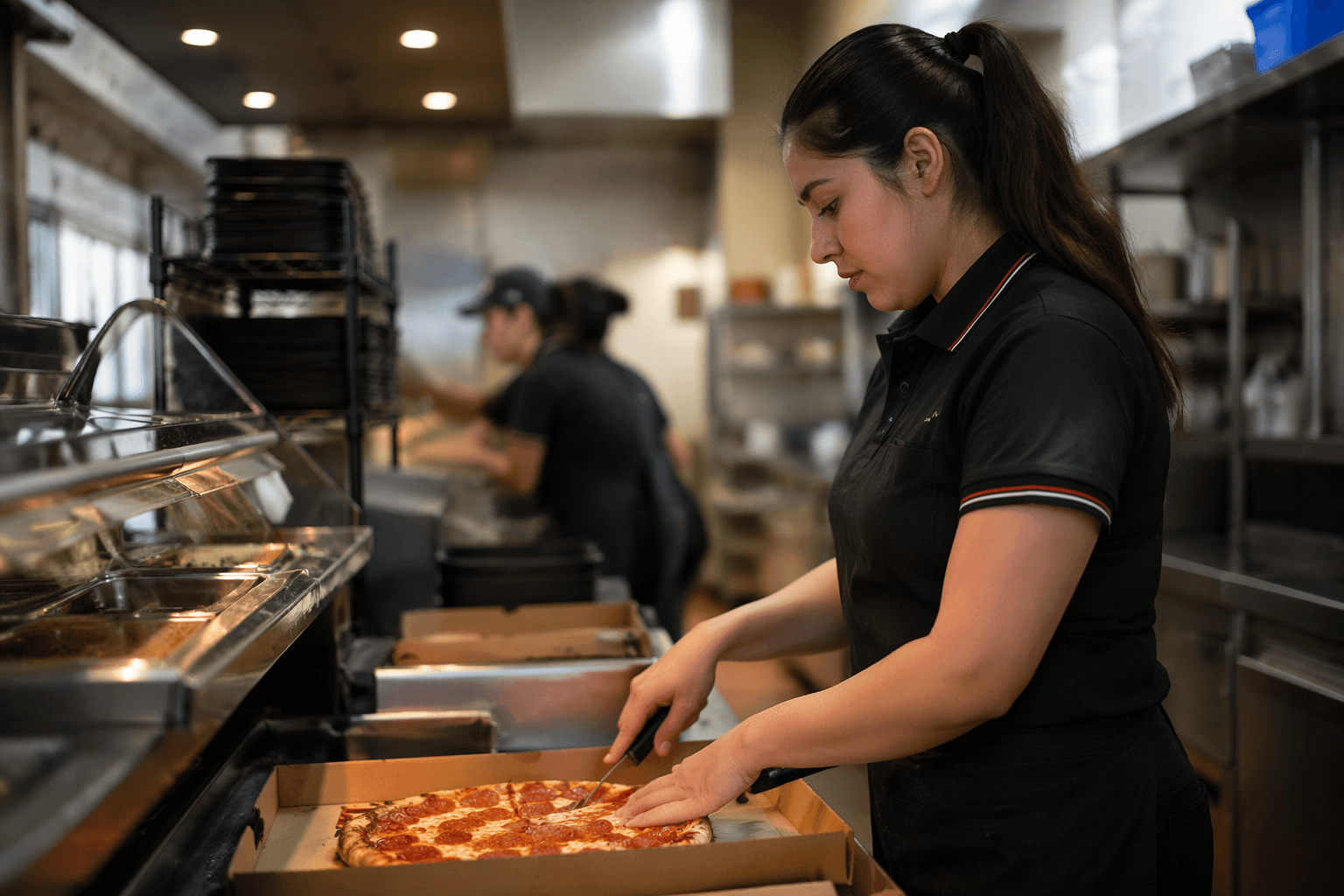
Yum! Brands scale shows why Pizza Hut stores run differently locally
Pizza Hut’s logo may be national, but Yum’s franchise scale lets pay, staffing, and scheduling vary store by store.
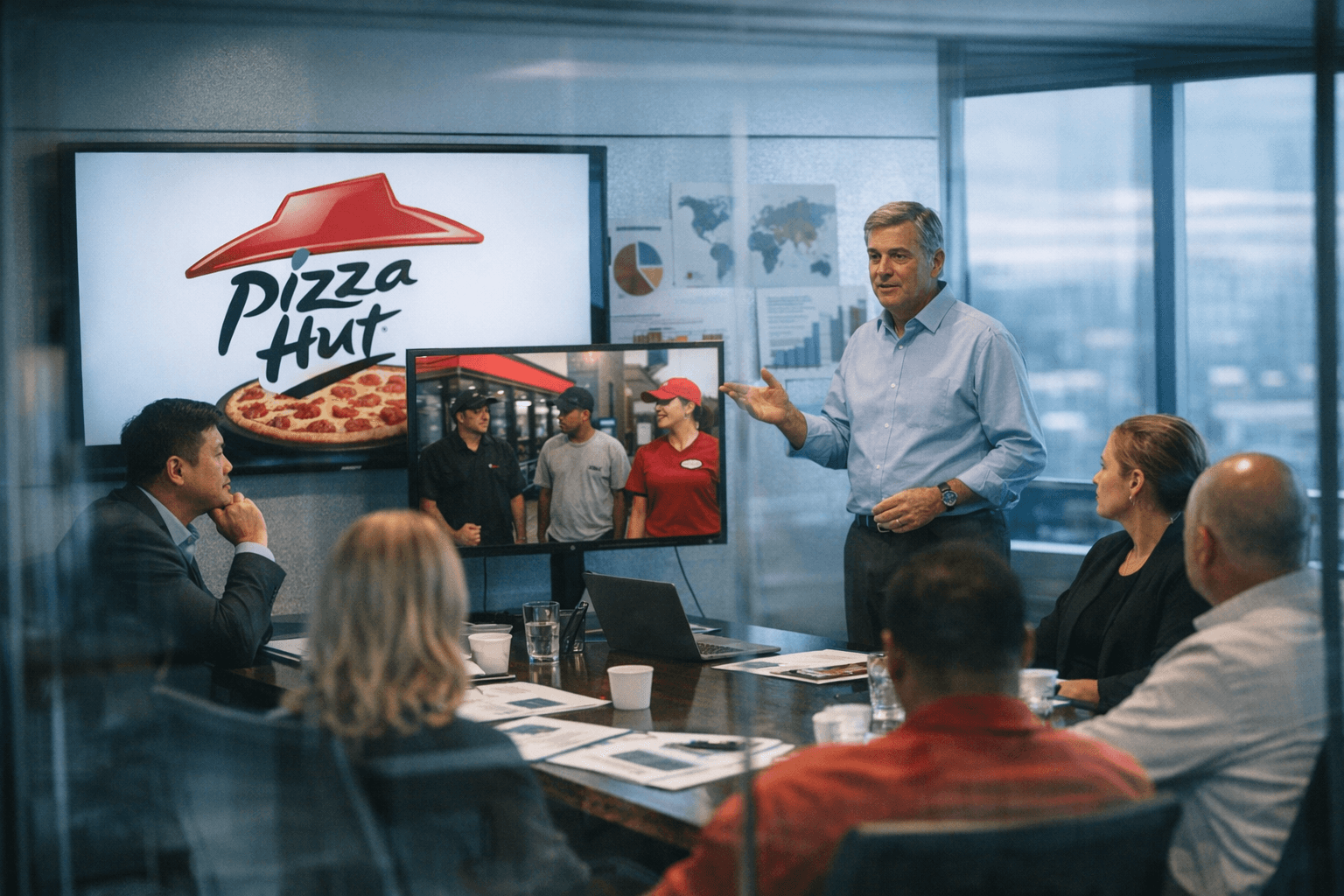
Yum! Brands is the part of the Pizza Hut story that explains why two stores with the same sign can feel like completely different jobs. The company says it works with about 1,500 franchisees, runs more than 63,000 restaurants across 155-plus countries and territories, and has more than 1,000,000 employees and franchise team members across its system. That scale matters on the floor: corporate can set the brand direction, but local owners and managers often decide how a shift is staffed, how promotions are executed, and how much pressure lands on the kitchen and delivery side.
Why the same Pizza Hut can feel like a different company
For crew members, drivers, and shift leaders, the biggest misconception is that a national brand automatically means one standard workplace. Yum’s structure shows the opposite. Pizza Hut sits inside a large franchise network, so a store’s day-to-day reality is shaped by the economics of that specific location, the preferences of the operator, and the labor market around it.
That is why one Pizza Hut may run with lean staffing, limited equipment, and tightly controlled labor hours, while another store across town can feel better resourced and more predictable. Menu tests, delivery rules, and local priorities can also differ because franchise economics are built locally even when the brand standards are national. The logo is the same, but the pace, the pay setup, and the management style can shift with the owner.
What corporate usually sets, and what local operators usually decide
A practical way to read any Pizza Hut policy is to ask one question: is this a brand-wide standard or a local operating choice? Corporate strategy usually sets the broad direction, especially around the menu, digital ordering, national marketing, and brand standards. Franchise operators, by contrast, often handle the parts that determine how a store feels to work in every day.
- how many people get scheduled on a given shift
- how aggressively digital orders are pushed
- how promotions are staged in the store
- how much training time is allowed
- how much labor is available during rush periods
That local control can include:
For workers, that difference is not abstract. It shows up in whether the make-line gets enough coverage, whether drivers are sent out with manageable delivery loads, whether prep gets finished before the dinner rush, and whether managers can react to a callout without throwing the whole shift into chaos.
Why pay, tips, and schedules can vary so much
Pizza Hut workers often compare notes and assume the company must be changing policy when the truth is more local than that. Franchise ownership creates room for big differences in base pay, scheduling practices, and the support a store gives to drivers and kitchen crews. A driver at one location may get steady hours and decent dispatching, while another driver can face split shifts, long waits between runs, and a heavier reliance on tips to make the math work.
That variability matters in the era of DoorDash and Uber Eats, where every delivery job competes with gig work that promises flexibility, even if the earnings are less certain. When a Pizza Hut franchise leans harder into delivery volume without matching labor, the burden lands on the existing staff: more stacked orders, more time pressure, and more wear on the people who keep the store moving. If a location is short-staffed, drivers feel it first in slower turnarounds and less reliable order timing, and kitchen crew feel it in line backups and missed breaks.
Staffing levels are a local decision with real consequences
Yum’s scale explains why staffing can feel generous in one store and razor-thin in another. The company’s system is enormous, but that does not mean every franchise owner invests the same way in labor. Some operators prioritize lean overhead, especially when traffic is uneven or margins are tight. Others choose to schedule more coverage because they know it improves speed, food quality, and customer satisfaction.
For employees, staffing levels shape everything from morale to injury risk. A store running short on make-line help can fall behind during a dinner push, which creates mistakes and makes every task feel urgent. Managers in these stores often spend more time plugging holes than coaching, which is why local leadership style can matter as much as the policy manual.
Equipment and training can also depend on the operator
Another reason Pizza Hut stores differ is that equipment decisions are not always identical from franchise to franchise. A well-funded operator may keep ovens, make-line tools, delivery systems, and point-of-sale equipment in better shape, while another store may stretch older gear longer. That affects speed, food consistency, and how stressful the shift feels when something breaks during a rush.
Training culture follows the same pattern. Brand standards may say what good service looks like, but the amount of time a new hire gets to learn it can depend on the franchise owner and the store manager. In one store, a new cook may get hands-on practice before being thrown into peak hours. In another, turnover and staffing pressure can force people to learn on the fly, which raises the odds of mistakes and frustration.
Why managers have more autonomy than many workers realize
Store managers are often the people who translate corporate goals into real shifts. At Pizza Hut, that means they can have meaningful autonomy over labor allocation, promotion timing, and how aggressively the store leans into digital orders. That freedom can be useful when a manager knows the local market well, but it also means workers may experience wildly different day-to-day expectations depending on who is in charge.
A strong manager can create a store that feels organized, fair, and consistent even under pressure. A weak one can turn the same corporate playbook into constant fire drills. That is why two employees with the same job title at two Pizza Hut stores may have completely different experiences with breaks, scheduling notice, order pacing, and how much support they get during peak hours.
What the Yum system means for career-minded workers
Yum’s larger ecosystem matters for workers who want more than a single-store path. Because the company says it operates four iconic brands and employs more than 1,000,000 people and franchise team members across its system, there can be more routes into the business than the average restaurant worker realizes. Those routes can include operations, support, and leadership roles at the brand level or at the franchise level.
For a Pizza Hut employee, that means the job can be a starting point rather than a dead end. A driver who learns dispatch flow, a kitchen worker who masters speed and accuracy, or a manager who handles labor and service pressure well may be building skills that transfer across a much wider network. In a system this large, local stores are only one part of the ladder.
How to read your store’s rules in practice
The simplest way to understand Pizza Hut is to separate the brand promise from the store reality. If a rule affects the menu, advertising, or broad brand standards, it is more likely to come from corporate direction. If it affects how many people are on the clock, when breaks happen, how a rush is handled, or how aggressively the store chases delivery volume, it is often being shaped at the franchise level.
That distinction matters because it explains why coworkers in one location may talk about fair hours, functioning equipment, and manageable delivery pressure, while another store under the same logo struggles with short staffing and constant turnover. Yum’s scale does not erase those differences. It is the reason they exist, and the reason workers should read every store policy through the lens of local ownership, not just the national brand.
This article was produced by Prism’s automated news system from verified source data, official records, and press releases, then run through automated quality and moderation checks before publishing. The system is built and supervised by the people who set the standards it runs under. Read our full AI policy.
Did this article answer your question?