Yum! Brands Sets May 14 Annual Meeting, Shareholders to Vote on Governance
Yum! Brands' May 14 meeting puts say-on-pay and a special-meeting threshold cut on the ballot as Pizza Hut's ongoing strategic review hangs in the balance.
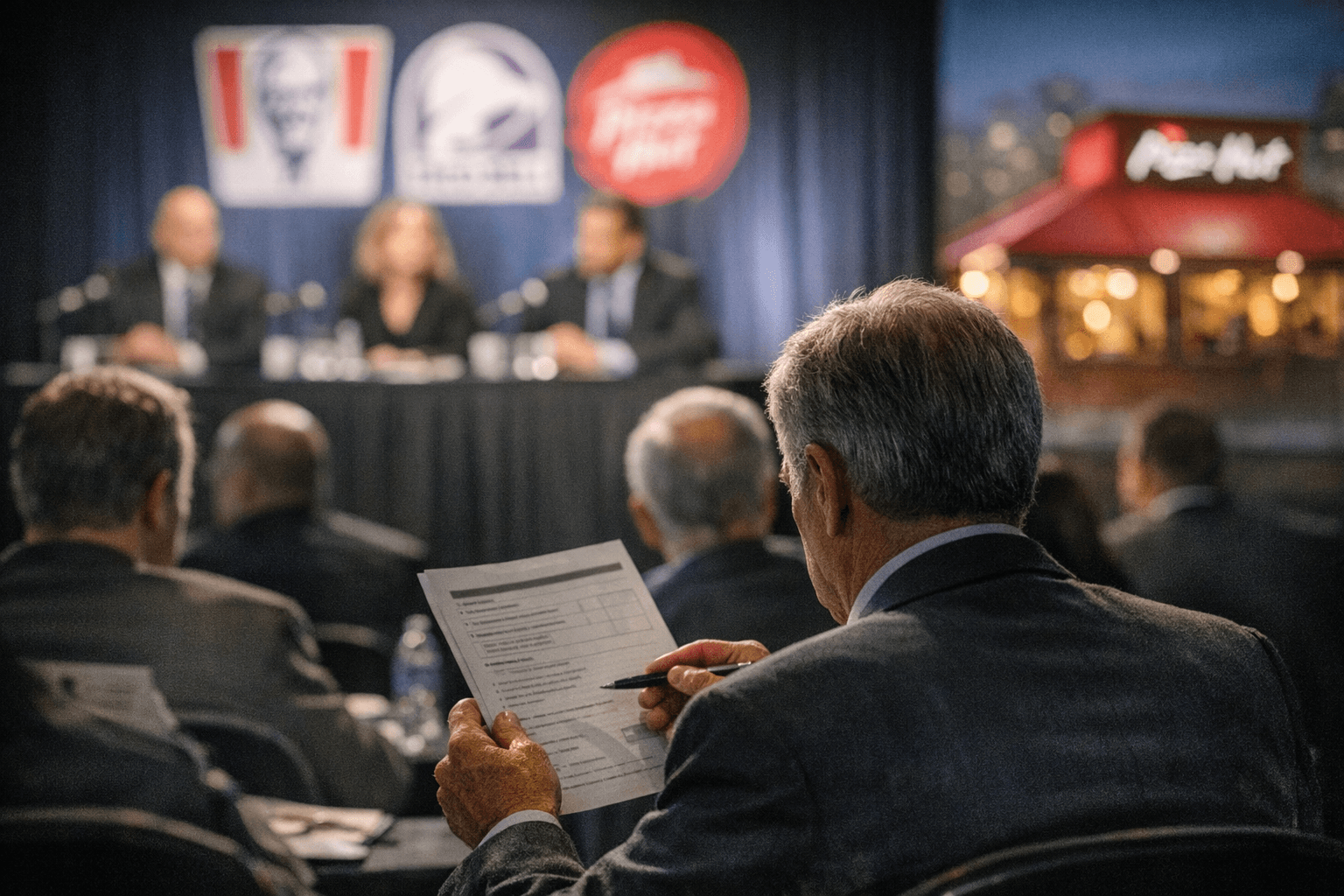
A shareholder proposal that would make it easier for activist investors to force emergency meetings at Yum! Brands is among the votes scheduled for May 14, arriving while Pizza Hut's future inside the company remains officially under review.
The virtual annual meeting carries a proxy deadline of May 13 and will put four ballot items before shareholders: the election of eleven directors to serve through 2027, ratification of KPMG LLP as independent auditor for 2026, an advisory say-on-pay vote on executive compensation, and a shareholder-submitted proposal to cut the ownership threshold required to call a special meeting from 25% of outstanding shares down to 10%. The board unanimously recommends voting against that last item.
That recommendation carries real weight for Pizza Hut's workforce. Lowering the special-meeting threshold to 10% would give smaller activist investors a faster mechanism to demand action on strategic decisions, including the Pizza Hut review that Yum! Brands formally launched in 2025. Yum! CEO David Gibbs said at the time that Pizza Hut's performance indicated the need for additional action, opening the door to scenarios including an outright sale of the brand. A shareholder base empowered to call meetings on shorter notice is one that can accelerate that timeline considerably.
The say-on-pay vote is the ballot item most likely to ripple into day-to-day store operations. Executive compensation structures at Yum! typically reward performance against same-store sales growth, system-wide cost benchmarks, and operating margin targets. When shareholder approval ties management pay to tighter efficiency metrics, the pressure travels down through regional leadership to franchise operators and eventually into the labor models that govern shift scheduling and crew hours.
For drivers, the relevant question is what post-meeting corporate messaging says about delivery infrastructure. The Pizza Hut strategic review includes decisions about whether the brand grows its own delivery capacity or accelerates reliance on third-party aggregators like DoorDash and Uber Eats, a choice that directly affects per-delivery earnings and tip volumes for in-house drivers. Any strategic announcements following May 14 should be read with that tradeoff in mind.
District and restaurant managers should anticipate increased requests for store-level performance data in the weeks surrounding the annual meeting. During active strategic reviews, regional leaders routinely collect labor metrics, sales-per-labor-hour figures, and average ticket data by daypart to build the operational picture that informs corporate decisions. Managers who keep wage records, scheduling logs, and fixed-versus-variable cost documentation current are better positioned to make the case for their store's staffing needs if restructuring conversations intensify post-meeting.
The eleven director seats on the ballot represent the oversight layer responsible for approving any sale, spin-off, or major restructuring of Pizza Hut. Board composition shapes how aggressively or cautiously leadership pursues those options, and shareholder decisions on May 14 will determine who holds that authority through 2027.
This article was produced by Prism’s automated news system from verified source data, official records, and press releases, then run through automated quality and moderation checks before publishing. The system is built and supervised by the people who set the standards it runs under. Read our full AI policy.
Did this article answer your question?