Black restaurant workers are underrepresented in the best-tipped jobs
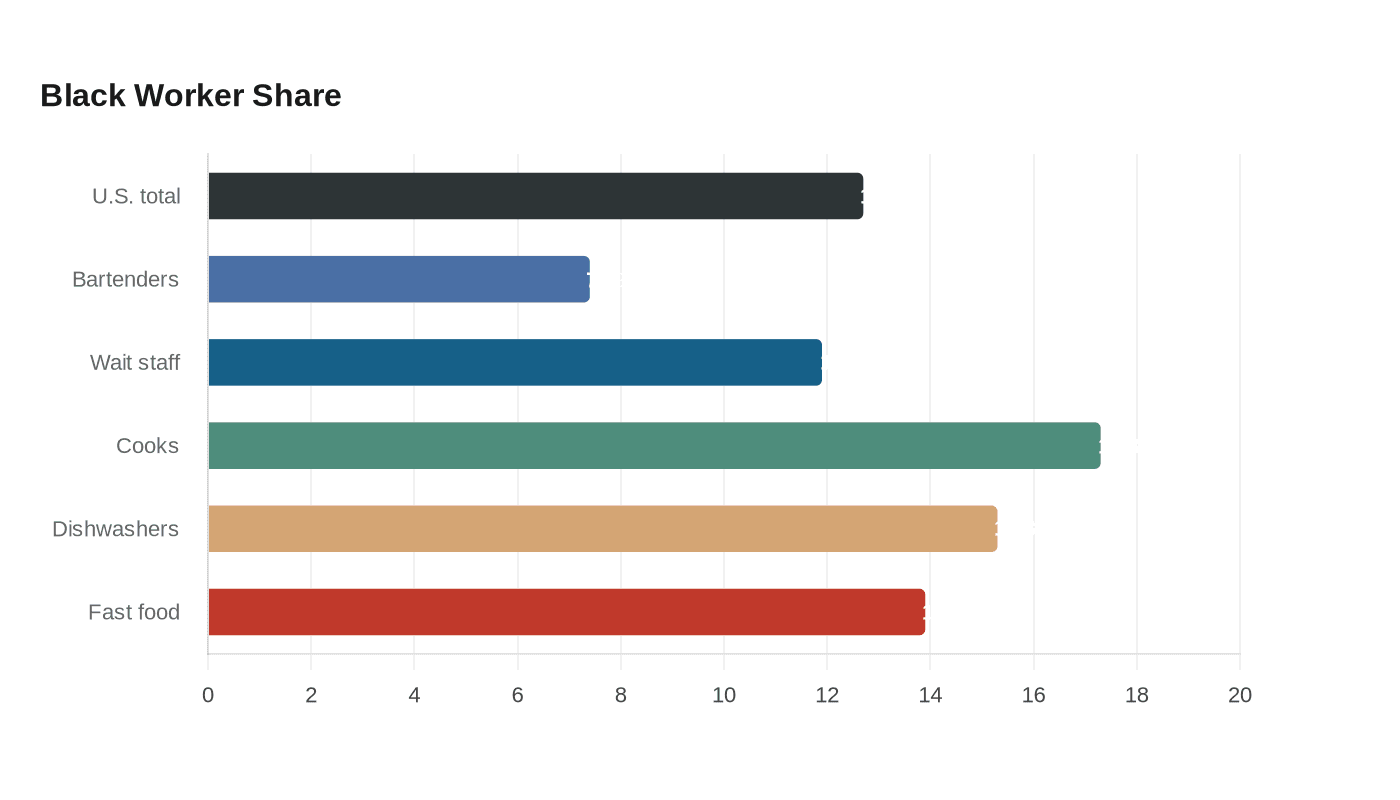
Black workers are 12.7% of the U.S. workforce but just 7.4% of bartenders, a gap that can shrink tip income and stall advancement.
The best-tipped jobs in restaurants are still not being shared evenly, and the money difference starts with who gets placed behind the bar, on the floor, or in the lowest-tip support roles. OysterLink’s analysis of 2025 Bureau of Labor Statistics data found Black workers made up 12.7% of total U.S. employment, but only 7.4% of bartenders and 11.9% of waiters and waitresses.
The same data show where Black workers are more likely to land instead: 17.3% of cooks and food preparation workers, 15.3% of dishwashers, and 13.9% of fast-food and counter workers. That matters because front-of-house jobs usually carry the highest upside through tips, while back-of-house roles tend to offer steadier pay but lower total earnings. In practice, the gap is built job by job, through hiring decisions, training access, internal promotion, section assignments, and which employees get sent to private events, prime sections, or the busiest shifts.
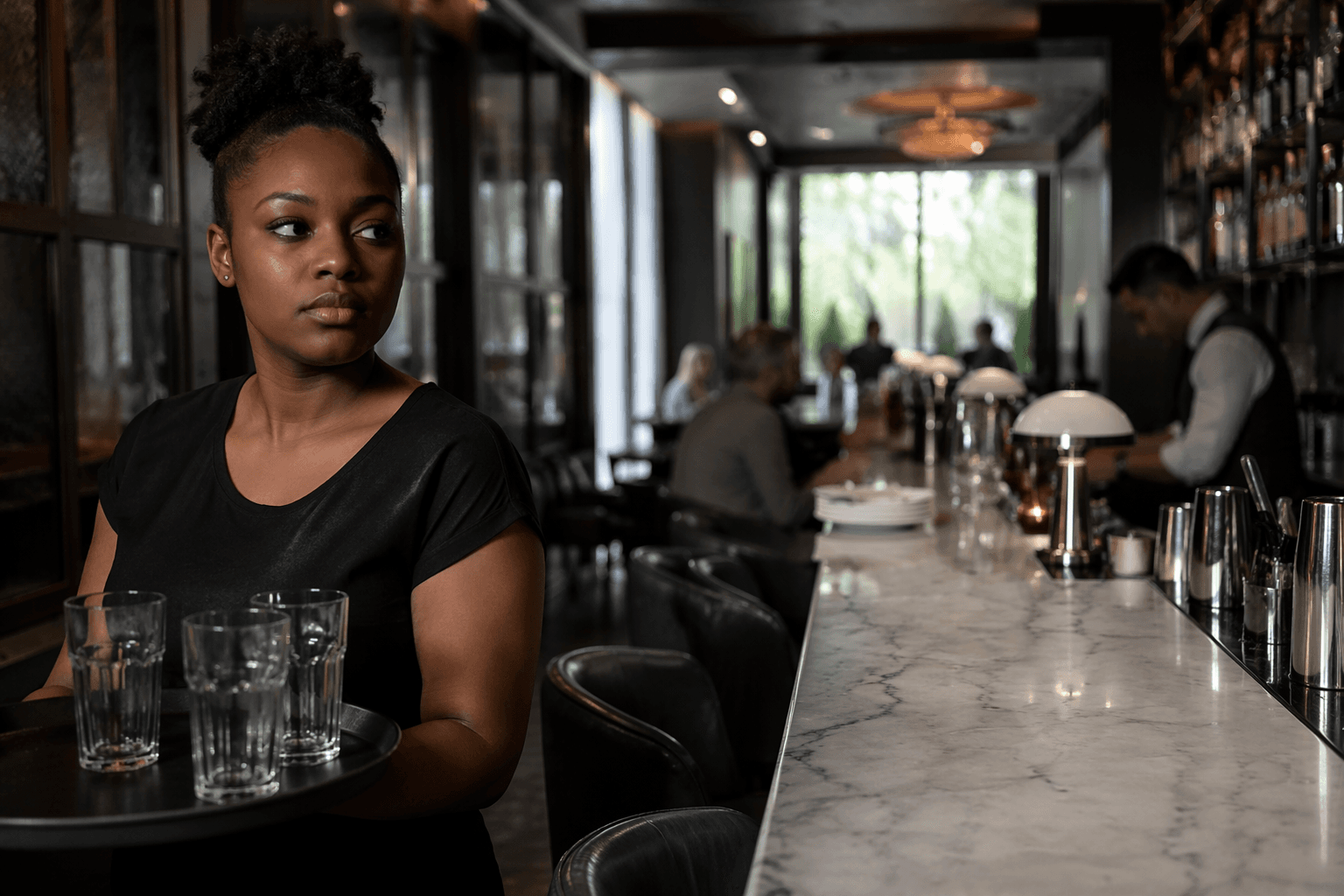
That is why the issue is bigger than a headline percentage. If a Black host is kept on the host stand instead of being moved into serving, or if one bartender is routinely given the best shifts while another is stuck closing slow nights, the annual earnings gap grows inside the same restaurant. Customer-facing bias can make it worse, because the money on a shift is tied not just to the assignment but to who gets the most lucrative tables and the best shot at bigger checks.
Federal wage rules help explain why the stakes are so high. Under the U.S. Department of Labor’s definition, a tipped employee is someone who customarily and regularly receives more than $30 a month in tips. Federal law allows employers to pay just $2.13 an hour in direct cash wages to tipped workers if tips bring total pay up to at least the federal minimum wage. That structure makes access to tip-heavy roles, not just hours worked, a central pay-equity issue for restaurant workers.
The pattern is not new. Cornell research by Michael Lynn, Curt C. Pugh and Jerome Williams found in 2006 that Black-White tipping differences persisted even after controlling for socioeconomic status. A 2012 Cornell Hospitality Quarterly study found higher socioeconomic status reduced some tipping differences but widened Black-White gaps in the amount tipped by those who did tip. That paper pointed to mystery shoppers, tipping-norm education, and automatic service charges as possible remedies. For restaurants, accountability means tracking who gets the bar, the sections and the shifts that actually drive income, and making that path into top earnings visible and fair.
This article was produced by Prism’s automated news system from verified source data, official records, and press releases, then run through automated quality and moderation checks before publishing. The system is built and supervised by the people who set the standards it runs under. Read our full AI policy.
Know something we missed? Have a correction or additional information?
Submit a Tip