BLS sees slight decline for servers, but turnover keeps openings high
Servers face a slight long-term job decline, but 456,700 annual openings keep the front of house moving. That churn, not growth, is where the real leverage sits.

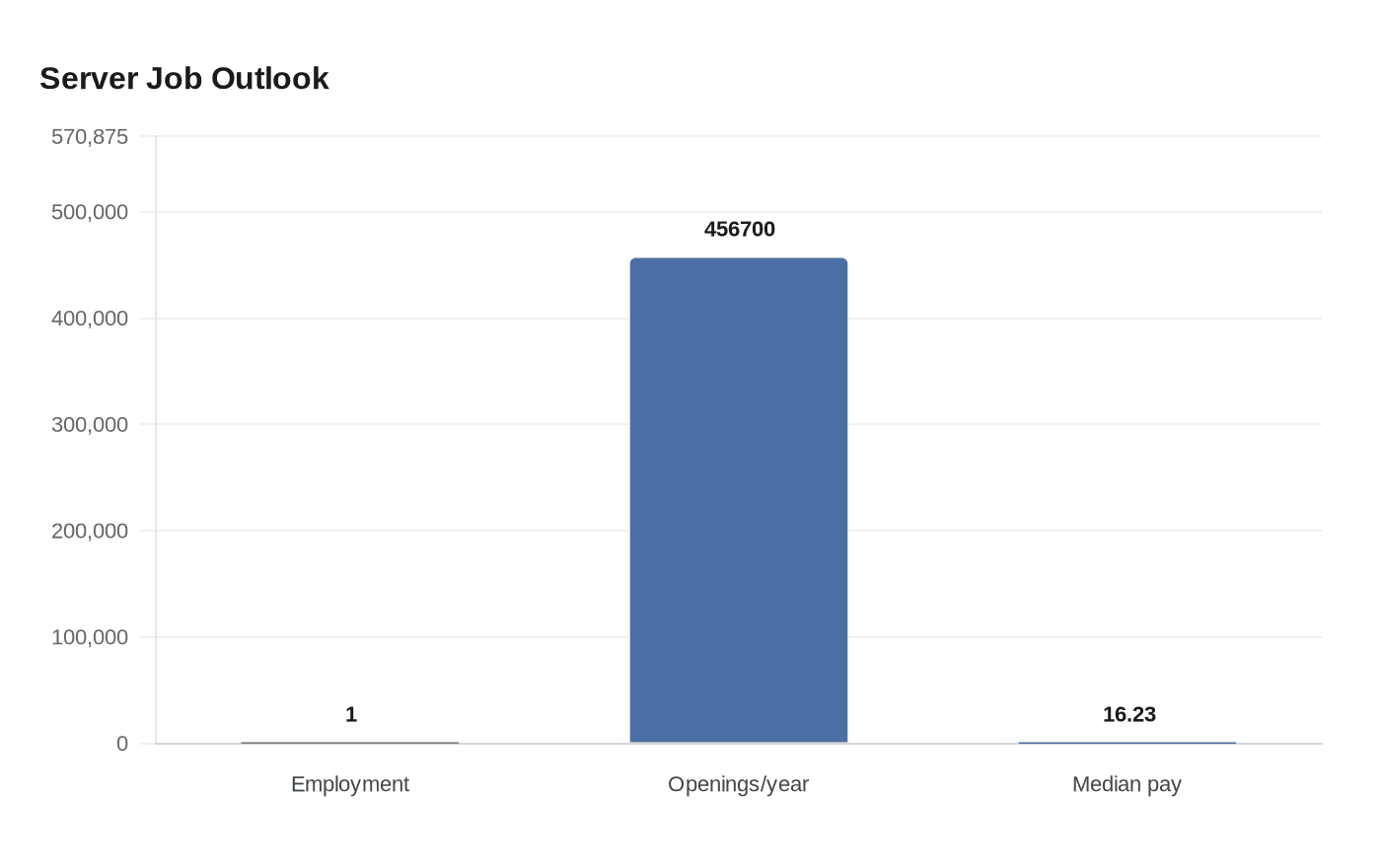
The front door may be staffed by the same name tag tonight and a new one next week. The Bureau of Labor Statistics says waiters and waitresses are headed for a 1 percent employment decline from 2024 to 2034, but replacement demand is still expected to generate about 456,700 openings a year, a sign that turnover, not expansion, keeps the room turning over.
That matters because server jobs are still the most common on-ramp into restaurants, bars, hotels and other food-serving spots. The median pay was $16.23 an hour in 2024, but the work remains built around variable hours, with part-time schedules common and shifts often landing in early mornings, late evenings, weekends and holidays. For a host trying to hold a Friday rush together or a server chasing a better section, the labor market is not tight in the way a growing trade is tight. It is tight because people keep cycling through it.

The BLS outlook suggests plenty of openings, but not necessarily more stable careers. In front-of-house work, “openings” often means somebody quit, transferred, burned out or moved up rather than a restaurant added seats or expanded service. That distinction matters for workers deciding whether there is real bargaining power behind the ads they keep seeing. A long list of postings can still hide a job that is hard to keep filled because the schedule is brutal, the tips are uneven or the pace is too much for too little control.

Some of the friction is built into the occupation itself. The BLS notes that some states require alcohol servers to be at least 18, a reminder that restaurant labor rules are still shaped state by state, not just by the industry’s national appetite for staff. For workers, that means access to serving can depend as much on local regulation as on experience. For operators, it means hiring pools, training timelines and role boundaries can shift depending on where the dining room sits.
The bottom line for anyone watching front-of-house labor is simple: a slight projected decline does not mean the server market is cooling off. It means the job keeps shedding people nearly as fast as restaurants need them, which is why openings stay high even when the occupation itself barely grows. In restaurants, churn is still the real staffing story.
This article was produced by Prism’s automated news system from verified source data, official records, and press releases, then run through automated quality and moderation checks before publishing. The system is built and supervised by the people who set the standards it runs under. Read our full AI policy.
Did this article answer your question?