Food service managers earn $65,310 as employment growth is projected 6%
Food service managers can make a solid living, but the job comes with hectic shifts, holiday work and pressure that never really ends.

A $65,310 median wage can look like a clean step up from the floor, but food service management pays that money because the job is built around pressure. The U.S. Bureau of Labor Statistics says managers in the occupation often work evenings, weekends and holidays, and the work can be hectic, with dissatisfied customers adding to the strain.
The BLS put food service managers at 352,800 jobs in 2024 and projected employment growth of 6% from 2024 to 2034. It also projected about 42,000 openings each year on average, many of them created when workers move into other occupations or leave the labor force. The usual entry point is not a shortcut to a desk job. Most workers need a high school diploma plus several years of food-service experience, and the BLS says the occupation typically calls for less than five years of related work experience and short-term on-the-job training.

That is why the role matters for servers, bartenders, line cooks and hosts weighing a move up. A good food service manager is not just the person making the schedule. The job can mean coaching staff through a rush, covering a call-out, handling inventory, smoothing over a bad table interaction and translating corporate expectations into something a shift can actually execute. It is a labor job in management clothing, and that is part of the draw for people who know restaurant work from the inside.

The career ladder is real. The National Restaurant Association says 9 in 10 restaurant managers started in entry-level restaurant positions, and 8 in 10 owners started there too. The association says 63% of adults have worked in restaurants at some point, a reminder that the industry remains one of the country’s most common training grounds for future supervisors and owners. It also says restaurants employ more minority managers than any other industry, underscoring how often the sector serves as a path into leadership for workers who are not getting that chance elsewhere.
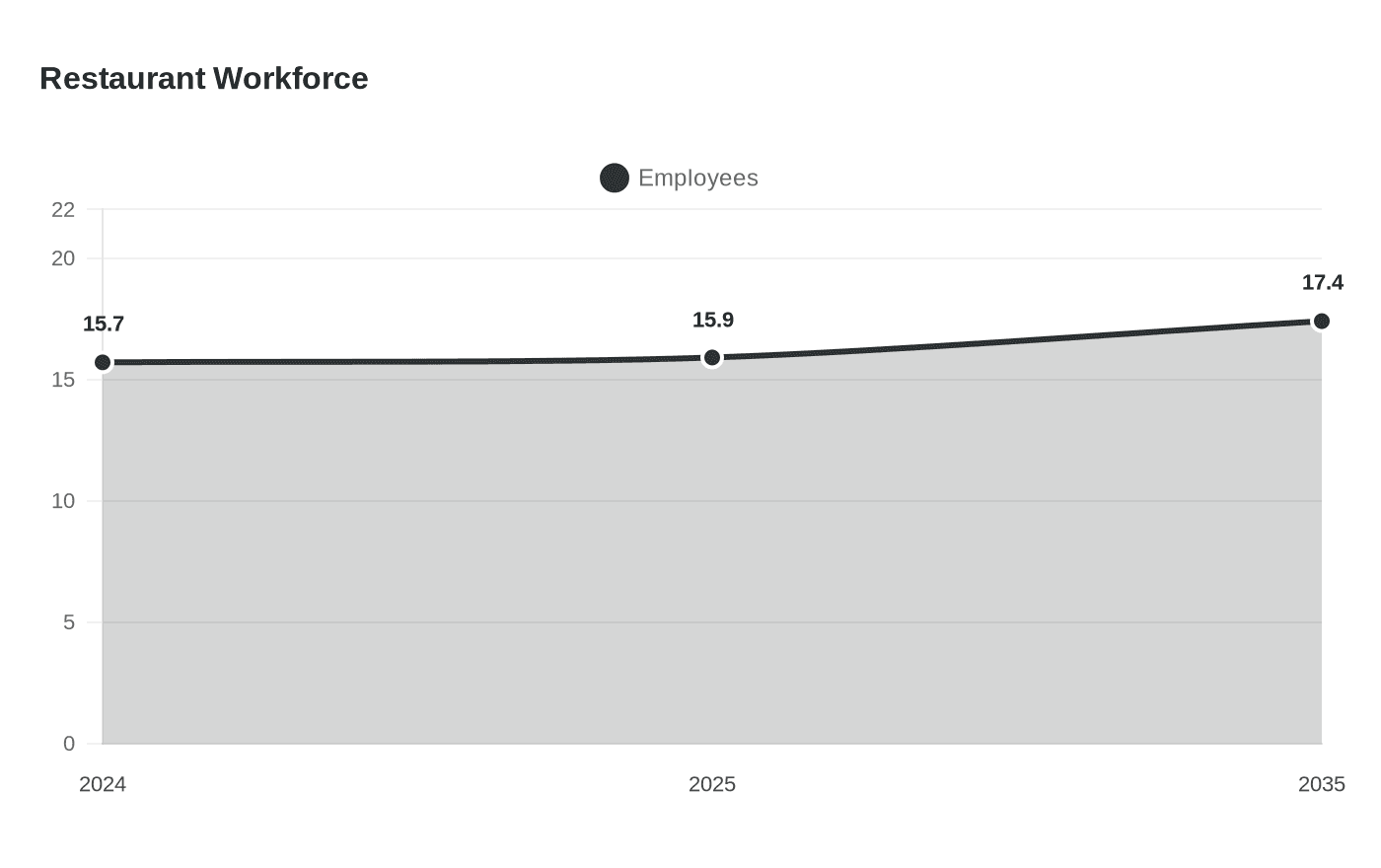
The broader market still puts a premium on people who can run a shift and keep a room together. The restaurant and foodservice workforce was projected at 15.7 million employees in 2024, and the National Restaurant Association projected 15.9 million employees in 2025 and 17.4 million by 2035. More than 9 in 10 restaurants have fewer than 50 employees, and more than 7 in 10 are single-unit operations, which helps explain why managers are expected to be hands-on generalists rather than paper-pushers. Black Box Intelligence said in October 2024 that hourly turnover was improving and that competitive compensation and more diverse management could help retention, but full-service staffing still remained below pre-pandemic levels. For workers deciding whether the jump is worth it, the answer is straightforward: the pay is real, but so is the burnout risk.
This article was produced by Prism’s automated news system from verified source data, official records, and press releases, then run through automated quality and moderation checks before publishing. The system is built and supervised by the people who set the standards it runs under. Read our full AI policy.
Did this article answer your question?