CDC spotlights training and kitchen management to improve restaurant food safety
New hires are most vulnerable when the rush hits, and CDC says the fix is less about warnings than about manager certification, written sick policies, and real kitchen coaching.

The first rush is where weak systems break
A restaurant’s food-safety problem usually is not a lack of rules. It is the moment a brand-new line cook, host, or prep worker gets slammed before the habits are there to carry the shift. The Centers for Disease Control and Prevention is treating that as an operations problem, not a morality tale: if the first example a young worker sees is a manager skipping thermometer checks or brushing past glove changes, that behavior becomes the standard.
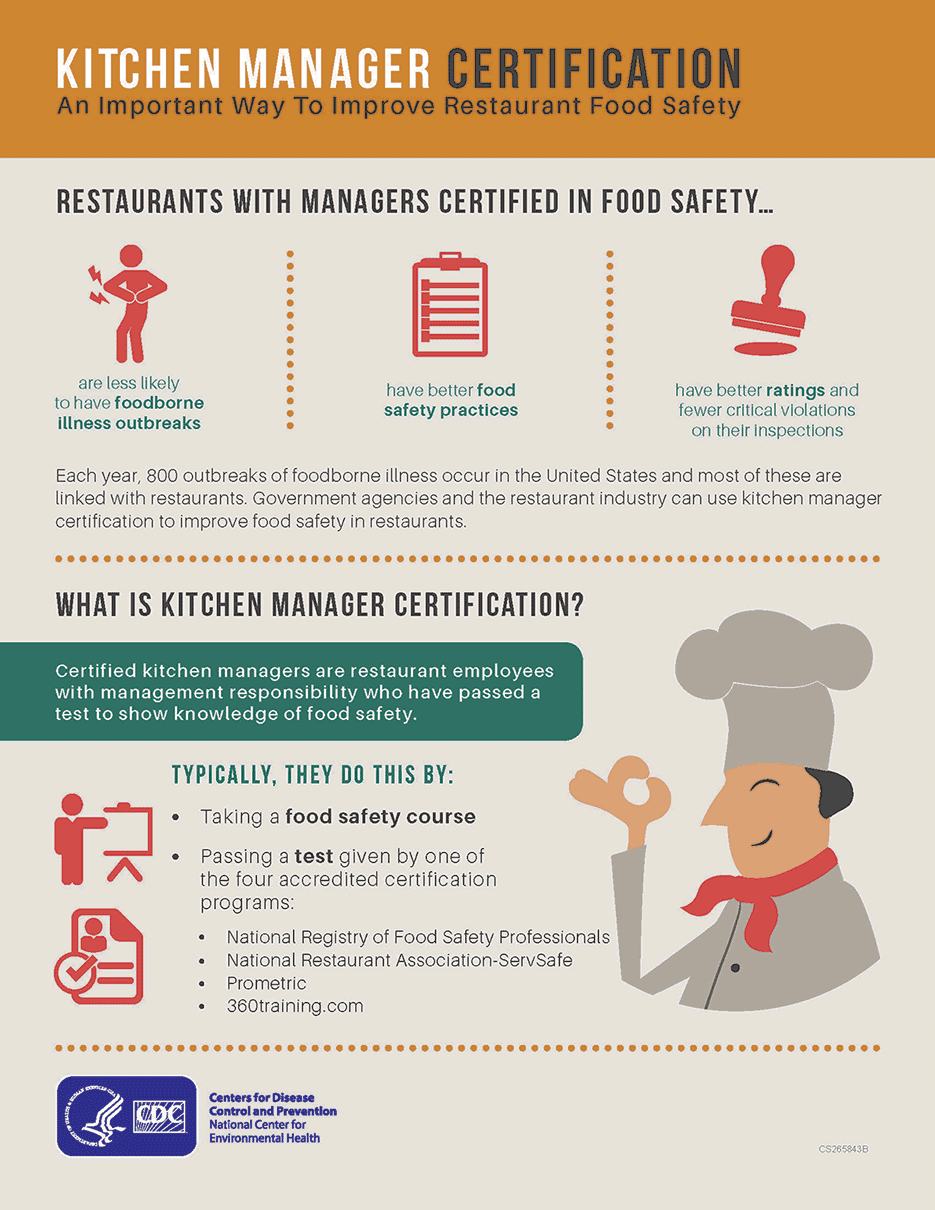
That matters because restaurant kitchens run on repetition, speed, and imitation. CDC says more than half of all foodborne outbreaks in the United States are associated with restaurants, banquet facilities, schools, and other institutions, and it estimates about 800 outbreaks a year, most of them linked with restaurants. Those outbreaks are not abstract numbers to the people working the line. CDC says they amount to roughly 15,000 illnesses, 800 hospitalizations, and 20 deaths each year.
Why training has to be built into management
CDC’s food safety culture research makes the core argument plainly: strong restaurant safety rests on four components, leadership, manager commitment, employee commitment, and resources. That is a labor story as much as a public-health story. Managers are in the key position to shape policies and practices, but they can only do that if the operation gives them time, authority, and supplies to back up the rules.
The practical meaning for workers is simple. Training cannot be a one-time orientation squeezed in before service. It has to survive turnover, understaffing, and the daily temptation to cut corners. CDC’s research points especially to younger, less-experienced workers and workers in independent restaurants, where smaller teams often have less margin for error and less time for formal training. In those kitchens, one bad habit can spread fast, because the new hire learns by watching the person beside them.
Certification changes the tone in the kitchen
CDC has been blunt about kitchen manager certification: restaurants with managers certified in food safety are less likely to have foodborne illness outbreaks, and they tend to have better food safety practices and fewer critical violations on inspections. That is not just a badge on the wall. It changes whether a manager knows when to stop a line, correct a process, and explain why the correction matters.
The agency’s older EHS-Net findings help explain why this matters. In 2006, restaurants with outbreaks were less likely to have a certified kitchen manager than restaurants without outbreaks, and the Food and Drug Administration later used those findings to recommend a certified-kitchen-manager provision in the 2013 Food Code. The policy lesson is clear: food safety improves when the person supervising the shift knows more than the average worker and is expected to use that knowledge.
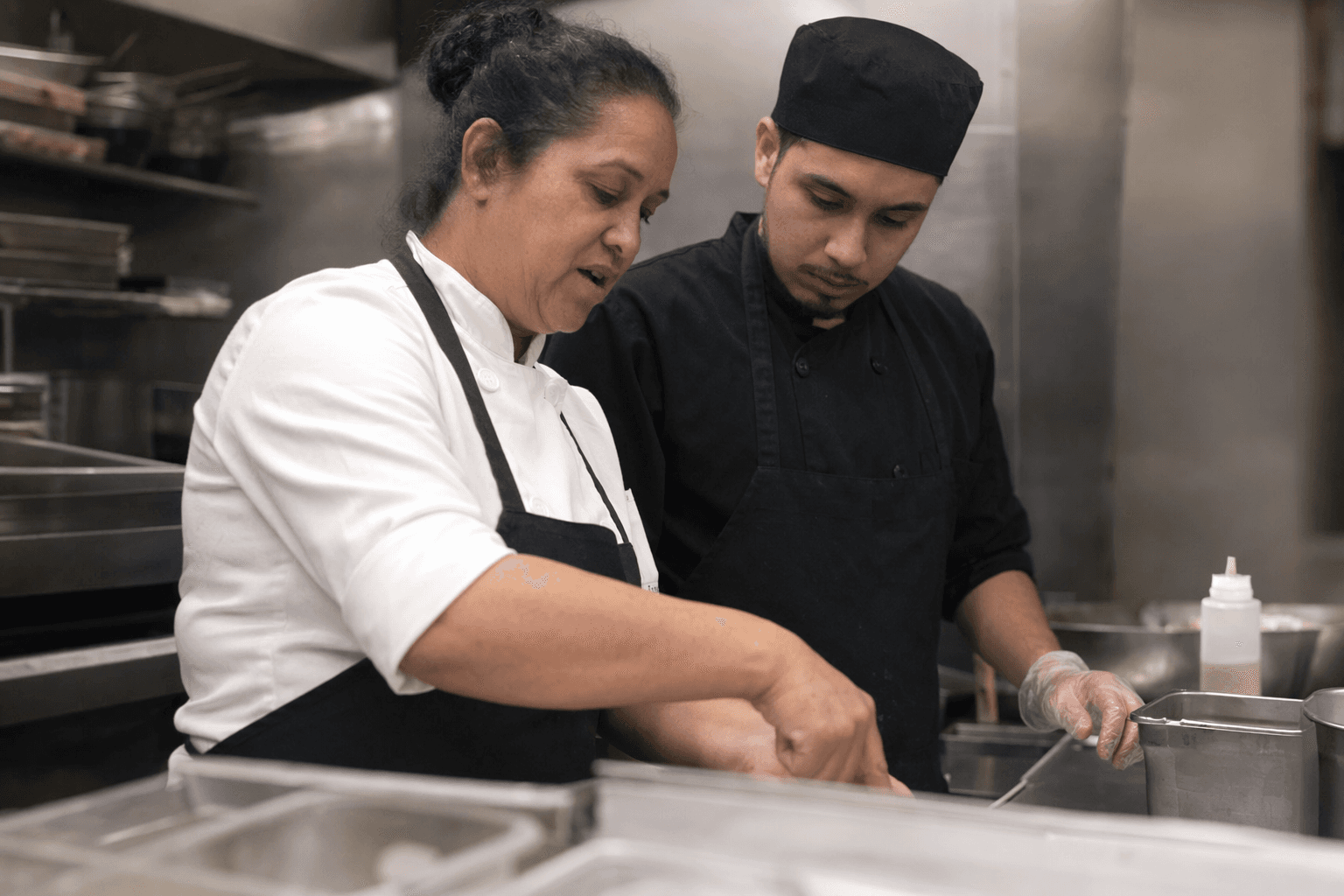
For line cooks and kitchen staff, that can mean the difference between a shift that feels chaotic and one that has checkable routines. Certification cannot solve every staffing shortage, but it can stop the norm of improvisation from becoming the norm of the entire kitchen.
The failure points are predictable
CDC’s safe-food-preparation research focuses on seven practices that fail most often when kitchens get rushed: handwashing, preventing contamination, using gloves, cooking to safe temperatures, keeping food hot, keeping food cold, and reheating to safe temperatures. Those are the moments where a busy line can slide from efficient to dangerous.
That is where inexperienced workers are most exposed. If no one slows them down long enough to learn how to separate raw and ready-to-eat foods, when to change gloves, how long to hold food, or how to verify temperature, then speed pressure does the teaching. The result can be contamination, rework, discarded food, and a scramble that lands on the next shift.
CDC’s date-marking guidance fits the same pattern. Date marking helps indicate when refrigerated ready-to-eat foods are no longer safe to eat, and CDC says most restaurants labeled those foods with dates showing when they should no longer be served. That is the kind of routine that protects both guests and workers, because it keeps a tired crew from arguing over what is still usable and what needs to be tossed.
Sick workers need a policy, not a wink and a nod
One of the easiest breakdowns to prevent is also one of the hardest for workers to navigate if management leaves it vague: coming to work sick. CDC recommends written policies that require food workers to tell managers when they are sick, along with clear symptoms that should keep them off the floor.
That is especially important in restaurant culture, where workers often feel pressure to show up no matter how they feel. In a business shaped by low margins, burnout, staffing shortages, and high turnover, sick-time policy can become a test of whether management really means what it says about safety. A serious operation does not rely on a worker deciding in the moment whether they are too ill to handle food. It puts the rule in writing and enforces it consistently.
What strong managers should be doing on every shift
CDC’s research points toward a simple management standard: build structure that helps new people do the right thing under pressure. That means coaches, not just bosses. It means enough soap, gloves, and other resources to make the rules workable, because CDC includes resources as one of the four pillars of food safety culture.
- making sure supervisors are certified in food safety
- teaching handwashing, glove use, and temperature checks in plain language
- using date marking so refrigerated ready-to-eat food is easy to sort
- creating written sick-worker rules that are actually followed
- giving younger and less-experienced workers more supervision during the rush
A solid restaurant operation should be doing a few things at once:
That approach protects the public, but it also protects the crew from the fallout of one preventable mistake. When a kitchen has to throw away food, re-clean surfaces, or answer for a violation, the burden usually lands on the people at the bottom of the chain, not on the system that failed them.
Young workers face the sharpest edge of the rush
The Occupational Safety and Health Administration adds another layer here with its young-worker restaurant eTool, which is meant to help teen workers and employers address common hazards and safety solutions in restaurants. That is a reminder that food safety and workplace safety overlap more than management often admits. The same rush that invites contamination also creates the conditions for injuries, from careless handling to hot equipment to other hazards common in restaurant work.
If the industry wants fewer outbreaks and fewer bad shifts, the answer is not to expect new workers to toughen up faster. It is to stop treating supervision as optional. CDC’s message is that restaurants do better when they make food safety part of the operating system, not a slogan, and when managers have the training and authority to keep the line from outrunning the people on it.
This article was produced by Prism’s automated news system from verified source data, official records, and press releases, then run through automated quality and moderation checks before publishing. The system is built and supervised by the people who set the standards it runs under. Read our full AI policy.
Did this article answer your question?