Chicago mayor sparks backlash over tipped wage slavery comparison
Johnson's slavery comparison widened Chicago's tipped-wage fight after a 30-19 veto override failed, leaving servers on a path to higher base pay by 2028.
Brandon Johnson’s comparison of Chicago’s tipped wage system to slavery sharpened a fight that now reaches straight into restaurant payrolls, and the timing mattered. After the Chicago City Council failed on April 15, 2026, to override Johnson’s veto of a measure that would have frozen the city’s tipped-wage phaseout, Chicago servers and bartenders remained on a path toward a higher base wage, while restaurant owners kept warning that more closures could follow.
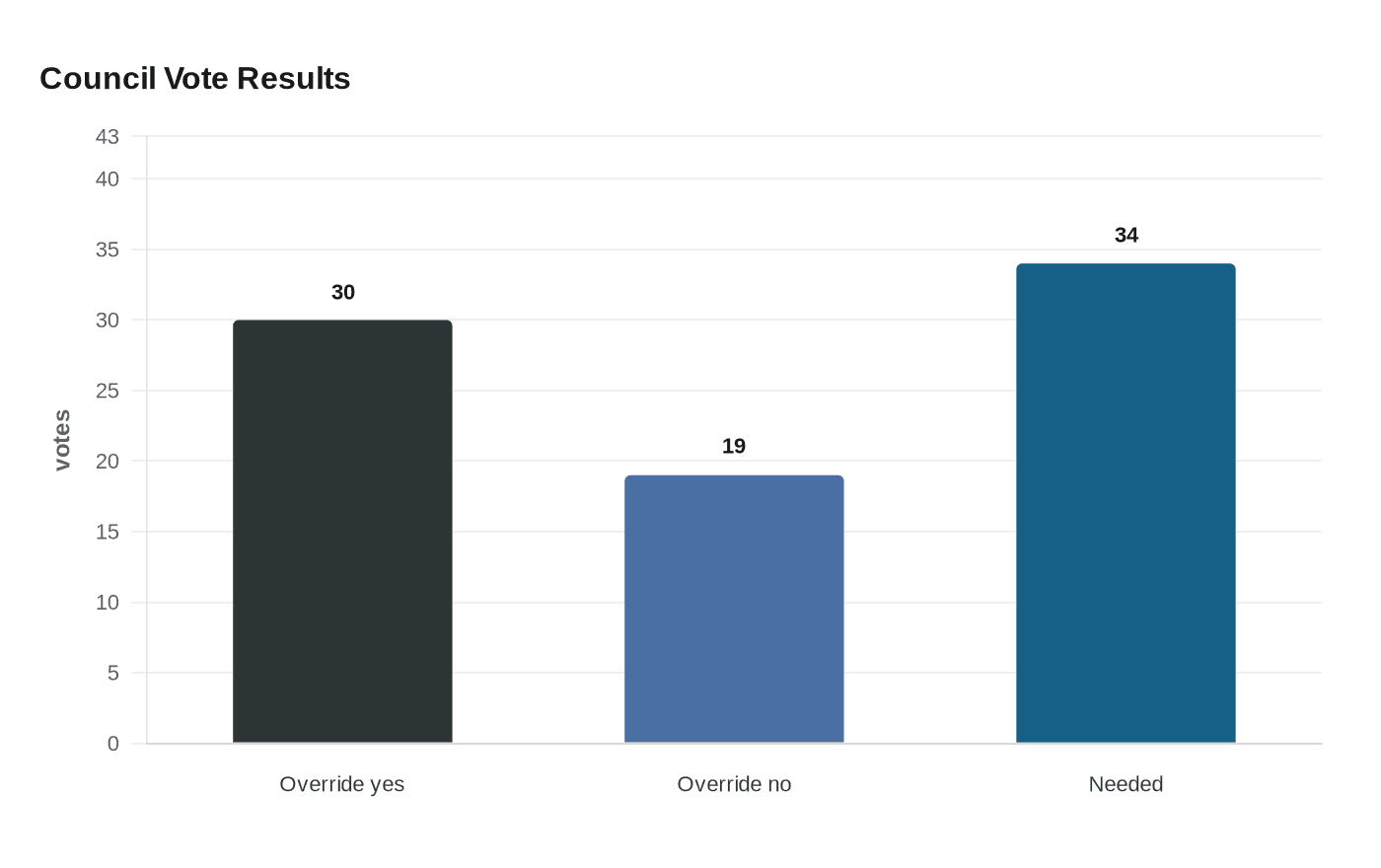
The override fell 30-19, four votes short of the 34 needed. That left intact the city’s One Fair Wage plan, approved by the council on October 6, 2023, in a 36-10 vote. Under the ordinance, restaurants must phase out the tipped minimum wage by July 1, 2028, with annual 8% raises every July 1 until tipped workers reach the city’s regular minimum wage.
At the time of the vote, Chicago’s tipped workers were paid $12.62 an hour, while the city minimum wage stood at $16.60. The frozen-rate proposal would have held tipped pay at 76% of that minimum. For workers who depend on tips to make rent, cover bills and keep food on the table, the difference is not theoretical. It is the base pay that shapes every shift, every schedule and every paycheck between now and 2028.
Johnson said the fight was against a “corporate-funded effort” to blame rising costs on Black and Brown workers. He has now successfully vetoed three measures in three years, including the tipped-wage freeze, a hemp-products ban and a curfew expansion for the Chicago Police Department. Ald. Jesse Fuentes led the push to eliminate the tipped minimum wage, arguing the issue was about a basic human need: making sure workers can afford rent, bills and groceries.
On the other side, the Illinois Restaurant Association, led by CEO Sam Toia, said the failed override was disappointing and urged a compromise that protects restaurants and jobs. Ald. Anthony Beale said the looming end of the tipped minimum wage was hurting Chicago, while Ald. Gilbert Villegas said the administration should negotiate and that he would seek another effort to freeze the scheduled increases. Restaurant advocates warned that without relief, more neighborhood restaurants could close and leave behind empty storefronts, a warning that lands hardest on the cooks, servers and managers who would be the first to lose shifts if the economics break down.
This article was produced by Prism’s automated news system from verified source data, official records, and press releases, then run through automated quality and moderation checks before publishing. The system is built and supervised by the people who set the standards it runs under. Read our full AI policy.
Did this article answer your question?