Starbucks customer finds nail in breakfast sandwich, lawsuit risks grow
A New Jersey woman said she found a nail baked into a Starbucks sandwich, turning one breakfast order into a potential six-figure liability problem.
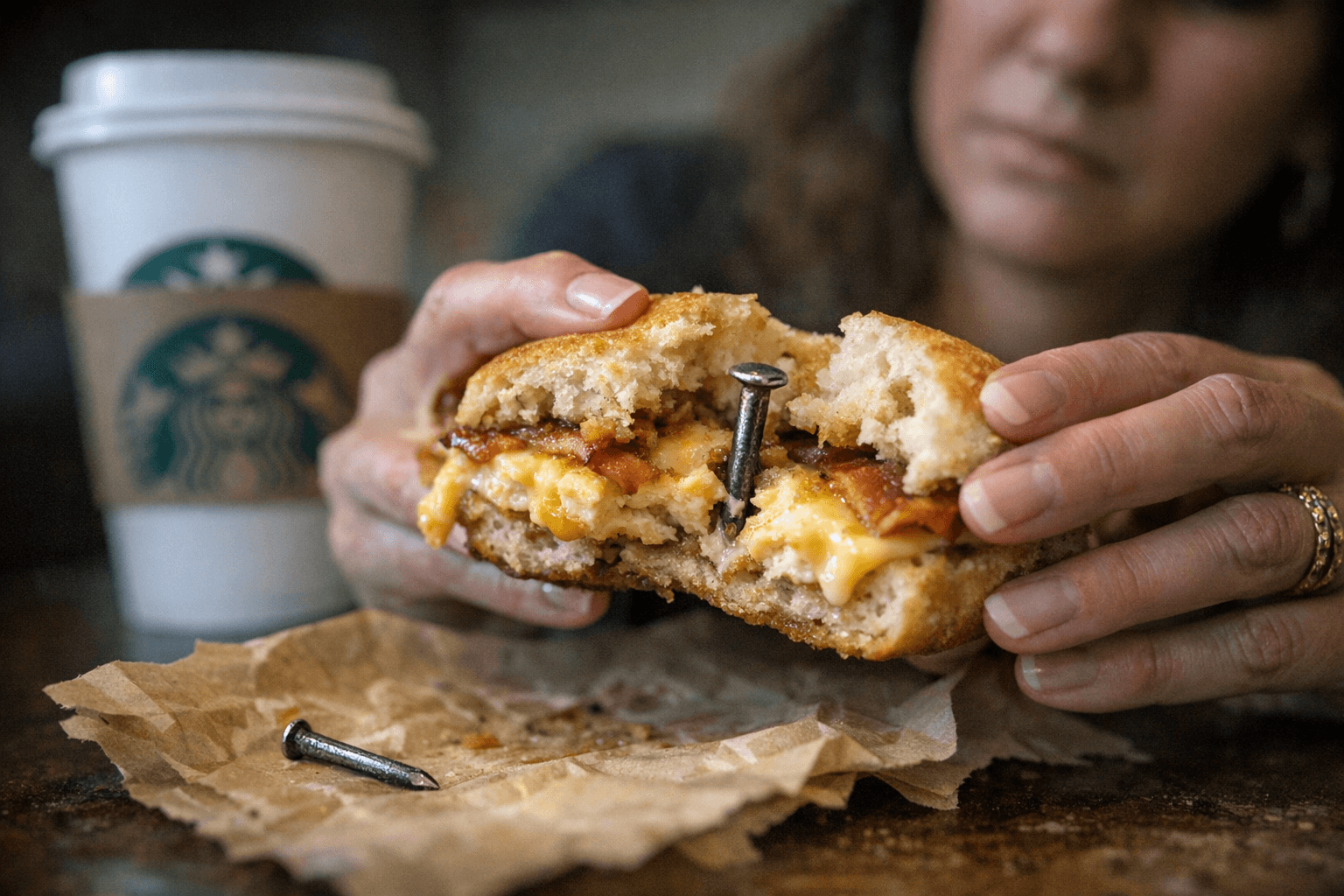
A New Jersey woman who posts as Kayla, @macncheese_yall, said she found a metal nail baked into the bread of a Starbucks breakfast sandwich, and the claim spread fast enough to turn a single store-level complaint into a chainwide risk. For restaurant operators, the problem is not just the image of a nail in breakfast. It is the speed with which one foreign-object incident can trigger customer outrage, legal scrutiny and an internal scramble over where the contamination started.
Starbucks is large enough for that scrutiny to matter. In company materials, it says it operates and licenses more than 41,000 coffeehouses worldwide, and its fiscal 2025 annual report put its workforce at about 381,000 people globally, including roughly 223,000 in the United States. That scale is why a sandwich complaint can move far beyond one location. In a system built on standardized production, a contamination allegation immediately raises questions about ingredient handling, supplier checks, prep controls and whether the object entered the food at the bakery, in transit or inside the store.
The legal backdrop is not subtle. Courts have long treated nails, wires and glass as classic foreign objects that can support liability. The California Supreme Court’s Mexicali Rose decision and the Supreme Court of Ohio’s 2024 Berkheimer decision both used examples like glass, stones, wires and nails when discussing dangerous contamination in food. That matters because these are not the kind of natural hazards that operators can shrug off as part of the product. They are the sort of defects that can quickly move a complaint from a customer-service issue to a product-liability claim.
FDA guidance says foods containing certain hard or sharp foreign objects may be considered adulterated. Consumers who find contaminated food are told to report it through the FDA’s reporting channels or to the appropriate state or territorial health department website. Food-safety literature also treats foreign material contamination as a persistent problem across food processing and supply chains, which is exactly why restaurant employers are pushed to document incidents fast, preserve packaging and retain the object itself if a claim is made.
That preservation step is where the next round of fallout often begins. Lawyers advise customers to keep the object, packaging and receipt, and to document any injury before pursuing a claim. In a business already dealing with staffing shortages, burnout and high turnover, the operational burden lands on the people behind the counter and in the manager’s office, who have to absorb the immediate backlash while the company tries to determine whether a nail in a sandwich was a one-off mistake or a breakdown in control.
Know something we missed? Have a correction or additional information?
Submit a Tip