Dave’s Hot Chicken rolls out tech upgrades that solve real problems
Dave’s Hot Chicken is betting on tech that trims order friction, not flashy automation, and it has already walked back one tool when guests hated it.
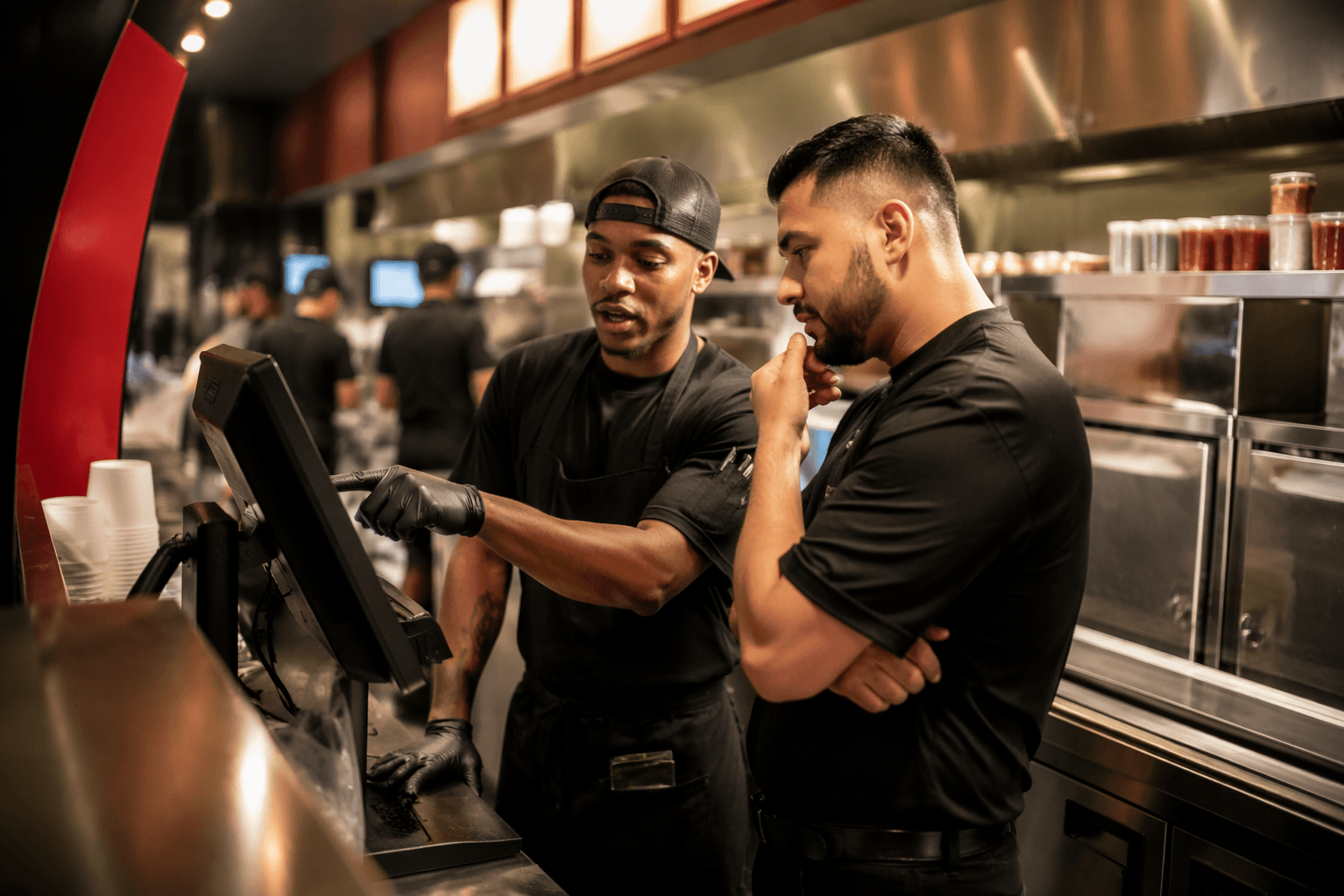
Dave’s Hot Chicken is drawing a hard line between restaurant tech that helps a shift and tech that just adds noise. The chain’s multi-year technology push is built around better order tracking, stronger point-of-sale tools, and kitchen display systems that keep front-of-house and back-of-house moving together. It is also proving that not every automation pitch belongs on the floor, especially when guests push back and the burden lands on crew.
Why this tech push matters on the line
Dave’s did not grow out of a polished corporate lab. It started in 2017 as a $900 parking-lot pop-up in East Hollywood, with folding tables and a portable fryer, and the company says the lines wrapped around the block. That kind of growth story creates a very practical problem for restaurant workers: a concept can go from scrappy to slammed faster than its systems can keep up.
By late 2024, the chain had more than 200 locations open and more than 700 franchised units sold across the United States, Canada, the United Kingdom, and beyond. A brand moving that quickly needs more than buzzworthy gadgets. It needs tools that cut down on order confusion, reduce duplicate work, and keep a busy shift from turning into a rescue mission.
The lesson from voice AI is not that automation always helps
Dave’s tested drive-thru voice AI and found something restaurant workers already know well: a system can look efficient on paper and still fail in the real world. The technology performed well on order completion, but guests did not like talking to a robot, so the company pulled it back. That matters because a tool that irritates customers often creates a second job for employees, who end up fixing the mess at the window, at the expo line, or at the register.
For line cooks, cashiers, and shift leads, the worst tech usually does not announce itself as bad. It shows up as more remakes, more questions from the front, more tickets that need reconciling, and more time spent calming down frustrated guests. Dave’s decision to back away from voice AI is a reminder that a labor-saving feature is not automatically a worker-friendly one if it makes service clunkier and pushes the cleanup onto staff.
The company has also explored kiosks, drone delivery, and computer vision, but not every idea has moved forward. That selectivity matters. In restaurants, especially in fast-growing chicken chains where volume can spike fast, the wrong tool can create friction faster than it creates speed.
What Dave’s is actually keeping in the stack
The technology that appears to be sticking is less glamorous and more useful. Dave’s moved to a newer POS system and QSR Automations’ kitchen display system because, as chief technology officer Leon Davoyan has said, the company sees a strong technology foundation as non-negotiable. That is the kind of move crews notice when it works: fewer order slips lost between counters, clearer routing to the kitchen, and better visibility into what is actually moving.
The company’s newer POS and KDS setup is meant to support order tracking and keep the system humming. For workers, that translates into fewer handoff errors and less repetition, especially when a rush hits and every extra step becomes a slowdown. It can also help managers spot problems faster, whether that means a missing item, a delayed ticket, or a lane that is backing up before the line turns ugly.
Qu said the system helped keep orders flowing during network issues at a New Jersey opening, using offline processing so the store could keep moving when the connection faltered. Qu also said the system handled more than $20,000 in sales on opening night at Dave’s Conyers, Georgia restaurant, which is co-owned by Usher. Those are the kinds of tests that matter to restaurant workers because the real measure of a platform is not how it looks in a demo, but whether it keeps a high-pressure opening from falling apart.
The test kitchen for tech is getting crowded
Dave’s has not limited itself to one or two experiments. At its corporate-owned test location in Chino Hills, California, operated by president and COO Jim Bitticks, the company has tested a robotic arm, self-service kiosks, and digital marketing boards. Other reporting also points to trials of robotic fry stations, smart kiosks, dynamic forecasting tools, and digital menu boards. The pattern is clear: Dave’s is searching for tools that help throughput without making the shift feel more mechanical.
That distinction matters to managers as much as it does to crew. Kiosks can reduce some front counter bottlenecks, but they can also create new questions if the menu logic is messy or the kitchen cannot absorb the pace. Forecasting tools can help with staffing and prep, but only if they are accurate enough to support a real shift instead of giving leadership false confidence. The company’s willingness to test and discard ideas suggests it understands that scale punishes sloppy tech decisions.
What workers should watch for when new tools arrive
- If the system cuts down on duplicate order entry, that is a real gain for cashiers and expediters.
- If the kitchen display makes tickets easier to prioritize, cooks are less likely to get buried in avoidable chaos.
- If a tool slows the guest down or creates confusion at the speaker box, crew will usually absorb the fallout.
- If managers can use the system to catch problems before they become remakes or comps, the shift gets lighter.
- If technology only looks efficient to corporate while adding steps on the floor, it is not solving a labor problem.
Scale, ownership, and the pressure to get this right
The stakes got even higher after Roark Capital acquired a majority stake in Dave’s Hot Chicken in June 2025 in a deal valued at about $1 billion. CNBC reported that Dave’s U.S. sales grew 57% in 2024 and surpassed $600 million, based on Technomic data. In 2025, reports said the chain planned to open 145 to 155 new locations, with systemwide sales projected around $1.2 billion.
That kind of growth puts a premium on systems that do not crack under pressure. A brand that is adding stores at that pace cannot afford tech that makes the guest experience worse or pushes extra complexity onto the people taking orders, bagging food, and keeping the line moving. Dave’s is showing that restaurant innovation only counts when it makes service cleaner, faster, and more dependable for the people actually carrying the rush.
This article was produced by Prism’s automated news system from verified source data, official records, and press releases, then run through automated quality and moderation checks before publishing. The system is built and supervised by the people who set the standards it runs under. Read our full AI policy.
Know something we missed? Have a correction or additional information?
Submit a Tip