Diners favor experience over discounts, restaurants lose loyalty share
Diners are swapping favorite brands faster, and grocery and convenience stores are stealing the quick-meal crowd as price cuts lose their pull.
Restaurant teams trying to win back regulars this month have a harder job than simply posting a bigger discount. Diners are drifting toward grocery stores and convenience stores, and the businesses that keep them coming back are the ones that make the meal feel faster, fresher and worth the stop.
Tillster’s 2026 Phygital Index Report found that 45% of consumers said their favorite restaurant changed in the last year, up from about one-third in 2025. The company says the industry is entering “Restaurant 2.0” in what it calls “one of the most fragmented foodservice landscapes in history.” For operators, that means the old formula of pushing deals and loyalty points is losing ground to the basics: food quality, convenience and speed.
The survey, based on responses from 2,144 U.S. diners in December 2025, showed that food quality was the top factor in where people eat, cited by 45% of respondents, followed closely by convenience at 44%. Price still matters, but it is no longer the main driver. Hope Neiman, Tillster’s chief marketing officer, said the results show consumers are prioritizing food quality, convenience and speed even in a tough economy.
The pressure is showing up at the register and in the dining room. Sixty-nine percent of diners said they have decreased or maintained their dining-out budgets because of economic conditions. Twenty-eight percent said they are dissatisfied with the loyalty programs they belong to, while 61% said they have abandoned an order because of delivery service fees. A third are choosing lower-priced items, 27% are using loyalty programs more often, and 26% are tipping less, a reminder that weaker checks can mean thinner gratuities for servers and bartenders already working in a high-turnover business.
For restaurant managers, that shifts the focus back to labor and execution. The National Restaurant Association forecast in February 2024 that U.S. restaurant sales would top $1.1 trillion in 2024 and that the industry would employ about 15.7 million people, but it also said 45% of operators needed more employees and 70% had hard-to-fill openings. With staffing still tight, restaurants have to get sharper on scheduling, ticket times, handoffs and hospitality. If a lunch line moves slowly, or a pickup order is missing items, the customer now has easier options a few blocks away.
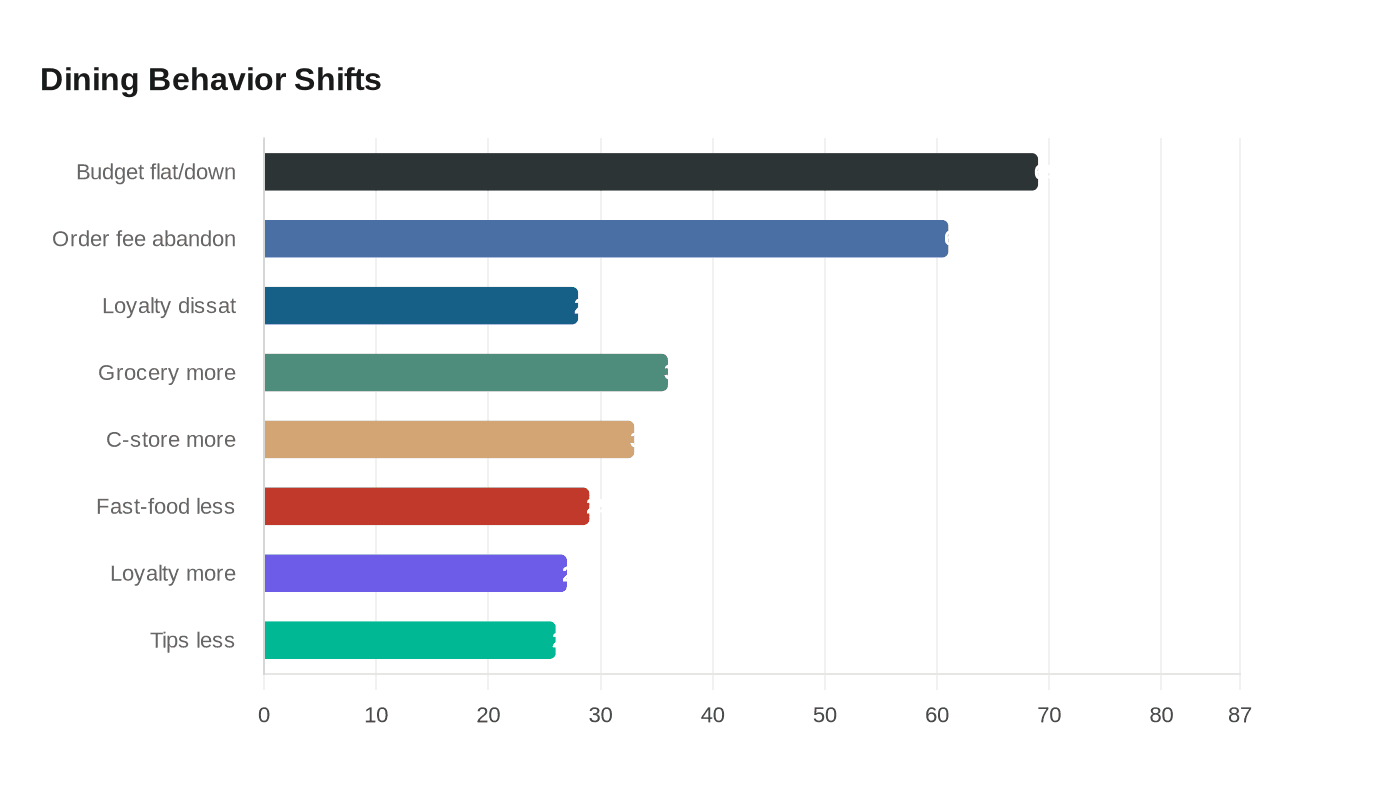
The leak is not theoretical. Tillster’s earlier report found that one-third of diners had already switched their favorite quick-service brand in the prior year, and 24% said they were eating at grocery and convenience stores more often. In the latest survey, that shift deepened: 36% said they are going to grocery stores more often and 33% are visiting convenience stores more frequently, while 29% said they are going to fast-food chains less often. Grocery and c-store foodservice has grown more competitive, and restaurants that want loyalty back will have to earn it with the meal itself, not just the coupon.
This article was produced by Prism’s automated news system from verified source data, official records, and press releases, then run through automated quality and moderation checks before publishing. The system is built and supervised by the people who set the standards it runs under. Read our full AI policy.
Did this article answer your question?