Experience-driven menus aim to boost summer restaurant traffic
Restaurants are betting on dinners that feel like events, but the real question is whether the added choreography boosts traffic enough to justify the labor.
A summer traffic play with a labor bill attached
Restaurants are trying to sell more than food this summer. They are selling a reason to leave home, and that means menus with a little theater attached, from chef’s-table builds to hibachi setups and other interactive formats that promise a memory, not just a meal.
The bet is understandable. The National Restaurant Association projects the U.S. restaurant industry will reach $1.5 trillion in sales in 2025 and employ 15.9 million people by year-end, with more than 80% of operators expecting sales to be higher or at least comparable to last year. But that optimism comes with pressure: full-service restaurants are still trying to win back pre-pandemic on-premises traffic, and they are doing it by pushing hospitality and enhanced dining experiences harder than they push price cuts.
Guests are acting like dinner is an occasion again
OpenTable’s dining trends data shows why experiential menus are getting attention. Dining out rose 8% year over year in 2025, and Americans are expected to dine out 10 times per month on average in 2026. The same report found 55% of Americans say they will spend even more on restaurants next year, which suggests there is still room to sell premium experiences if operators can make them feel worth the money.
The bigger shift is behavioral. OpenTable found 61% of Americans now see dining out in 2026 as more of a special occasion than an everyday routine, and happy hour dining between 4:00 and 4:59 p.m. was up 13% year over year. For operators, that means the opportunity is no longer confined to dinner service alone. It also means the room has to earn the guest’s time faster, because people treating a meal as an event are more likely to notice a slow start, a clumsy explanation, or a weak payoff.
Debby Soo, OpenTable’s chief executive, has framed the market as one where diners are looking for value and experiences that feel authentic and worth it. That is the key line for restaurant workers, because authenticity is not a slogan on a menu board. It has to show up in the pacing, the plate, the script from the server, and the way the whole room moves.
What the experience costs on the floor
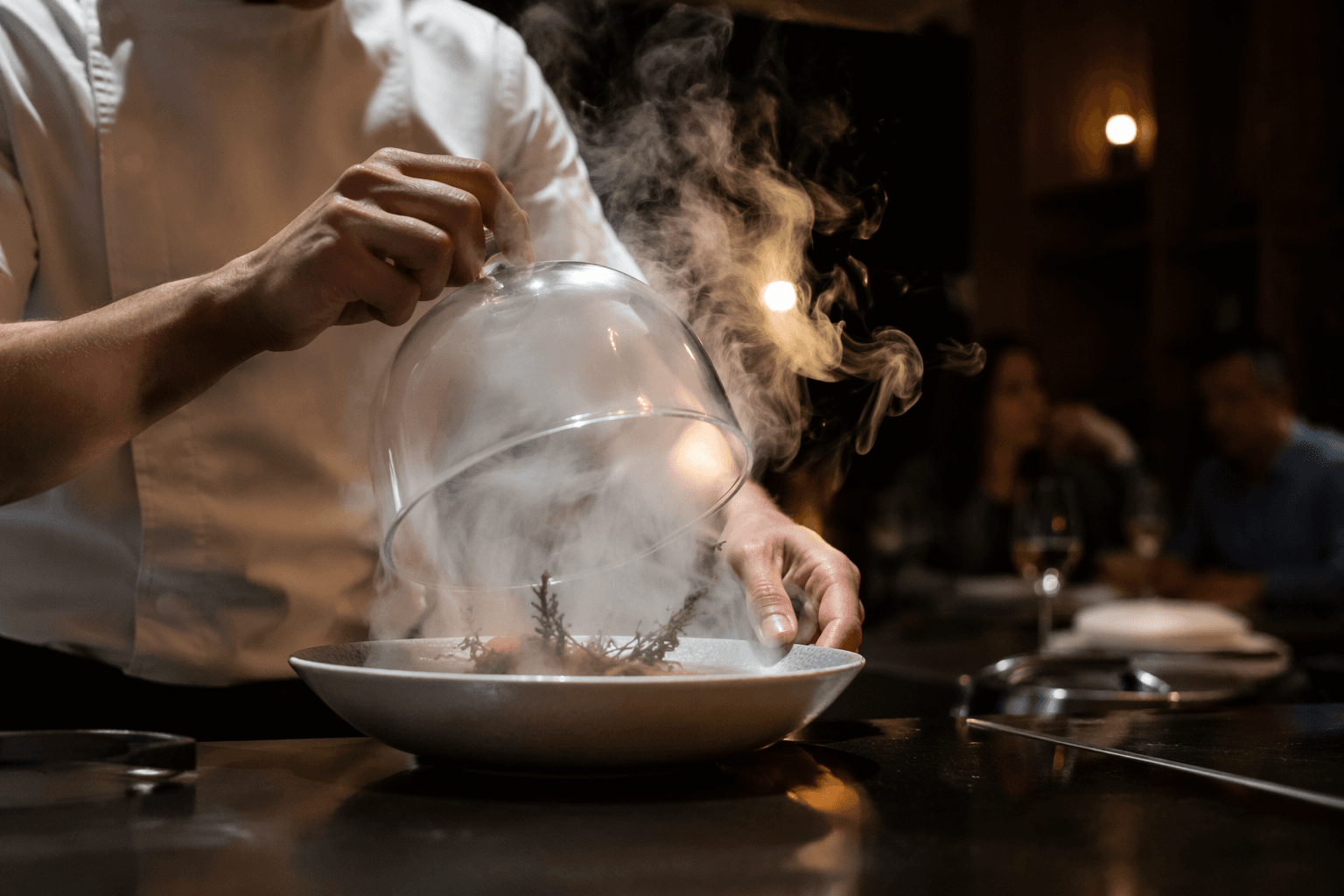
Experience-driven menus sound like a marketing advantage, but they are also an operating decision. A tableside finish, a curated tasting sequence, or a theatrically timed reveal can add pressure to line cooks, servers, bartenders, hosts, and managers in very real ways. It can mean more training, tighter timing, extra prep, more steps of communication between the back and front of house, and more chances for a service hiccup to show up in front of guests.
That is where the labor math matters. If a concept adds labor hours, slows ticket times, or requires more manager attention, it has to earn that cost back through stronger traffic, higher check averages, better repeat business, or all three. Otherwise, the “experience” becomes another layer of work for the same wage base, with servers and bartenders carrying the burden of explaining, pacing, and recovering when the kitchen falls behind.
For managers, the operational question is simple even if the answer is not: does the concept create enough perceived value to justify the added work per shift? For cooks, it is whether the menu can be executed consistently without turning the pass into a bottleneck. For servers, it is whether a more memorable night also means a larger tip pool and more generous checks, or just more table hand-holding with no payoff at the end of the shift.
The momentum is real, but it is not coming from one gimmick
The strongest evidence that this trend has legs comes from search behavior and category growth. Yelp-based reporting showed searches for Le Petit Chef rose 509% in the January-to-March 2025 period. In the same stretch, searches for hibachi catering rose 55%, chef’s table 36%, popup restaurant 14%, and Medieval Times 40%. That mix is revealing because it is not just about fine dining or novelty. It spans spectacle, social dining, and formats that turn the meal into something visibly different from a standard night out.
That is also why certain concepts have kept expanding. Reporting on the same trend noted that Cooper’s Hawk, KPOT Korean BBQ & Hot Pot, Kura Sushi, and Puttshack had outgrown the industry average in 2024. Those businesses all offer more than a plate of food. They give guests something to do, something to watch, or something to post, which matters in a market where 79% of millennials say a restaurant’s Instagram or TikTok-worthiness affects where they choose to dine.
Le Petit Chef is a useful example of how polished this category has become. Its concept is built around an immersive culinary journey with 3D visuals, theatre and dining combined, and the promise of the world’s smallest chef. That is not a back-of-house efficiency play. It is a front-of-house production that depends on timing, staging, and a staff that can keep the illusion intact long enough to make the experience feel special.
Old formats are being refreshed for a new audience
None of this is truly new. Medieval Times has operated since 1973 as a dinner-theater experience, which is a reminder that people have long been willing to pay for a meal tied to a show. What is different now is the audience and the pressure on operators. Diners are more value conscious, more social-media aware, and more likely to treat going out as an event worth photographing, remembering, and repeating if the experience lands.
The American Culinary Federation’s 2026 trends report points in the same direction, saying consumers will be looking for dishes that feel authentic and connect emotionally, along with presentations crafted to stimulate the senses or stories that engage the imagination. That is the sweet spot for restaurant leaders trying to avoid a pure gimmick. The most durable concepts will not just be loud or photogenic. They will feel rooted in the food, the service, and the identity of the room.
How operators should judge the payoff
The question for restaurants is not whether experiential menus can attract attention. They clearly can. The harder question is whether they can convert that attention into traffic, margin, and repeat business without exhausting the staff that has to deliver them night after night.
A useful test looks like this:
- Does the concept fill the room during the parts of the day that matter, including the 4:00 to 4:59 p.m. happy hour window that is growing?
- Does it lift check averages enough to cover the extra prep, training, and labor?
- Can servers and bartenders explain it quickly without slowing service or confusing the guest?
- Can the kitchen execute it consistently without blowing up ticket times?
- Do guests return after the first visit, not just post about it once?
That last point matters most. SevenRooms research found 74% of consumers said they would return after a unique experience, which suggests the upside is not limited to one-time novelty. But repeat business only shows up when the experience feels genuine, the food holds up, and the staff can deliver it without burning out the line or the floor.
The summer traffic race is not being won by the loudest concept. It will go to the operators who can prove that the theater on the menu is worth the work on the clock.
Know something we missed? Have a correction or additional information?
Submit a Tip