FDA offers free, multilingual food safety training materials for restaurants
Free FDA posters in nine languages can turn a pre-shift huddle into food-safety coaching, especially on handwashing, employee health and time-temperature control.
What the FDA is handing restaurants for free
A laminated reminder can do a lot in a slammed kitchen, especially when the same crew is juggling prep, tickets, and a manager trying to keep service moving. The U.S. Food and Drug Administration is offering a set of Retail Food Protection Industry Educational Materials that restaurants can post, print, and hand out free of charge, giving operators a low-cost way to reinforce food safety without buying a custom training program.
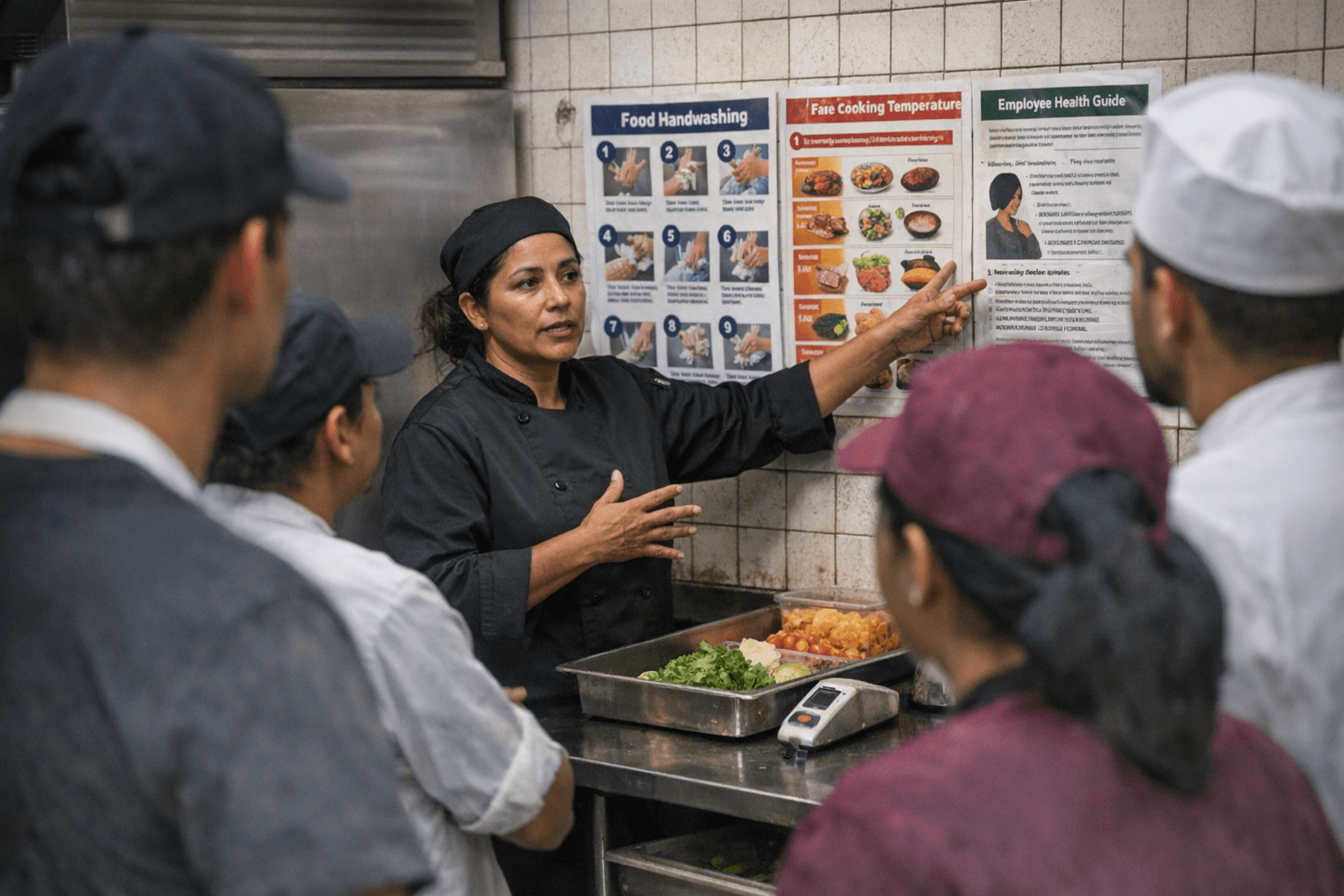
The agency says the posters and storyboards are meant to help food employees understand the role they play in protecting public health. In practice, that makes them useful in the places where restaurant habits are actually formed: on prep tables, on the wall near hand sinks, in orientation packets, during pre-shift meetings, and in corrective coaching after someone cuts a corner.
Why this matters on the line
The most useful training tools are usually the ones people see before they make a mistake, not after. FDA says the materials can be used in food preparation areas, in training sessions, and in food safety discussions, which is exactly why they fit the rhythm of restaurant work. They are not just wall decor. They can become a fast reminder when a dishwasher is backing up, the line is busy, and nobody wants to stop service for a lecture.
That matters because FDA’s own restaurant research keeps pointing to the same weak spots. In its 2017-2018 retail food service study, the two most common out-of-compliance risk factors were improper holding time and temperature, along with poor personal hygiene. FDA also said well-developed food safety management systems were the strongest predictor of compliance, which is a reminder that posters do not replace management, but they can support it by making the right habits visible every day.
For a small operator, that is the appeal. You do not need to hire a consultant to build a training deck if the basics are already spelled out in ready-to-use visuals. A manager can use one poster to open a five-minute pre-shift conversation about handwashing, another to review employee illness reporting, and another to remind the crew why cross-contact matters when ingredients, utensils, and surfaces are moving fast.
The posters that solve the biggest gaps
If you are deciding what to put up first, start with the materials that match the most common restaurant breakdowns. The point is not to cover every possible hazard at once. The point is to stop the mistakes that happen in the daily rush.
- Handwashing and personal hygiene: FDA says norovirus remains the leading cause of foodborne illness, and many illnesses can be traced to food contaminated by soiled hands of infected food employees in retail food establishments. That makes handwashing visuals one of the highest-value reminders in any kitchen.
- Employee health: Posters that reinforce staying home when sick, reporting symptoms, and understanding illness risks can help managers avoid the kind of spread that turns one bad shift into a multi-day problem. FDA’s Employee Health and Personal Hygiene Handbook is built to help prevent the spread of bacteria and viruses such as Salmonella and norovirus, so the poster library works best when it points back to those same rules.
- Time and temperature control: FDA’s risk-factor studies show this is one of the most common compliance failures. A simple visual reminder near hot holding, cold holding, or the prep cooler can be worth more than a thick binder in the back office.
- Cross-contact prevention: For kitchens that handle allergen-heavy menus, a clear visual on separating tools, surfaces, and ingredients can keep a small mistake from becoming a serious one. Even when the poster is basic, it gives managers a reason to slow the crew down and reset the standard.
The sweet spot is using these materials to catch the gaps that show up after the rush, when people get casual. A poster that lives near the hand sink or the prep station is doing more work than one buried in a training folder.

A multilingual tool for mixed crews
One reason these materials are especially practical for restaurants is the language range. FDA says they are available in nine languages: Arabic, English, Hindi, Korean, Russian, Simplified Chinese, Traditional Chinese, Spanish, and Vietnamese. That matters in kitchens and dining rooms where a shift may include workers who do not all train most easily in the same language.
For managers, the multilingual format can prevent a familiar problem: a good safety message gets lost because it was written for only part of the crew. For workers, the visuals make the point faster than a long policy memo, especially when someone is learning on the fly, working the line for the first time, or trying to absorb instructions while the pace is already moving.
The materials are also free to post and distribute. FDA says they are not copyrighted, and it asks only that users credit the agency when using or posting them. That makes them unusually easy for small operators, franchisees, and independent restaurants to adopt without adding another line item to the training budget.
How to use them without turning training into a lecture
The best use case is not a one-time safety day. It is a small, steady habit. Put one poster where the issue happens, then use it as the opening note for a short conversation. That keeps the training concrete and makes it easier for the crew to remember what the manager actually wants.
A practical rollout can look like this:
1. Put handwashing and employee-health materials near sinks, time clocks, and break areas.
2. Place time-and-temperature reminders near coolers, hot holding equipment, and prep stations.
3. Use cross-contact visuals in prep zones where ingredients, gloves, and utensils move constantly.
4. Bring one poster into orientation for new hires, then revisit it during corrective coaching when a habit slips.
5. Rotate materials in the kitchen so the crew does not stop seeing the same message after a week.
FDA also points operators to related educational videos that can be used in breakrooms or training rooms, which gives managers another way to show what can happen when food safety practices are ignored. For crews that learn better by seeing than reading, that matters.
Part of a bigger prevention strategy
These posters are not a standalone campaign. FDA frames them as part of its Retail Food Safety Initiative, launched in September 2011 as part of a prevention-based, farm-to-table strategy to reduce foodborne illness. The initiative was prompted by a 10-year study of more than 800 retail food establishments that looked at five key foodborne illness risk factors across nine types of retail operations.
That history is important because it shows the materials are tied to a long-running effort to get restaurants to manage risk before people get sick. The agency’s retail risk-factor work has repeatedly pointed toward the same conclusion: the strongest systems are the ones that make food safety routine, not optional. In that sense, the posters are less about decoration and more about making the right behavior hard to ignore.
For restaurants trying to do more with less, that is the real value. Free, multilingual, ready-to-use materials can help a manager turn a two-minute pre-shift check-in into a meaningful food-safety reset. In a business where one missed handwash or one bad holding decision can ripple through a whole service, that kind of low-cost reinforcement can pay for itself quickly.
This article was produced by Prism’s automated news system from verified source data, official records, and press releases, then run through automated quality and moderation checks before publishing. The system is built and supervised by the people who set the standards it runs under. Read our full AI policy.
Did this article answer your question?