Independent Restaurants Shrink 2.3%, Raising Concerns for Workers
About 9,500 independent restaurants disappeared in 2025, cutting the number of kitchens where workers could build skills, loyalty, and upward mobility.
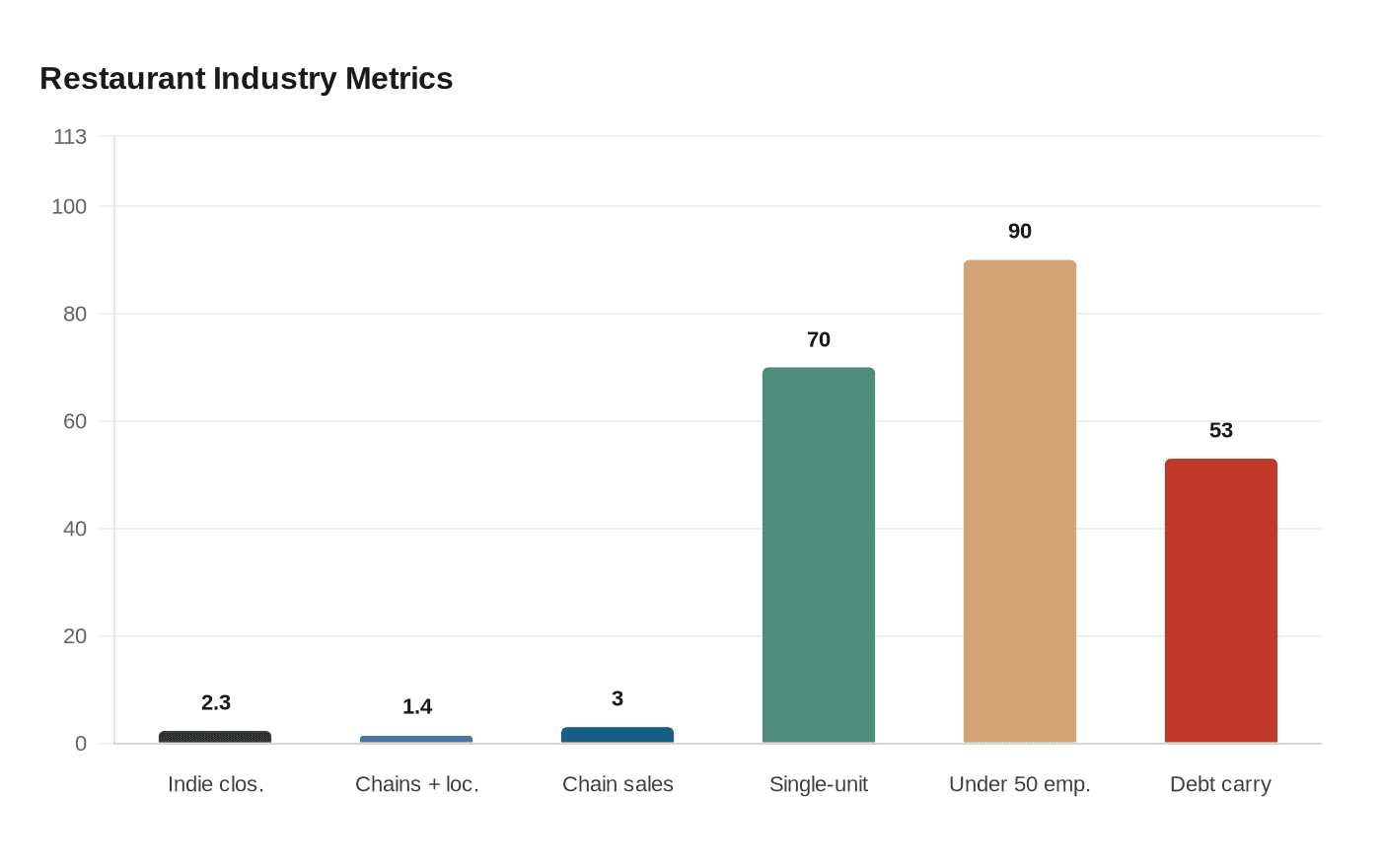
About 9,500 independent restaurants disappeared in 2025, a 2.3% drop that reached far beyond an industry chart. Every closure meant fewer shifts for servers and bartenders, fewer entry-level jobs for hosts and dishwashers, and fewer chef-driven kitchens where line cooks could learn fast, move up, and stay in one neighborhood long enough to build a following.
The decline also widened the gap with chains, which added 1.4% more locations in 2025. Technomic said the 500 largest U.S. chains grew sales 3% in 2024, a sign that scale continued to pay off while independents ran into tighter margins and less room to absorb weak traffic or higher costs. For workers, that meant the labor market kept tilting toward larger brands with more centralized scheduling, more standardized training, and less of the ownership contact that often shapes the culture of a small dining room.
The National Restaurant Association’s own numbers show how central small operators still are. Seven in 10 U.S. restaurants are single-unit operations, and nine in 10 have fewer than 50 employees. The association projected that restaurant and foodservice employment would reach 15.9 million in 2025, with sales topping $1.5 trillion. That scale matters on the ground: when independents close, the places that often hire first-time workers, promote from within, and pay neighborhood-based servers and bartenders through loyal regulars are the ones that vanish.
The pressure on those businesses had been building. In August 2025, the National Restaurant Association said dampened customer traffic and stubbornly elevated costs were keeping profits modest. It also said the average restaurant would need to raise prices 23.8% just to break even on higher input costs. As of November 2024, 53% of operators still carried pandemic-era debt, leaving many small owners with little cushion when sales softened or payroll, rent, and food costs moved against them.
Even as more than 80% of operators expected 2025 sales to be higher than or about the same as the prior year, the independent sector kept shrinking. That split is the story for workers: a restaurant economy that still employs millions, but one where the middle is thinning. As more jobs concentrate inside large brands, workers may find steadier systems and clearer ladders, but fewer chances to shape a place from the ground up or move between independent kitchens without losing the rhythm of their trade.
This article was produced by Prism’s automated news system from verified source data, official records, and press releases, then run through automated quality and moderation checks before publishing. The system is built and supervised by the people who set the standards it runs under. Read our full AI policy.
Did this article answer your question?