Israelis Flee Restaurants Without Paying Amid Sirens
When sirens emptied his Tel Aviv bar, Omri Barel came back to find a table for four gone without paying. Israeli restaurants are down 53% in fine dining reservations; now wartime dine-and-dash is accelerating the collapse.
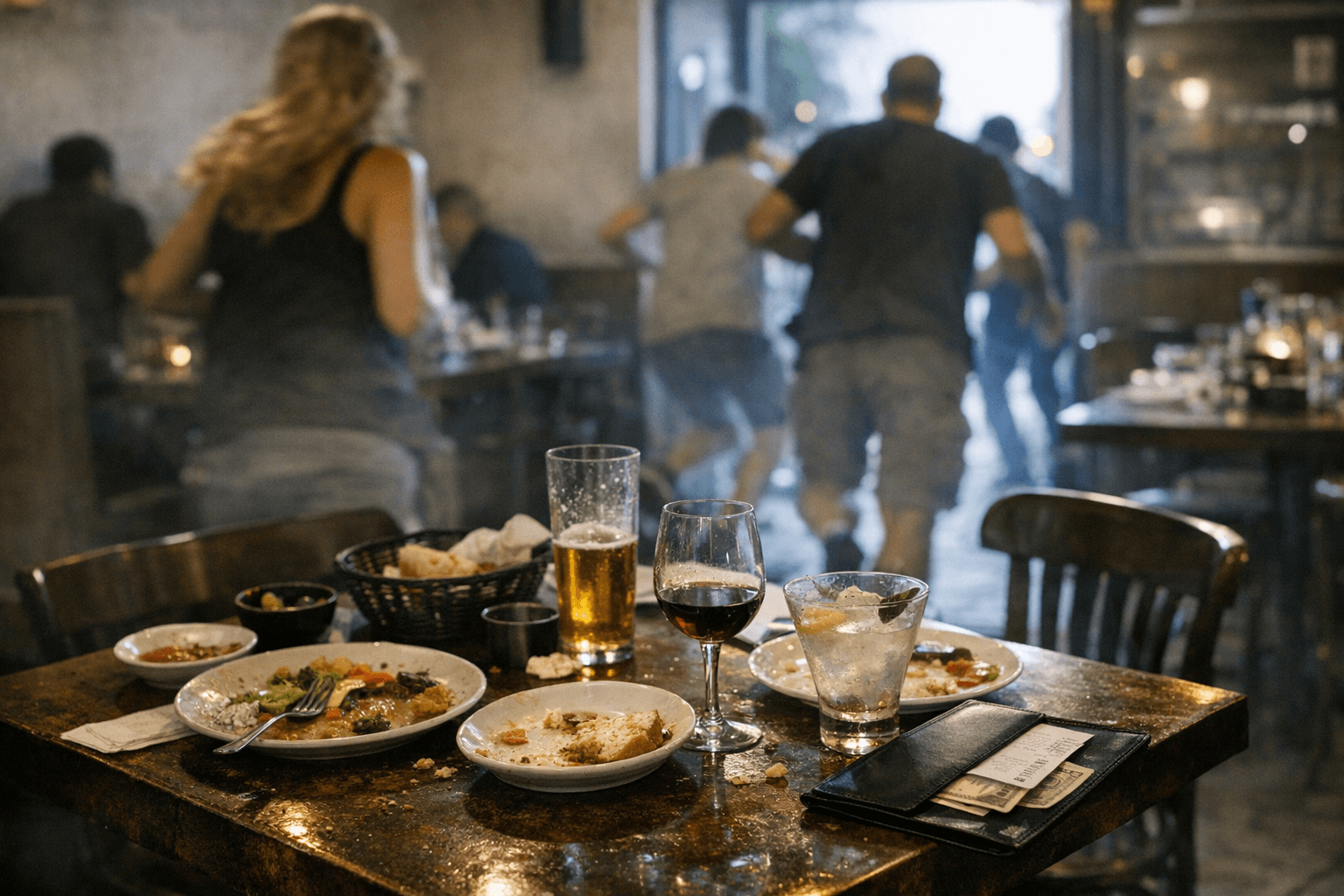
Omri Barel was back at A La Rampa bar in Tel Aviv when the all-clear sounded. The table for four he had been serving wasn't. The siren had cleared the room, and when customers returned to their seats, that group was gone, leaving a tab that ran into hundreds of shekels and no one to collect it from.
Barel's experience has become a pattern across Israel since Operation Roaring Lion began on February 28, 2026, when the U.S. and Israel launched strikes on Iran and triggered a sustained wave of retaliatory ballistic missile attacks. Channel 13 first documented the trend: certain individuals in restaurants and shopping centers appeared to deliberately wait for sirens to sound, then used the chaos of an evacuation to leave without settling their bills.
The exploitation lands on the people least able to absorb it. When a table skips during a siren alert, whoever is holding that check takes the hit, and in tip pools, everyone on the floor feels it. A café owner told Walla: "I can't afford to lose revenue even in the tens of shekels right now. We are barely staying afloat as it is."
Yakir Lisitsky, Chairman of the Israeli Restaurants and Bars Association, has been the loudest industry voice pushing for structural fixes. "Opening shifts to receive guests during a difficult security period involves significant economic risk, calling in workers, preparing raw materials, and operating the business under restrictions and uncertainty. During a siren, work stops immediately, dishes cool down or are thrown away — this leads to immediate losses," he said, recommending that restaurants require a deposit or collect credit card information at reservation.
Some operators have already moved to upfront payment before seating. Not all have followed. One bar owner argued the model "doesn't fit our relaxed atmosphere" and that incidents "don't happen too often," adding: "If someone takes advantage of the situation, karma will deal with them."
The individual walkout problem sits on top of a broader financial collapse. Booking platform Ontopo recorded a 29% average drop in restaurant reservations across Israel since the start of 2025, with fine dining and chef's restaurants falling as much as 53%. Tel Aviv specifically was down 31%. "The restaurant industry is like a national barometer for the mood of the public," said Ontopo Israel general manager Daniel Mustacchi. Israel's Finance Ministry estimated the war costs the economy more than NIS 9.4 billion, roughly $2.93 billion, per week under Home Front Command "red" restrictions. Business consultancy Zoo Consulting identified hospitality and wellness as the hardest-hit sectors. Consultant Yair Amit was direct: "Eating out is a treat, not a necessity. When money gets tight, it's the first thing families cut."
For operators trying to stop the bleeding, the toolkit is narrow but actionable: require a credit card at reservation, mandate prepayment for parties of four or more, hold a deposit on large bookings, and set a written front-of-house policy on what happens to an open tab when a siren clears and a seat stays empty. Nobody expects staff to chase a dine-and-dasher across the street into a bomb shelter. That's exactly why payment-first needs to happen before they sit down.
Know something we missed? Have a correction or additional information?
Submit a Tip