Uber Eats Raises Commission Rates, Squeezing Restaurant Margins on Delivery Orders
Uber Eats just handed restaurants their first fee hike in a decade. On a $30 order, that's $1.50 gone before a cook touches an ingredient.
Brandon Solano ran the numbers and pulled the plug. When Uber Eats notified Rave Restaurant Group, the parent company of Pie Five and Pizza Inn, that it would be raising commissions by 3%, Solano calculated what remained after fees and found operators would be left with little to no profit on delivery orders. He asked Uber to negotiate. Uber declined. On March 17, both brands left the platform.
"At some point, enough's enough," Solano said. "I just can't raise my prices anymore. I can't take it in margin anymore. And I'm just not going to participate in this."
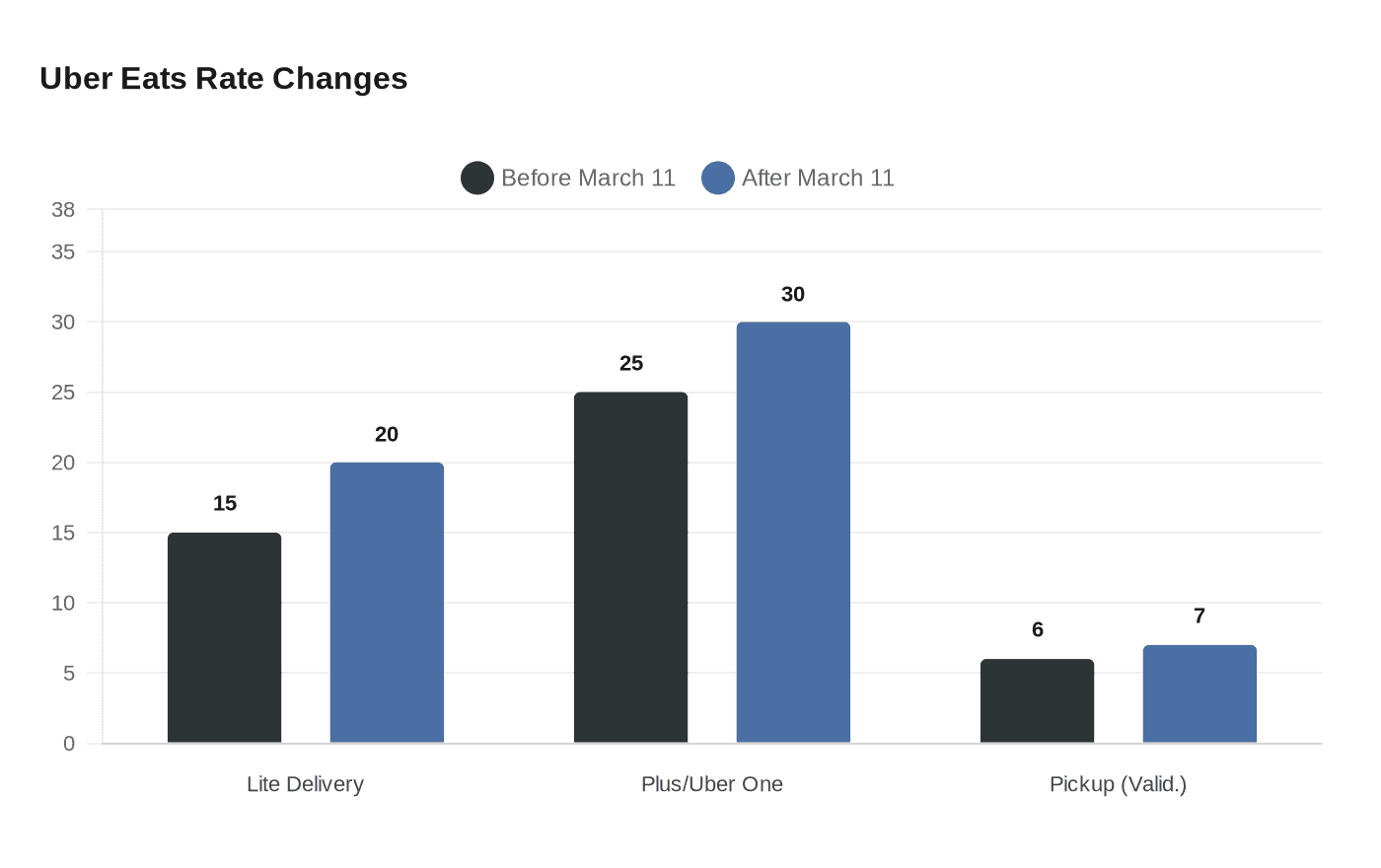
The fee changes that triggered his exit took effect March 11. Merchant marketplace rates for the Lite tier rose from 15% to 20%, and Plus-tier restaurants hold at 25% on standard orders but now pay 30% on any order placed by an Uber One subscriber. Pickup commissions across all tiers ticked up from 6% to 7% for restaurants that validated their in-store pricing; those that haven't now owe 10% on every pickup. Uber Eats says this is the first time it has changed its rates in about 10 years.
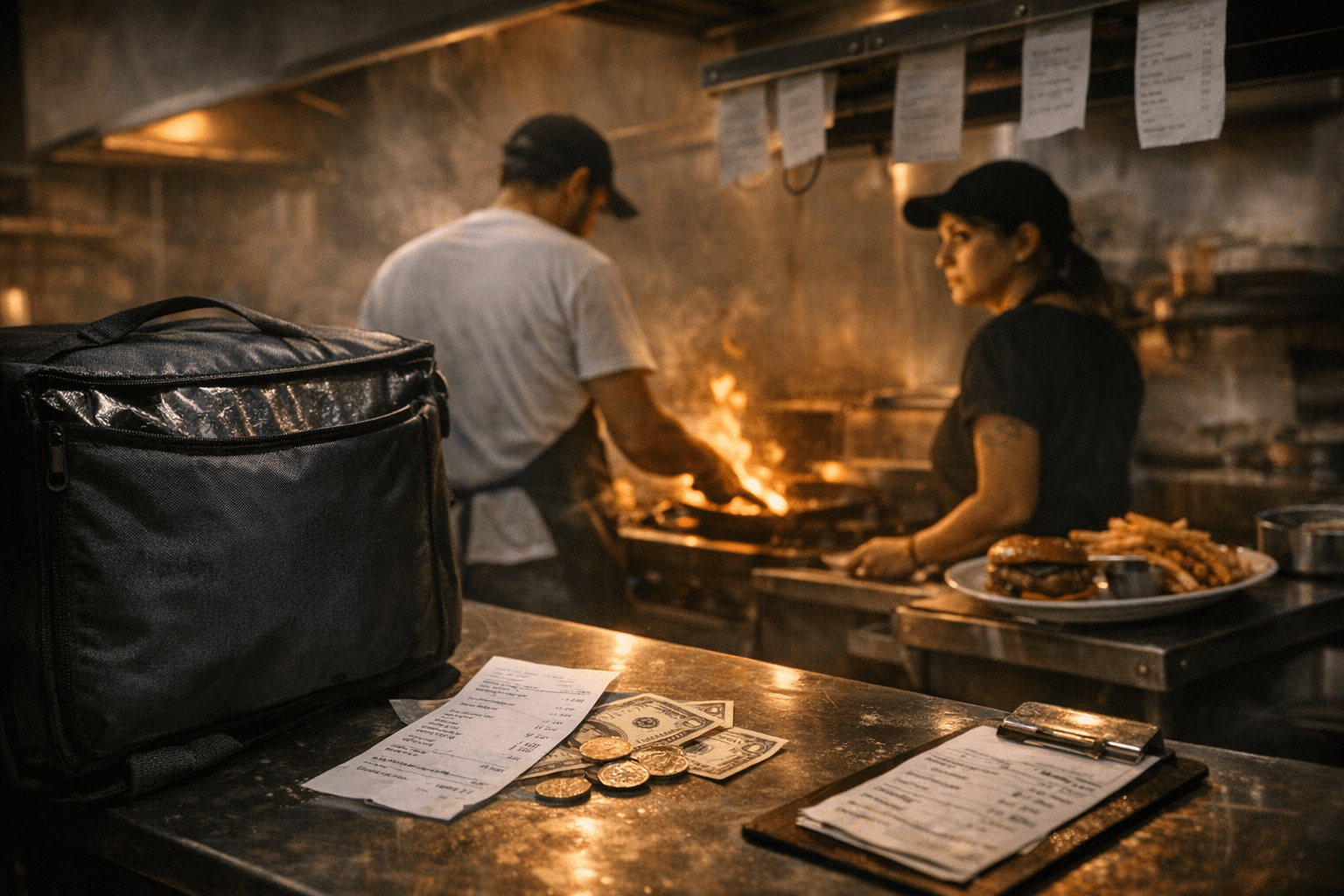
On a single $30 delivery order, the math is unforgiving. A Lite-tier restaurant's commission just moved from $4.50 to $6.00. After food cost at the industry-standard 30%, or $9, the restaurant keeps $15 of that order to cover labor, rent, packaging, and every other fixed cost. Before March 11, it kept $16.50. That $1.50 gap compounds fast: across a shift of 30 delivery tickets, it's $45 in margin that didn't exist a month ago. At a contribution margin of roughly $9.80 per $14 entrée after food cost, a kitchen needs to sell five more entrées per shift just to offset what the hike costs. For a restaurant running 300 delivery orders a week, the annual damage reaches $23,400.
Uber One members make up 60% to 70% of Uber Eats bookings, depending on the market. That statistic rewrites the Plus-tier calculus entirely. If 65% of a Plus restaurant's orders come from Uber One subscribers now charged at 30%, the blended delivery rate hits 28.2%, nearly erasing the tier distinction from Premium. Operators who haven't audited their order composition since March 11 are likely paying more than their dashboard implies.
The operator decision points are now concrete. Check whether delivery-specific menu pricing is already enabled in your Uber Eats Manager account and price to the 20% rate if you're in the Lite tier, not the 15% you budgeted last year. Submit your in-store pricing to Uber immediately if you haven't, since the rolling review can lock restaurants into the 10% pickup default. Run the numbers on self-delivery: at 15%, Uber's own fleet-managed option is now five percentage points cheaper than the lowest marketplace tier, which changes the break-even on maintaining house couriers. DoorDash and Grubhub have thus far left their delivery fees for restaurants unchanged, which makes this an unusually favorable moment to renegotiate or shift volume across platforms.
For workers, the downstream exposure is real. When operators absorb fee increases by raising menu prices, customers face higher subtotals, which historically produces flat or shrinking tip rates even as the restaurant collects more per order. A shift toward in-store pickup to escape marketplace fees will move labor from delivery-packing roles to front-counter positions, changing who gets what hours. If management introduces automatic service fees or adjusts tip-pool policy to offset the margin loss, get written confirmation of how that money will be distributed before it takes effect.
According to a survey by Restaurant Business and Nation's Restaurant News, 50% of operators said third-party fees are the biggest obstacle to growing their off-premise business. Rave's exit won't bend Uber Eats' pricing curve on its own. But Solano's math is transferable to any kitchen still running delivery on terms set in a different cost environment.
This article was produced by Prism’s automated news system from verified source data, official records, and press releases, then run through automated quality and moderation checks before publishing. The system is built and supervised by the people who set the standards it runs under. Read our full AI policy.
Did this article answer your question?