Labor Department Recovers $200,137 from Oregon Restaurant Over Wage Violations
Federal investigators recovered $200,137 from a McMinnville restaurant after finding 19 workers were misclassified, denied overtime and pulled into an invalid tip pool.

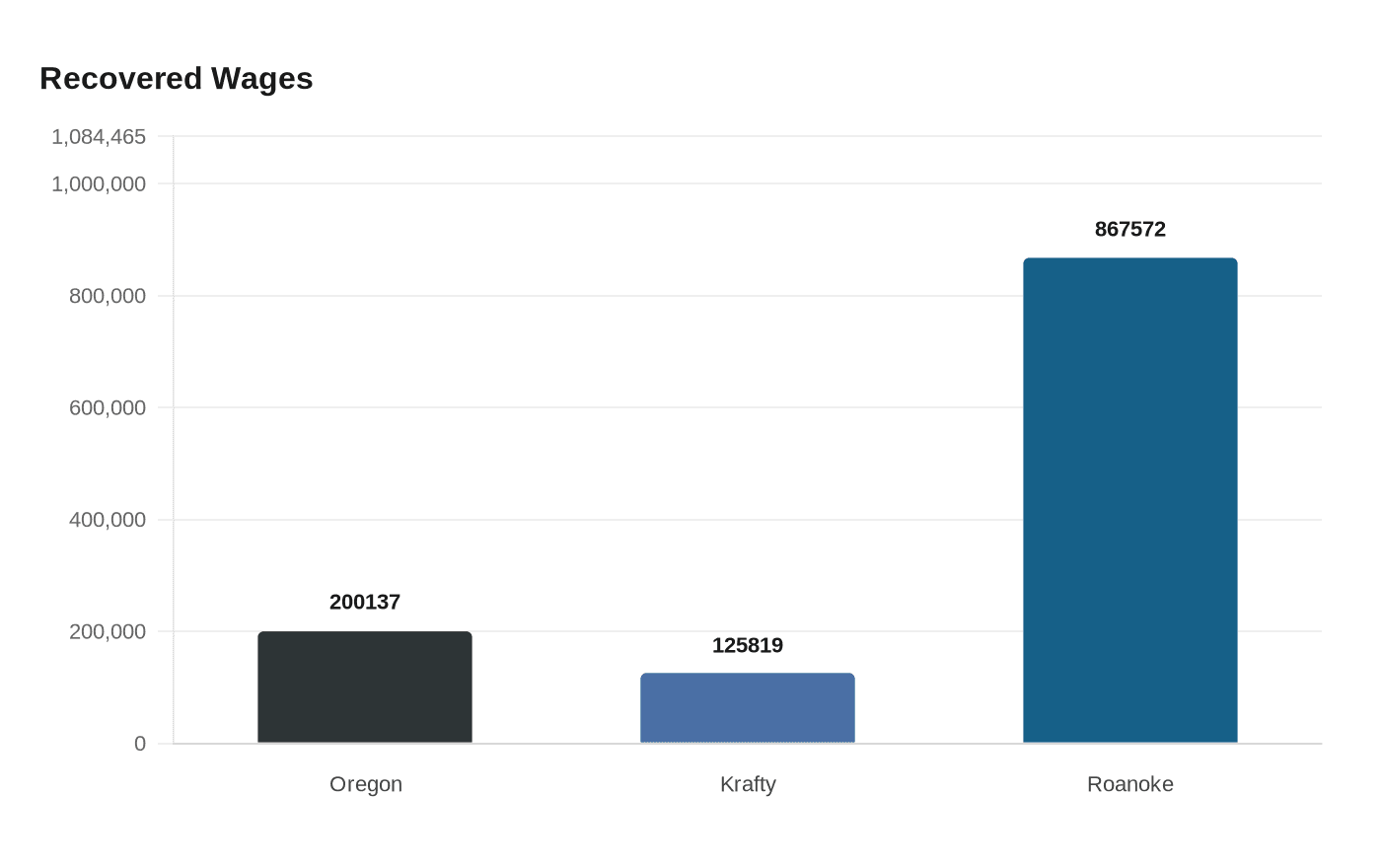
Federal investigators recovered $200,137 in back wages and assessed $15,256 in civil money penalties after finding wage violations at Taste of India 1 in McMinnville, Oregon, a case that shows how quickly a bad payroll setup can turn into a costly enforcement action.
The U.S. Department of Labor said the restaurant incorrectly treated 19 workers as exempt, then paid them straight-time instead of the overtime premium required at time-and-a-half for hours over 40 in a workweek. Investigators also found that management used workers’ tips to supplement base wages, creating an invalid tip pool. The agency called the violations willful, which is why penalties were added on top of the back wages.
For restaurant workers, the facts matter in a very practical way. A kitchen employee labeled salaried does not automatically lose overtime rights just because management changes the pay stub. If that worker keeps putting in long shifts and the job does not meet an overtime exemption, the restaurant still owes overtime. The same goes for tip practices: owners cannot use employees’ tips to offset wage costs, and managers and supervisors may not keep employees’ tips under federal rules.
The problem is not limited to one dining room in Oregon. In a 2024 case, the Labor Department recovered $125,819 for 23 workers at Krafty Draft Brew Pub in Lexington, South Carolina, after investigators found an invalid tip pool that included traditionally non-tipped workers such as dishwashers and cooks. In 2022, the department recovered $867,572 for 910 workers at Roanoke Hard Eight BBQ after finding that hourly managers were included in a tip pool and that tipped employees were denied full tips and proper overtime wages. The same compliance failures keep resurfacing across the industry.
For operators, the audit list is blunt: check whether anyone classified as exempt really meets the test, verify that timekeeping captures every hour worked, and review every tip-sharing arrangement for workers who are legally allowed to participate. If tips are being used to cover wages, the pool is on shaky ground. If managers are touching tips, that is another red flag. The Wage and Hour Division also pointed employers to its compliance tools, the toll-free helpline at 866-4US-WAGE, and the PAID program for resolving some minimum wage and overtime issues before they become enforcement cases.
If workers cannot be located after back wages are recovered, the Labor Department holds the money for three years before sending unclaimed funds to the Treasury. As of October 1, 2025, Workers Owed Wages payments are made electronically, a reminder that wage recovery is now built to move money directly back to employees when violations are found.
This article was produced by Prism’s automated news system from verified source data, official records, and press releases, then run through automated quality and moderation checks before publishing. The system is built and supervised by the people who set the standards it runs under. Read our full AI policy.
Did this article answer your question?