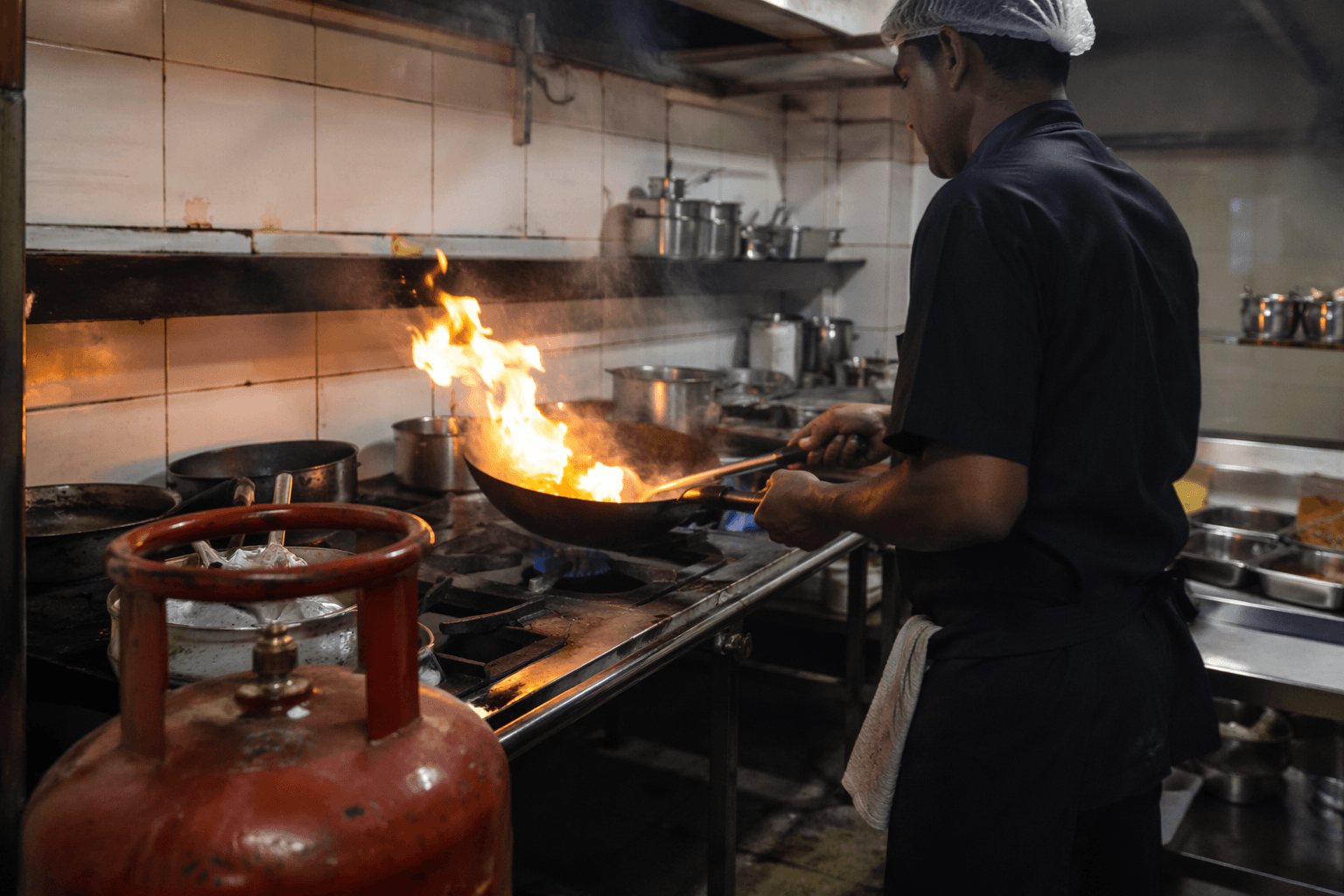
OSHA Guidance Highlights Everyday Safety Risks Facing Restaurant Workers
Burns, slips and knife cuts are routine in restaurants until they send workers home. OSHA’s hospitality guidance says the fix starts with better habits, layout and communication.
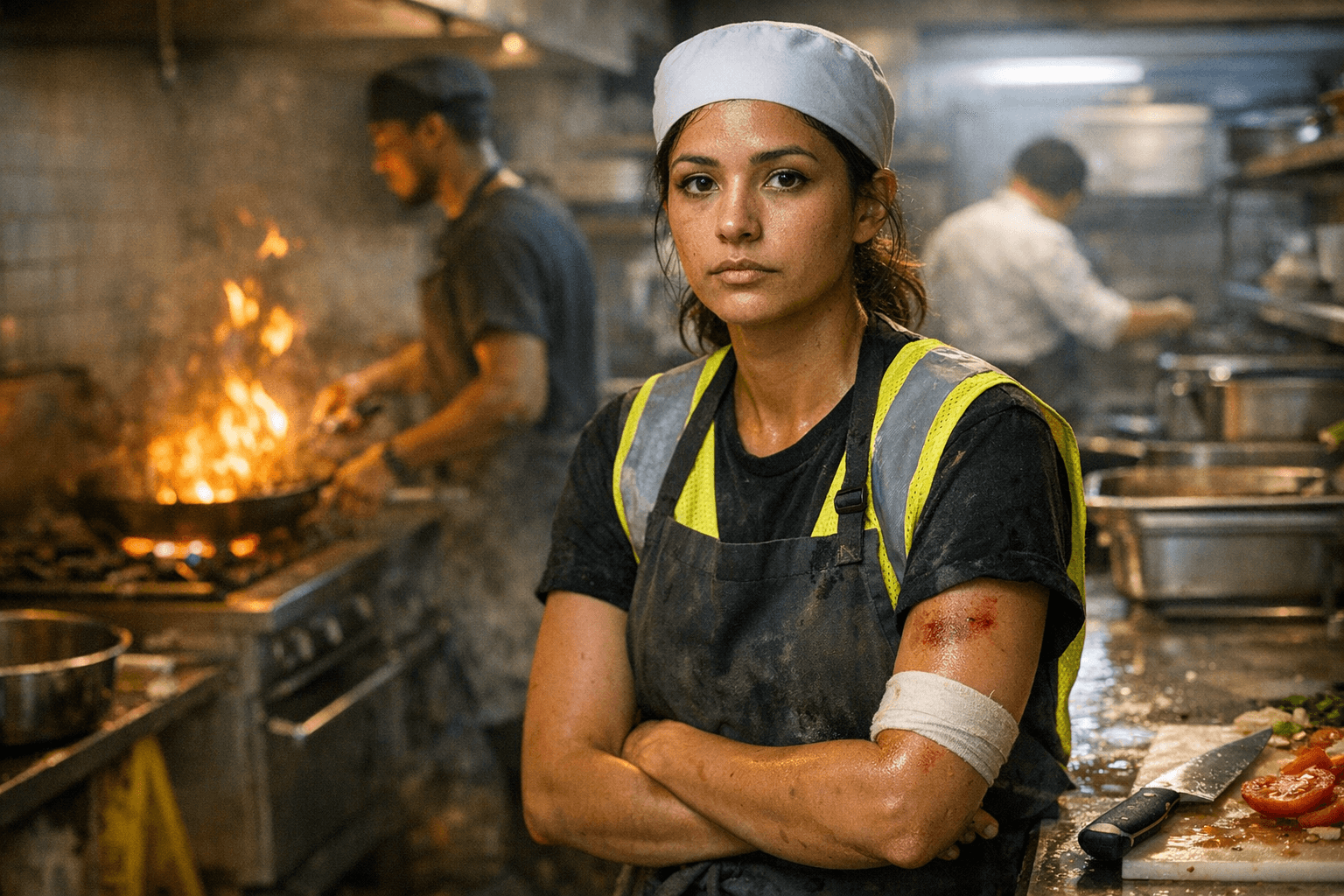
The hazards that blend into a shift
A wet floor, a hot pan and a crowded pass can turn a normal dinner rush into a missed shift. OSHA’s hospitality guidance treats restaurant work as a place with predictable risks, not random bad luck, and that matters because line cooks, dish staff, servers and hosts face those hazards every day.
The danger is often so familiar that people stop noticing it. Hot surfaces, sharp tools, slippery floors, heavy lifting and, in some settings, violence are part of the job description whether anyone says it out loud or not. The injuries that get dismissed as minor are often the ones that end up taking workers off the schedule for days or weeks.
When ordinary tasks become injuries
Burns usually start with speed. A cook reaches too fast, a server cuts across a crowded path, or hot oil is treated like something that can be handled without a warning. Knives cut when they are dull, poorly stored or used in a hurry, and slips happen when a spill sits on the floor because everyone is trying to keep service moving.
That is why training and pacing matter as much as equipment. Restaurant culture rewards getting through the rush, but OSHA’s guidance points to the other side of that habit: workers are often hurt while trying to save time. A little pressure to keep tickets moving can turn into a burn on a forearm, a cut finger, or a fall that keeps someone out of the building long after the shift ends.
For tipped workers, that lost time can hit immediately. A server or bartender who misses a shift does not just miss hours, they miss the chance to earn from that service period at all. In the back of the house, the same injury means slower stations, more pressure on the rest of the crew and a bigger chance that the whole line starts slipping behind.
Where restaurants set workers up to get hurt
The OSHA lens is useful because it shifts the focus from after-the-fact compliance to the way a restaurant is actually designed. If the expo station is too crowded, if the walk-in is badly lit or if the service path creates constant collisions, the operation is building injury risk into the shift before the first ticket prints.
That is why the small details matter. Mats need to be in place where water and grease collect. Knives need to be stored safely. Hot pans need to be carried clearly. Cleaning cannot be pushed off until the end of a chaotic service, because the spill that seems manageable now becomes the fall that closes a section later. Communication helps too: calling out behind, warning about hot oil and reporting a wet floor immediately are not optional manners, they are part of keeping people upright and on the clock.
A supervisor’s checklist for the most common failures
The safest restaurants do not wait for an accident to reveal the weak spot. They walk the floor before service and look for the places where a burned hand, a twisted ankle or a cut finger is most likely to happen. The goal is not perfection, it is catching the repeat problems before they become the reason someone is sent home early or kept out for a week.
- Check that mats are down wherever water, grease or condensation collects.
- Make sure knives are sharp, stored safely and easy to access without reaching into clutter.
- Keep hot pans, oil and surfaces clearly identified during service.
- Clear spills as soon as they happen, even during a rush.
- Look at lighting in the walk-in, dish area and storage spaces.
- Watch the expo station and main paths for crowding and constant collisions.
- Reinforce simple callouts, like behind, hot and wet floor, until they are routine.
- Treat every repeat near-miss as a design problem, not just an individual mistake.
That checklist matters because many restaurant injuries are not dramatic at the start. They begin as a little leak on the floor, a cramped turn at the pass or a stack of boxes lifted without enough room. By the time the pain gets serious, the damage is already showing up in missed shifts, slower service and more turnover.
Why these injuries ripple beyond one person
Heavy lifting is another hazard that gets normalized until someone strains a back or drops a load. Boxes, cases, kegs and stacked trays move through tight spaces every day, and the injury may not look severe in the moment. But the result can still be a worker who cannot move quickly, cannot grip properly or cannot stay on the schedule they counted on.
OSHA also flags violence in some hospitality settings, and that warning matters most for the people who deal with the public face-to-face. Hosts, servers and bartenders are often the ones closest to a hostile guest, an intruder or a late-night conflict. A violent incident is not just a security issue, it is a work disruption that can shake the confidence of the whole floor.
That is why the injuries most likely to be brushed off as “part of the job” deserve the most attention. Burns, slips, cuts, lifting injuries and violence risks are all preventable failure points during a normal shift. In a business already defined by burnout, staffing pressure and high turnover, the cost of ignoring them is measured in missed work, workers’ comp claims and the steady loss of people who know the job well enough to do it safely.
This article was produced by Prism’s automated news system from verified source data, official records, and press releases, then run through automated quality and moderation checks before publishing. The system is built and supervised by the people who set the standards it runs under. Read our full AI policy.
Did this article answer your question?