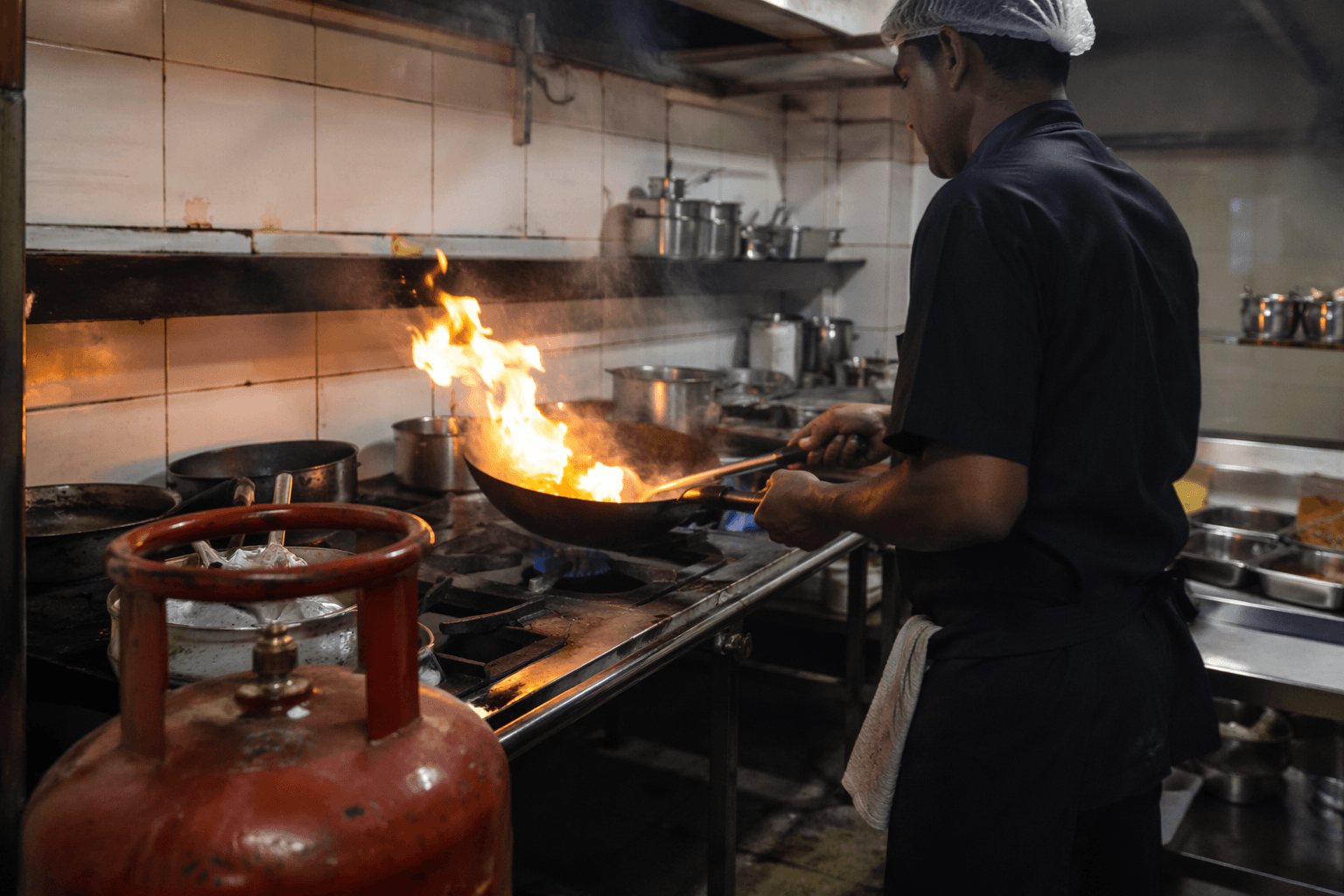
OSHA urges restaurant workplace violence plans, zero-tolerance policies
A violence plan only matters if the host stand, bar, and closing shift know the drill before a guest turns aggressive. OSHA says restaurants need prevention built into daily operations.

What a real plan looks like when a guest turns
A guest starts shouting at the host stand, the bar is full, and the closing crew is still counting cash. That is the moment OSHA is talking about when it urges restaurants to treat workplace violence as a real operational hazard, not a binder on a shelf. The agency says one of the best protections is a zero-tolerance policy toward workplace violence, but the policy only works if the restaurant has already built in the steps workers will actually use.
Why OSHA is pressing employers now
OSHA says there are currently no specific workplace-violence standards, but employers still have obligations under the General Duty Clause when violence is a recognized hazard. In plain terms, if a restaurant knows about threats, intimidation, or other warning signs, it is expected to act, not wait for an incident to force the issue. OSHA says that action should include a prevention program, plus engineering controls, administrative controls, and training.
That matters because a restaurant’s risk is often baked into the job. Late-night hours, alcohol service, cash handling, delivery handoffs, and customer disputes all create moments where aggression can escalate fast. A written policy is useful only if it tells hosts, servers, bartenders, and managers who does what when a situation starts going bad.
Where restaurant workers are most exposed
Restaurant violence rarely looks like a slow-moving compliance problem. It shows up at the door when a host is dealing with an angry walk-in, at the bar when a drunk guest refuses to leave, at the drive-thru when a customer is boxed in by traffic and frustration, and at closing time when staff are tired, undercounted, and trying to get out the door. OSHA’s restaurant-serving guidance explicitly lists workplace violence as a hazard in serving areas, right alongside burns, knives and cuts, slips, trips, falls, and strains and sprains.
The risk is bigger because the industry is enormous and young. OSHA’s young-worker restaurant materials say restaurants and other eating-and-drinking businesses employ 11.6 million people in the United States, and nearly 30% of those employees are under age 20. That means a lot of workers facing volatile situations for the first time, often with minimal time on the job and a lot of pressure to keep service moving.
What a real prevention plan has to answer
The best restaurant plans do not sound abstract. They answer the questions staff ask in the middle of a problem, before anyone has to improvise under stress.
- Who do you call first if a guest threatens staff?
- Is there a clear procedure for refusing service when someone is intoxicated?
- Can a host step away from an unsafe door position without being blamed for abandoning the front?
- Are bartenders and closing crews trained on de-escalation and exit routes?
If the answer to those questions is fuzzy, the restaurant does not have a prevention plan yet. OSHA’s guidance points employers toward building those procedures into a safety manual, employee handbook, or standard operating procedures, which is exactly where workers are most likely to find them when the room gets tense.
Zero-tolerance has to mean something on the floor
A zero-tolerance policy is not just about punishment after the fact. In practice, it should tell managers when to back up a worker who refuses to keep engaging with a threatening customer, when to cut off service, and when to move staff out of harm’s way. In restaurants, where the instinct is often to smooth things over and keep the tickets moving, that kind of clarity can be the difference between a bad interaction and an injury.
The other part of zero tolerance is that management cannot shrug off smaller warning signs. OSHA’s position is that once an employer knows about threats or intimidation, it is on notice. In a restaurant, that can mean the difference between dismissing a guest’s behavior as “just being difficult” and recognizing a pattern that needs a response before someone gets cornered at the host stand or followed into the parking lot after close.
What the numbers say about the risk
The broader violence picture helps explain why OSHA is treating this as a serious hazard. The U.S. Bureau of Labor Statistics reported 57,610 nonfatal workplace violence cases in private industry in 2021-2022 that led to days away from work, job restriction, or transfer. Those cases had an annualized incidence rate of 2.9 per 10,000 full-time equivalent workers, and women accounted for 72.5% of the cases.
BLS also reported 458 workplace homicides in 2017, including 128 committed by robbers and 77 committed by co-workers or work associates. Health care and social assistance had the highest counts and incidence rates in the 2021-2022 fact sheet, but accommodation and food services remained among the sectors shown in the workplace-violence chart. Restaurants are not the only risky workplaces, but they are squarely inside the public-facing category where the hazard is familiar and foreseeable.
What separates a plan from a paper policy
OSHA says employers should assess worksites to find ways to reduce the likelihood of incidents. That assessment is where a lot of restaurant safety efforts break down, because it forces operators to look at actual workflows, not just written rules. Are hosts isolated at the front door? Are bartenders left alone with volatile guests late at night? Are closing crews moving cash and cleaning up with no clear chain of command if someone starts hanging around?
The agency’s framework is straightforward: use engineering controls, administrative controls, and training together. In restaurant terms, that means the layout, the rules, and the practice all have to line up. A safety manual can say violence is not tolerated, but a worker still needs training on what to say, who to call, when to stop service, and how to get out safely.
Why the history matters
OSHA has been pointing employers toward tailored prevention for years, including a 2009 publication on workplace-violence prevention in late-night retail settings. That precedent matters because it reflects a long-running view that public-facing, late-hour businesses need plans built for their own risks, not generic workplace language borrowed from somewhere else. NIOSH has likewise described workplace violence as ranging from verbal abuse to physical assaults and has focused on risk factors and prevention strategies for decades.
For restaurants, the lesson is not complicated. Knife cuts and hot pans are still hazards, but they are not the only ones that can send a worker home injured or traumatized. A real violence-prevention plan is one that a host, bartender, server, or closing manager can use in the exact minute a guest crosses the line, and that kind of plan has to be designed into the job before the shift starts.
This article was produced by Prism’s automated news system from verified source data, official records, and press releases, then run through automated quality and moderation checks before publishing. The system is built and supervised by the people who set the standards it runs under. Read our full AI policy.
Did this article answer your question?