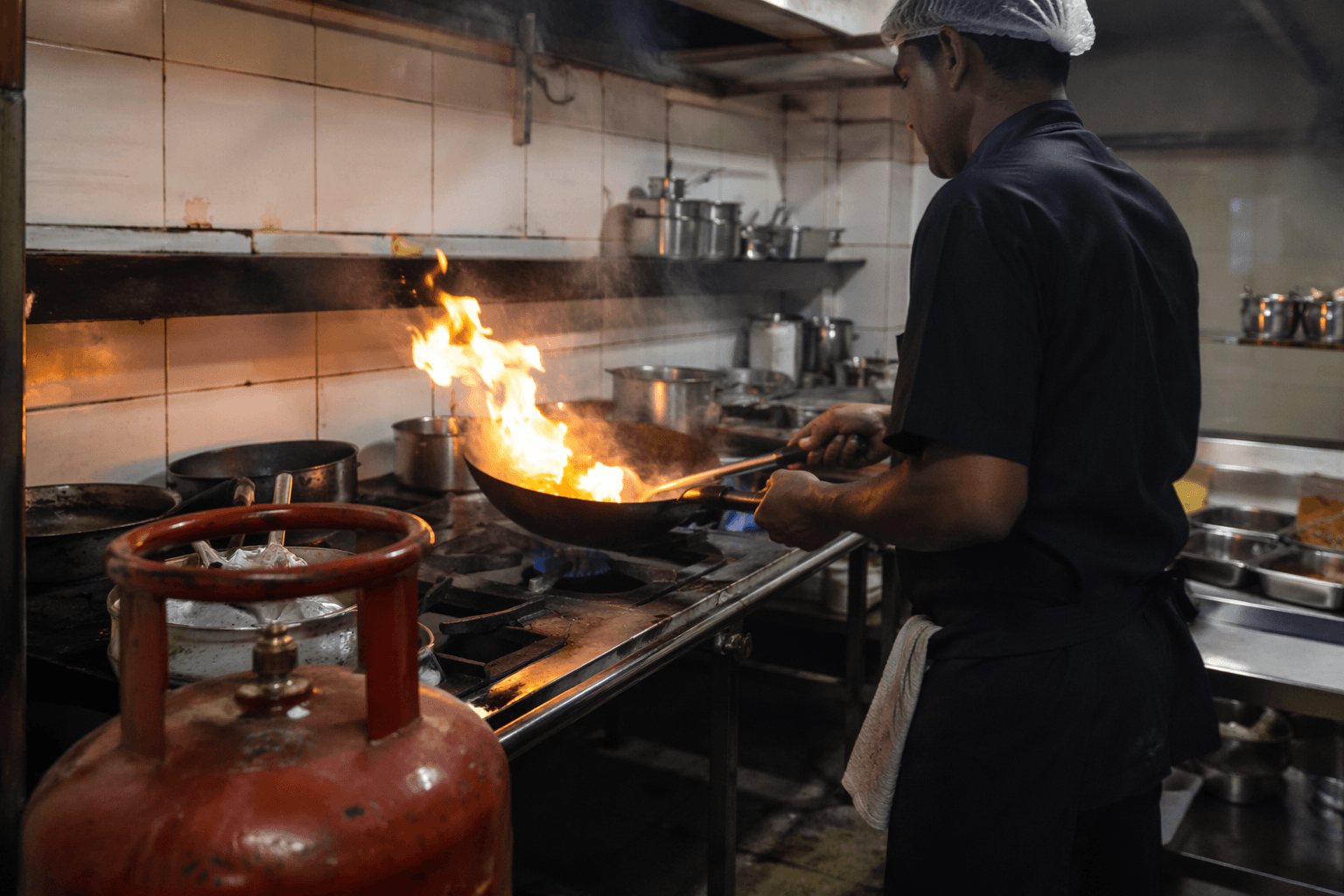
OSHA warns restaurant workers face strain from repetitive kitchen tasks
Restaurant pain rarely starts with a dramatic accident. OSHA says the real red flags are the repeated lifts, reaches, chops and hours on hard floors that slowly sideline crews.
The strain that builds before anyone calls it an injury
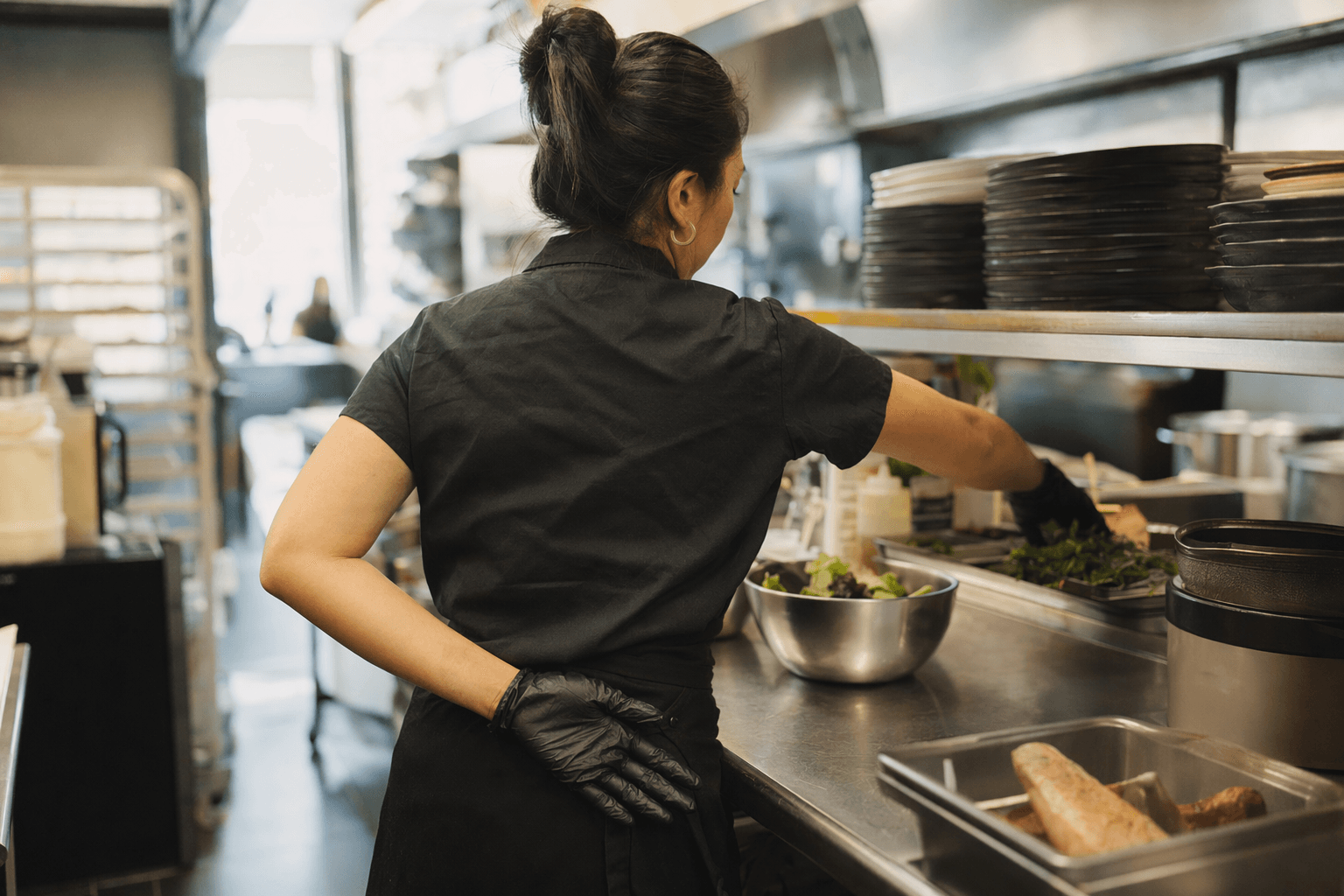
A cook does not usually get taken out by one bad moment. It is the extra reach into a deep sink, the heavy pot lifted one more time, the rush of chopping and scooping, then the ache in a shoulder, wrist, or lower back that turns into a missed shift, then a week off, then a worker who never quite comes back the same.
That is the quiet danger OSHA wants restaurant teams to notice. In food service, the injuries that matter most are often the ones workers normalize until they become strains, sprains, tendonitis, carpal tunnel syndrome, and other musculoskeletal disorders that can limit a career.
Why this is a restaurant problem, not a back-office issue
The U.S. Bureau of Labor Statistics says the food services and drinking places subsector includes full-service restaurants, limited-service eating places, special food services, and drinking places. It is enormous, with about 12.3 million employees in early 2026, and the sector’s size helps explain why small ergonomic fixes can have a big effect.
The Centers for Disease Control and Prevention’s National Institute for Occupational Safety and Health has said the broader food services industry employed nearly 9.5 million workers in the United States in its sector summary, and about 80% of the 425,000 food service firms were small businesses with fewer than 20 employees. That is the reality of restaurant work: a huge workforce spread across thousands of small, low-margin operations where one bad station design can wear down a whole crew.
OSHA’s ergonomics guidance makes the same point in plainer language. Workers in many industries can be exposed to lifting heavy items, bending, reaching overhead, and doing the same or similar tasks over and over. In restaurants, those exposures are not abstract. They are the line, the dish pit, the prep table, the stock room, and the server station.
The red flags to audit on the floor
The most common musculoskeletal hazards in a kitchen are easy to spot once you know where to look. OSHA’s food services guidance points to deep sinks, heavy pots, carts, hand tools, frequent chopping and scooping, and prolonged standing on hard floors. Those are the spots where a shift starts to cost a body more than it should.
The injury patterns are just as familiar. Repetitive motion, force, vibration, and awkward positions can drive musculoskeletal disorders that affect muscles, nerves, blood vessels, ligaments, and tendons. In restaurant terms, that means the worker who keeps reaching across a hot pass, the dishwasher who twists to load racks, the prep cook who cuts all morning with wrists bent, or the manager who jumps on the line and spends three hours lifting where the station was never built for that body.
- If a worker has to reach far across a sink, shelf, or prep table, the station is too deep or the tools are too far away.
- If elbows flare away from the body during prep or plating, the work surface may be too low, too high, or poorly arranged.
- If heavy pans, tubs, or stock are being carried by hand when they could be moved with equipment or in smaller loads, the force is too high.
- If a shift keeps a person standing in one place on hard flooring for hours, fatigue can turn into pain long before the end of service.
A simple audit can catch a lot in one shift:
The fixes OSHA says matter most
OSHA’s most useful restaurant advice is not a slogan about posture. It is station design. The agency recommends keeping most work within a repetitive access area, using height-adjustable work surfaces, redesigning tasks so elbows stay close to the body, and reducing extreme reaching. In a kitchen, that can mean moving the most-used tools within arm’s length, lowering the need to twist, and setting up stations so workers are not constantly extending into awkward zones.
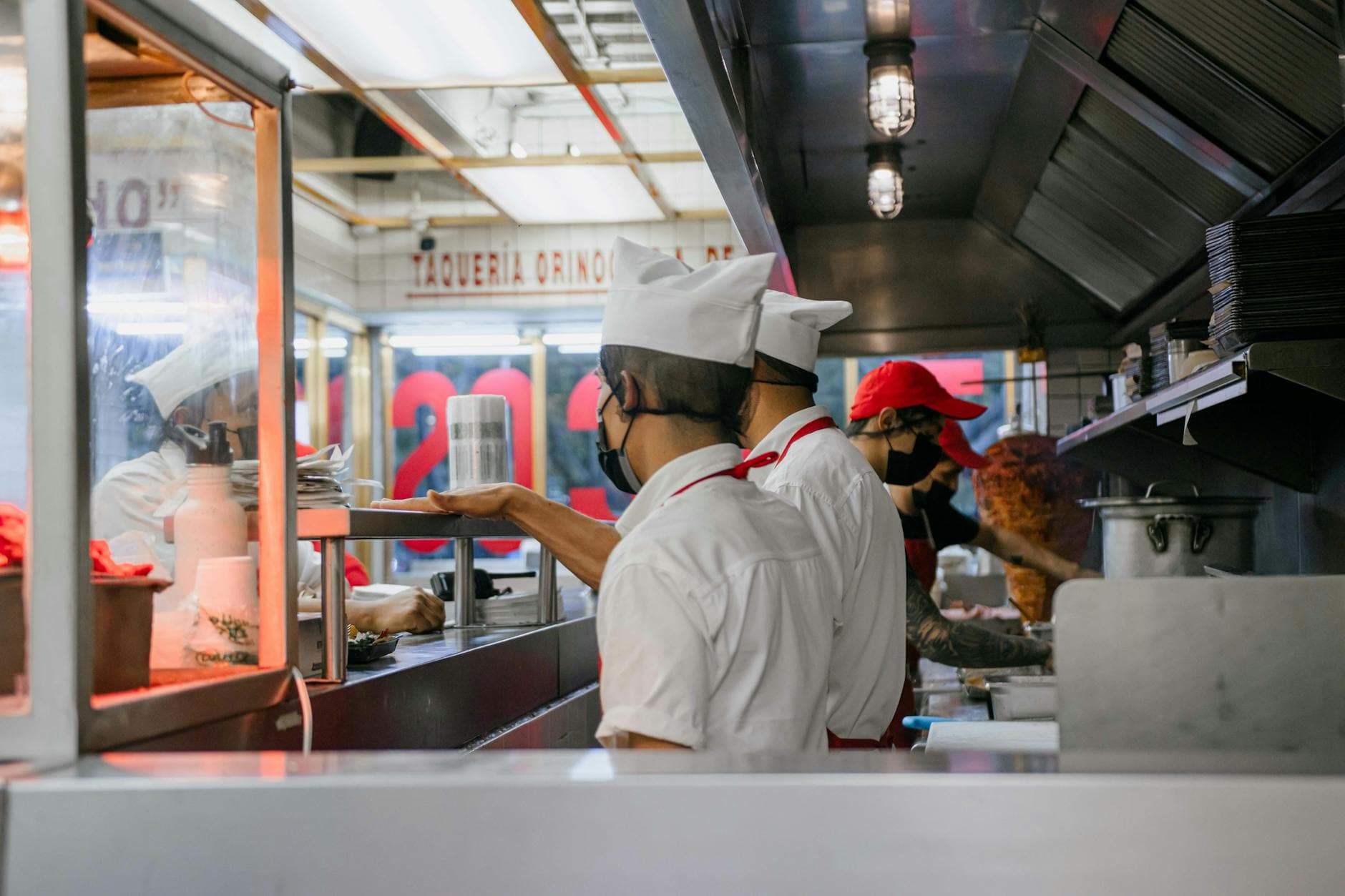
The controls also go beyond layout. OSHA says employers should use devices to lift and reposition heavy objects, reduce load weight, and rotate workers away from continual exertion and awkward postures. For a manager, that can mean splitting a bulk prep job into smaller loads, assigning two people to the heaviest transfers, or changing the order of tasks so one motion does not repeat for an entire hour.
For workers, the practical lesson is to speak up before pain becomes routine. A line that makes you shrug, stretch, and shake out your hands every 20 minutes is not just a hard station. It is a station telling you where the redesign needs to start.
Why standing still can hurt as much as lifting
Restaurant ergonomics is often talked about as a lifting problem, but prolonged standing is its own injury path. CDC has found that standing at work for long periods is associated with low back pain, physical fatigue, leg swelling, tiredness, and body-part discomfort. That matters in kitchens, on expo, behind the bar, and at host stands where the posture is fixed even when the work is moving fast.
That is why managers should treat fatigue complaints as operational warnings, not personal complaints. A server who is hurting by the end of a double, or a prep cook whose feet and back are cooked before lunch rush, is not just uncomfortable. That worker is closer to a callout, a comp claim, or a quit.
Young workers feel it fast
OSHA says young workers are especially at risk in restaurants, and the service industry ranks highest among U.S. industries for injury among workers ages 16 to 19. The agency also reported 22 work-related deaths and 27,070 injuries or illnesses among youths under 18 in 2017.
That makes ergonomics especially important for first-job workers who are learning speed, order, and safety at the same time. A teenager on a dish line or prep station may not know that a bent wrist, a twisted trunk, or a too-low cutting surface can pile up damage shift after shift. Good training should include where to stand, how close to keep the load, when to ask for a smaller batch, and how to move before the body starts compensating.
The broader food chain is still under the same strain
OSHA’s warning is not limited to dining rooms. In January 2024, the agency said a Fairfield, Ohio food warehouse supplying fast food franchises exposed workers to repetitive hazardous forceful exertions and awkward postures, and proposed $41,483 in penalties. That case involved a warehouse rather than a restaurant, but the lesson travels straight back to kitchens: food work across the supply chain depends on manual handling, and manual handling punishes bodies that are asked to repeat the same motion too many times.
That is why ergonomics belongs in the same conversation as scheduling, staffing, and turnover. A better layout, a better tool, or a smarter task rotation can mean fewer callouts, fewer workers’ comp claims, and a pace the team can actually sustain. In a business built on tight margins and constant turnover, keeping people unbroken is not a luxury. It is one of the few durable ways to keep service moving.
This article was produced by Prism’s automated news system from verified source data, official records, and press releases, then run through automated quality and moderation checks before publishing. The system is built and supervised by the people who set the standards it runs under. Read our full AI policy.
Did this article answer your question?