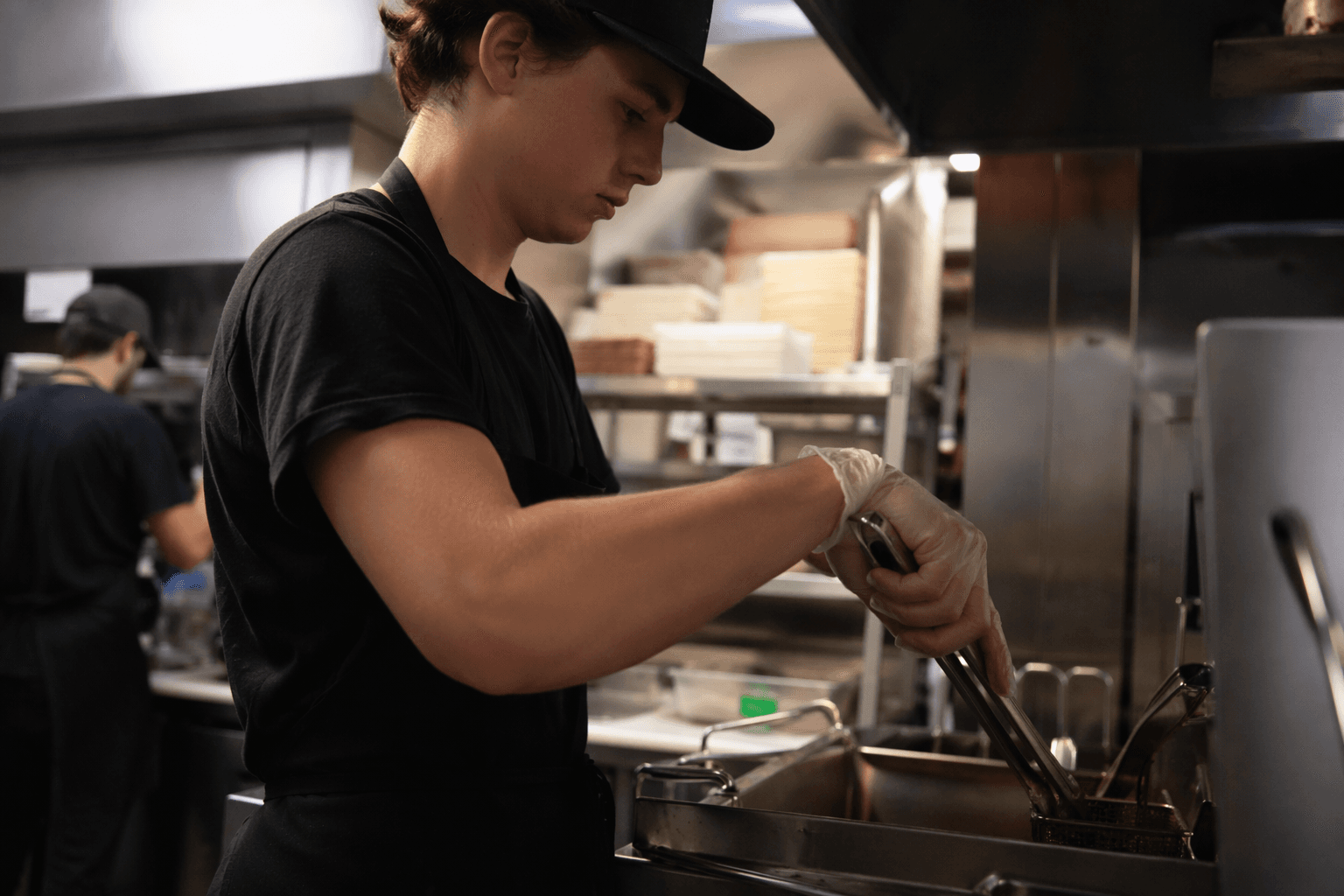
OSHA warns young restaurant workers face burns, cuts and violence
Young servers and hosts face more than bad guests and bad tips. OSHA says the front of house brings burns, cuts, falls and violence, and young workers are hit hardest.

Servers and hosts are often treated like the friendly face of the restaurant, but OSHA’s guidance makes the front of house look more like a hazard map. Burns, cuts, slips, strains, and violence all sit inside the same shift, and young workers are the ones most likely to learn that lesson the hard way.
That is not just a safety story in the abstract. When a server goes down with a scald, a fall, or a knife cut, the result is usually a missed shift, a smaller paycheck, and, in many cases, a workers’ compensation claim that adds paperwork and cost to an already thin-margin business. In an industry built on speed, tipping, and constant contact with the public, the real risk is that injuries get treated as bad luck instead of a predictable part of the job.
The front of house is a risk zone, not a soft job
OSHA says serving-area hazards for young restaurant workers include burns and scalds, knives and cuts, slips, trips and falls, strains and sprains, and workplace violence. The agency also notes that restaurants can be locations for violence because workers handle cash, work late hours, and have constant contact with the public.
For a host stand, a crowded bar, or a server station, that combination matters. The job is physical even when it looks polished from the dining room, and the same pace that keeps service moving can turn into a safety problem if training is thin or the shift is short-staffed. OSHA’s broader restaurant guidance also says the service industry ranks highest among U.S. industries for injury among workers ages 16 to 19.
A Bureau of Labor Statistics study from 1998 to 2002 found that 14% of overall youth workplace injuries were attributed to assaults or violent acts. In other words, young workers are not just at risk from hot equipment and wet floors. They are also working in a setting where customer conflict can become a physical hazard.
Burns are not just kitchen injuries
The burn risk in restaurants does not stop at the line. OSHA says burns can happen while handling hot food or drinks, using espresso machines or other hot-liquid equipment, carrying plates from heat lamps, or even reaching over candles on tables. For bartenders and servers, that means the danger is steam, coffee, tea, heated plates, and awkward movements during a rush, not just a spilled drink.
CDC and the National Institute for Occupational Safety and Health add an important piece of the picture: slips and trips are a major route to burns in restaurants because workers may stumble, then instinctively try to steady themselves and knock hot liquids onto their bodies. Their burn facts also say scalds from hot water are very frequent in the restaurant industry and can cause third-degree burns almost instantaneously if the water is boiling or simmering.
That is why hot-pad use, oven mitts, careful handling of hot-liquid machines, and basic first aid matter. A server who knows how to carry a tray safely is not just being efficient. They are cutting the odds of a burn that can put them out for the night or longer.
Cuts, broken glass, and the pressure to move fast
OSHA’s guidance on serving-area hazards is blunt about cuts. It specifically warns against scooping ice with a glass, because the glass can break and cut the worker. Broken glass should be cleaned up with a broom and dustpan, not by hand, and workers should stay focused when handling knives because distractions increase the risk of injury.
That sounds simple, but restaurant work rarely is. A rushed section, a chaotic bar, or a host stand trying to manage walk-ins and reservations can turn attention into the scarce resource. The larger lesson is that front-of-house safety depends on pace and communication as much as tools, because safe carrying and clean handoffs are part of service, not separate from it.
OSHA also links these hazards to protective habits like hand protection for cuts, lacerations, and thermal burns. If a restaurant trains workers on upselling and guest recovery but skips the basics of glass cleanup and knife handling, it is leaving the most obvious risks to chance.
Young workers carry the biggest risk
CDC and NIOSH say employers are responsible for providing young workers with a safe and healthy workplace, and that young workers may have little or no prior work experience. That matters in restaurants, where a first job often means learning speed, pressure, cash handling, and physical routines all at once.
The injury numbers are hard to ignore. NIOSH estimates 26,900 emergency-department-treated injuries among 15- to 17-year-olds in 2022. It also estimates 17,270 injuries and illnesses requiring at least one day away from work among youth ages 15 to 17 in 2021-2022. A CDC MMWR analysis estimated 3.2 million nonfatal injuries to young workers were treated in hospital emergency departments during 2012-2018, with the highest rates among workers ages 18 to 19.
OSHA’s own young-worker overview adds the human cost: in 2017, 22 youths under 18 died from work-related injuries, and another 27,070 were sickened or injured. Those are not just statistics. They are the backdrop for every new host sent to the floor with minimal training, every new server learning the run on the fly, and every young bartender trying to keep up during a Friday rush.
For tipped workers, the blow can be immediate. A missed dinner shift can mean lost earnings, fewer tips, and a tighter week all around. When injuries lead to time away from work, the damage shows up in wages first and safety paperwork second.
Violence prevention belongs in front-of-house training
OSHA says workplace violence can be prevented or minimized with appropriate precautions. That is especially relevant for hosts, servers, and bartenders who exchange money with the public, manage late-night service, and sometimes work alone or in small groups.
The point is not to scare people away from serving jobs. It is to treat conflict management the way restaurants treat food safety: as a basic operating requirement. If the floor team is trained to recognize escalating behavior, backed up when a guest turns aggressive, and supported by managers who take threats seriously, the front of house becomes safer without slowing service to a crawl.
Why this matters beyond one shift
The broader labor picture explains why OSHA is paying attention. The Bureau of Labor Statistics says private industry employers recorded 2.5 million nonfatal workplace injuries and illnesses in 2024, and the total recordable case rate was 2.3 cases per 100 full-time-equivalent workers, the lowest in the series going back to 2003. The food services and drinking places subsector includes full-service restaurants, limited-service eating places, special food services, and drinking places, so this is not a niche problem tucked inside one kind of dining room.
For restaurants, the takeaway is practical: front-of-house safety is an operations issue, a staffing issue, and a pay issue. The same rush that sells drinks and turns tables can also send someone home injured, off the schedule, and into the claims process. The safest dining room is the one that trains for the hazards that customers never see.
This article was produced by Prism’s automated news system from verified source data, official records, and press releases, then run through automated quality and moderation checks before publishing. The system is built and supervised by the people who set the standards it runs under. Read our full AI policy.
Know something we missed? Have a correction or additional information?
Submit a Tip