Pie Five Pizza Drops Uber Eats After Platform Raises Delivery Fees
A 33% Uber Eats fee hike cost Pie Five Pizza $2 more per $40 order. CEO Brandon Solano's response: cancel the contract entirely.
When Uber Eats raised its delivery commissions in early March 2026, Rave Restaurant Group CEO Brandon L. Solano did the math on a single order and walked.
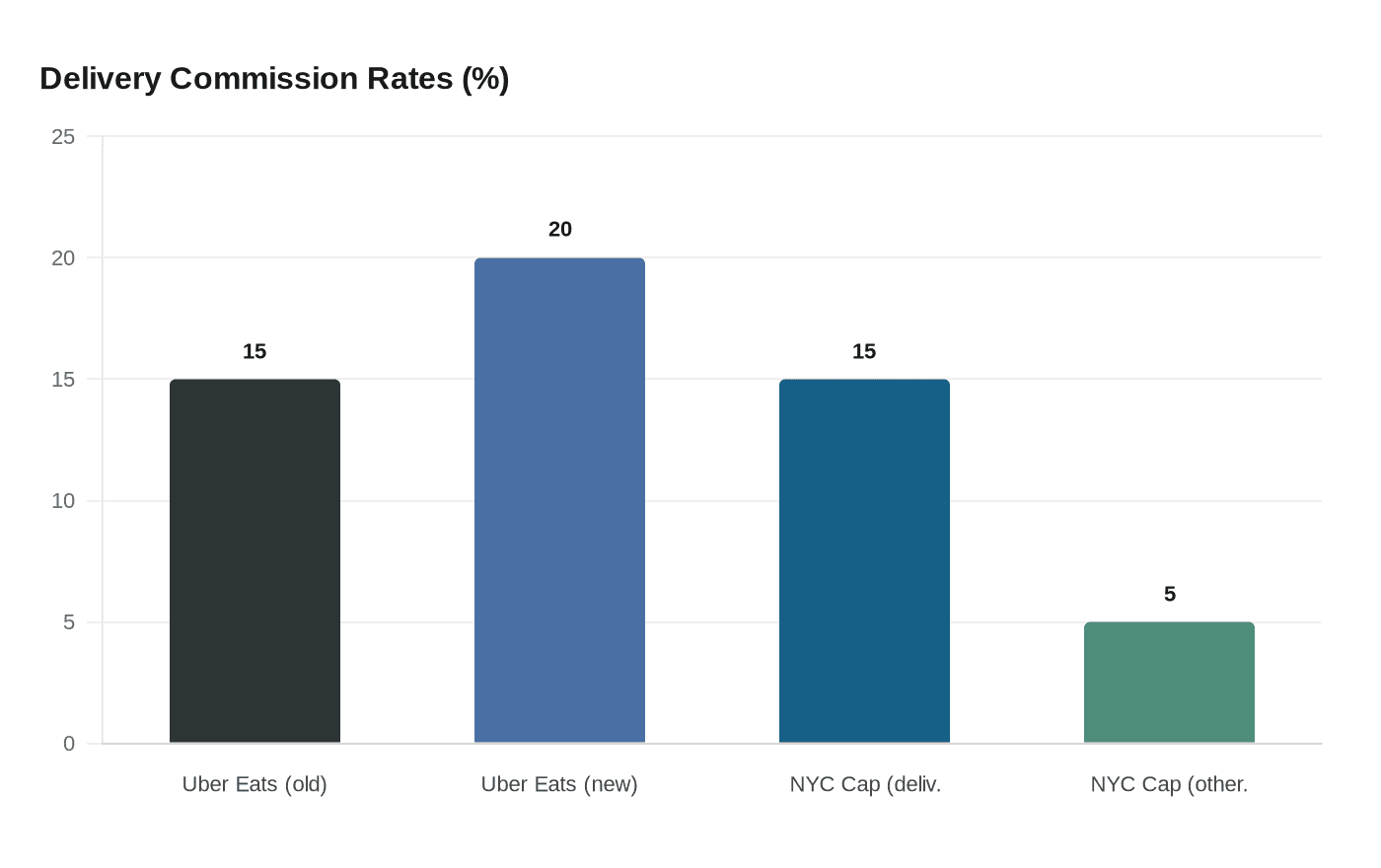
The arithmetic is direct. On a $40 Pie Five pizza delivery, Uber Eats' Lite-tier commission alone climbed from $6.00 to $8.00 when the platform raised its rate from 15% to 20%, a 33% increase in what the platform collects per transaction. For Rave specifically, that commission increase stacked 3 percentage points on top of the company's existing rate. Fold in platform marketing and payment-processing fees, and the all-in per-transaction cost approached or exceeded 30 cents on the dollar for some orders, putting the delivery platform's cut in the same territory as the restaurant's own food cost on that ticket. Solano declined to absorb it, canceling the Uber Eats contract for both Pie Five and the legacy buffet chain Pizza Inn.
Rave, the Dallas-based publicly traded parent company listed on NASDAQ as RAVE, had posted 23 consecutive profitable quarters as of February 2026. This was not a struggling operator looking for exits. Pie Five founder Pizza Inn dates to 1958; the brands have survived market swings before. The decision was a financial discipline call, made from solid footing, against a fee increase Solano described as unilateral, with no room to negotiate.
For the 19 Pie Five locations still operating across Arkansas, Illinois, Kentucky, Mississippi, Oklahoma, and Oregon, the consequences land on the schedule board. Delivery volume that moved through Uber Eats now needs to find another channel or disappear. Back-of-house staff who built their hours around delivery prep volume can see those hours compress when a major platform goes dark. Front-of-house workers who logged time staging and packing delivery bags face the same exposure. Pie Five once ran more than 100 locations before Blaze Pizza and MOD Pizza carved into its market during the mid-2010s fast-casual pizza surge. At 19 stores, every delivery order carries more weight than it would at a national chain, and every point of commission matters more to the people keeping those kitchens staffed.
Solano did not stay quiet about his reasoning. He publicly criticized the platform for raising rates while restaurant closures continue to mount across the industry, and argued that Uber Eats' take now exceeded what vendors and farmers receive on the supply side of the same meal. His message to the industry was blunt: third-party delivery providers "should be cautious" about continued rate increases.
The leverage that once existed to push back has eroded. An industry advisor noted that the tools "a larger brand could use as leverage to lower commission rates in the past are no longer on the table," a constraint that lands hardest on mid-size regional operators like Rave: too small to command a carve-out from the platform, too invested in multi-unit operations to pivot overnight.
Uber, for its part, is not under pressure to reverse course. CEO Dara Khosrowshahi announced that Uber Eats gross bookings crossed $100 billion in annual run-rate for the first time. Fee increases on restaurant partners are part of how that milestone gets defended to investors.
Regulatory enforcement is moving in at least one major market. New York City Mayor Zohran Mamdani's administration announced a nearly $1 million settlement with food delivery app HungryPanda in early April 2026 after the city's Department of Consumer and Worker Protection found the platform had charged immigrant-owned restaurants thousands of dollars in illegal fees. NYC law caps third-party delivery commissions at 15% for delivery and 5% for all other services. The HungryPanda action was the first time DCWP had moved against a delivery app specifically for harming business owners; the agency has since signaled it is examining other platforms. For restaurant workers in cities with active fee-cap enforcement, that scrutiny has the potential to reshape which platforms their employers stay on.
This article was produced by Prism’s automated news system from verified source data, official records, and press releases, then run through automated quality and moderation checks before publishing. The system is built and supervised by the people who set the standards it runs under. Read our full AI policy.
Did this article answer your question?