Pizza Hut spotlights Hut Lane drive-thru, signaling faster shifts for workers
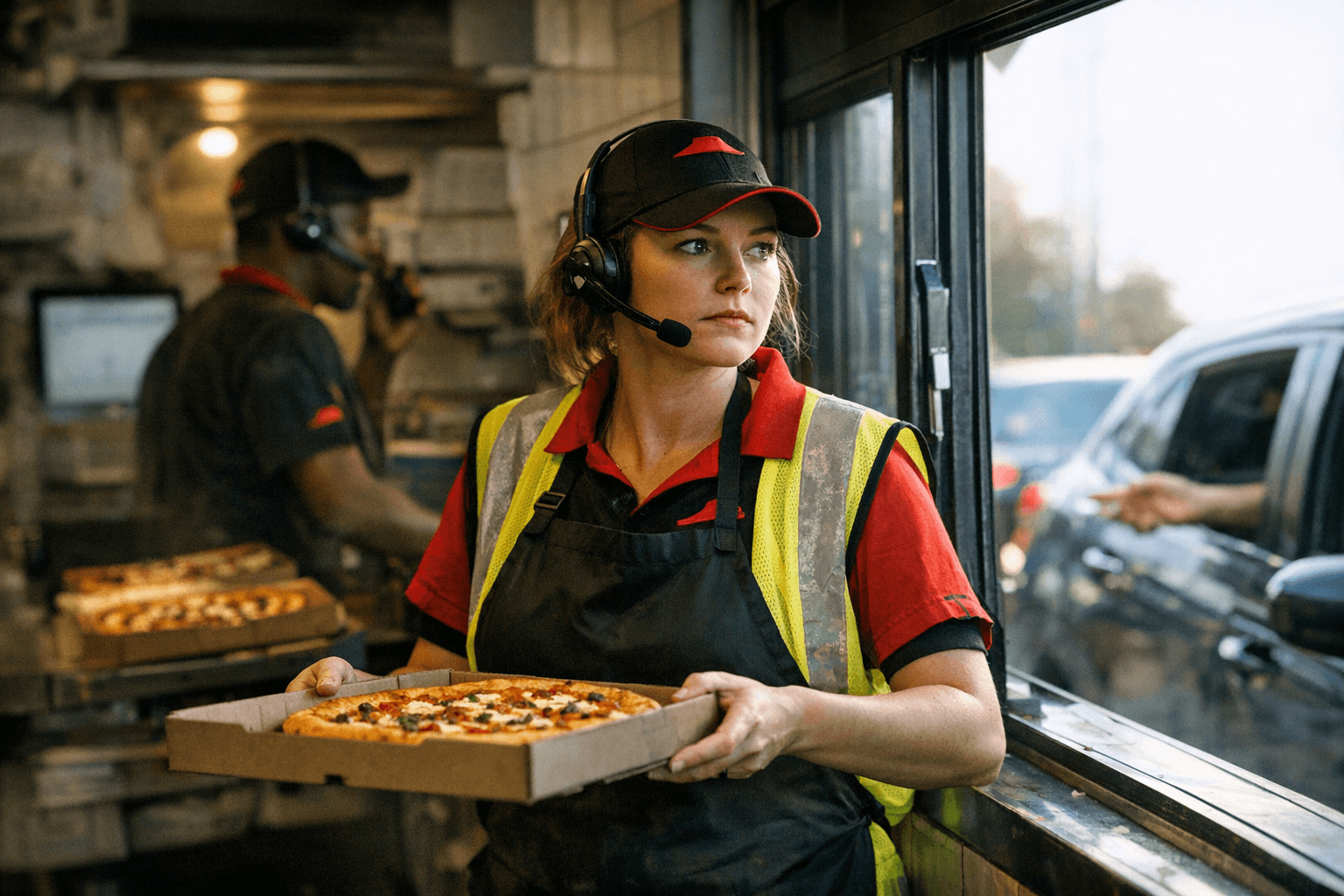
Pizza Hut’s Hut Lane push turns one store into a multitasking relay, with the same crew juggling window handoffs, phones, and carryout pressure at speed.
Pizza Hut’s current site is selling more than convenience. By spotlighting Hut Lane drive-thru locations across a U.S. footprint of 6,000+ restaurants, the chain is signaling a shift in how the work gets done, not just how the pizza gets out the door.
Hut Lane is a staffing signal, not just a locator filter
The locator language is blunt about the new promise. Pizza Hut tells customers, “if you’re feeling hungry on-the-go, drop by one of The Hut Lane™ drive thru locations,” and the dedicated Hut Lane page says participating stores can hand over pizza, wings, and pasta from a pickup window after an order placed ahead of time. That turns the restaurant into a speed operation, where service is measured in handoffs and seconds, not just in completed tickets.
For workers, that matters because drive-thru and curbside-style service compress the distance between order, payment, and pickup. The job becomes less about one station and more about keeping several streams moving at once, which changes the tempo of the entire shift. In a Pizza Hut with Hut Lane traffic, a delayed order or a missed modifier is not just an inconvenience, it can jam the window, back up carryout guests, and leave delivery drivers waiting at the same time.
One person, several jobs
The operational reality of a Hut Lane store is that the person at the window often cannot stay in one lane for long. They may need to answer phones, verify mobile orders, manage the pickup window, and keep an eye on driver arrivals or carryout guests while the kitchen is still firing tickets. That kind of setup rewards crews that are cross-trained and comfortable switching tasks quickly, but it also raises the risk of one worker becoming the catch-all for every problem that lands near the front of house.
That is where staffing decisions start to matter more than the marketing. If the same employee is expected to run the register, solve a kitchen issue, and keep the pickup line moving, the restaurant can look efficient on paper and feel chaotic on the floor. The technology can make the service model feel modern, but the labor demand is still very real, and it falls hardest on the people closest to the window.
Speed changes the shape of the shift
A drive-thru-heavy model does not just move food faster, it changes the kind of mistakes that hurt most. In a dine-in room, a slow table can be recovered with a manager visit or a comped item; at a pickup window, the clock is visible to every guest in line and every driver waiting behind them. Accuracy, line balance, and communication between the front counter, the kitchen, and the pickup station become the difference between a smooth night and a constant stream of re-fires and apologies.
That has real consequences for burnout, especially in stores already dealing with thin staffing and fast turnover. When a crew is rushed, training tends to narrow instead of deepen, and that is exactly when mistakes multiply. For restaurant workers, the hidden issue is not whether a service model is fast, it is whether the schedule and the staffing chart are built to absorb the speed it demands.
Why the company is leaning harder into it
Pizza Hut did not invent Hut Lane as a one-off gimmick. The brand launched The Hut Lane in March 2021 as a digital-first pickup option, saying it was available at over 1,500 U.S. locations at launch and could be accessed through its app, pizzahut.com, or by phone. If Hut Lane was unavailable, the app would steer customers to contactless curbside pickup instead, which shows the company was already building a backup plan around vehicle-based service.
The chain also framed the format as part of a long-term strategy to modernize ordering and improve the customer experience. That matters because it tells workers where the company believes demand is going: less lingering in dining rooms, more throughput through phones, apps, and windows. Pizza Hut’s own current pages now knit together carryout, delivery, and Hut Lane as part of the same operational story, which means the staffing model has to cover all three without losing pace.
Franchise investment makes the labor shift harder to ignore
The rollout also had a capital side. Pizza Hut said Flynn Restaurant Group, after taking ownership of more than 900 Pizza Hut restaurants, planned to prioritize Hut Lane in future builds and relocations. Once a major franchise operator starts baking a pickup window into store design, the model stops being just a marketing choice and becomes part of the floor plan.
That is the piece workers should watch closely. A store built around Hut Lane is likely to need tighter role definitions, more cross-training, and cleaner handoffs between front and back of house than a standard counter-only layout. If management does not add labor where the service pressure lands, the burden shifts downward to the crew, where speed becomes a constant demand instead of a shared advantage.
What this means on the floor
For teams working in or near a Hut Lane store, the healthiest version of the model is one with clear station ownership and enough overlap to cover rushes. That usually means:
- a dedicated window worker during peak periods
- a separate person handling call-in and mobile-order verification
- backup coverage when kitchen delays hit the front line
- training that covers handoffs, not just individual tasks
The larger point is simple. Pizza Hut’s current messaging is telling workers that the future of the brand is built around rapid pickup, digital ordering, and multi-channel volume. In restaurants already defined by tight labor budgets and uneven pay structures, that means the shift is not just faster, it is broader, busier, and more dependent on crews who can do a little bit of everything without breaking.
This article was produced by Prism’s automated news system from verified source data, official records, and press releases, then run through automated quality and moderation checks before publishing. The system is built and supervised by the people who set the standards it runs under. Read our full AI policy.
Did this article answer your question?